That’s what I thought until looking at my Career page this week
I think this is important feedback for TR. The “adjustments” that users are making may well fly in the face of the planned progression that TR intends, but it points out an area for education if TR feels this will cause issues in the long run.
So, understanding why people are getting these “overly easy” workouts initially and the best way to handle them going forward should be addressed. I suspect, based on the comments in the cast, that this “soft start” is one of the things they intend and learned would be better from a progression standpoint, according to their ML research.
But like many aspects of AT, we need to know better how this is intended to work so we can trust the system and follow it vs trying to manipulate it, especially if that is likely to blow up down the line.
PS, great stuff on the same thoughts @AlphaDogCycling 
Also would be great to know how TR is going to monitor how well AT is doing, and at least conceptually, what KPIs (key performance indicators) they are looking at. For example:
- Change in workout completion %
- Change in plan compliance %
- FTP changes over time
- Etc.
The other part we don’t know is how well with AT adapt to us. For example: if for me, I constantly rate the workouts that AT initially gives me as “Easy”, will it learn from that that I’m (me as an N=1 case) able to handle / ramp-up difficulty faster than the “baseline”, and therefore adapt to me? If so, then “overriding” AT’s recommendations could theorectically negatively impact / slow down how well AT learns me as an N=1 case, and its ability to prescribe workouts for me (again N=1 case) to get the best out of me.
I do agree with this. Base phases being ‘too easy’ is not a new narrative, but it’s likely we will have to reiterate the purpose of base phases and the work you’re doing there/the purpose it serves. 
Bruh secret sauce. 
I thought so, but we really need a “white paper” that talks through these points, even if not all of the specifics are spelled in gory detail.

Sure. I feel like we did expand upon this a while back to address ‘too easy’ criticism and mentioned failure rates/etc, but I’ll for sure bring it up to the team that athletes are requesting more visibility to the ‘why’ behind that. Whether or not that’s proprietary and the team will be able to share the receipts so to speak? TBD. But I’ll ask!
Interesting! Maybe I will cool my jets just a little bit for now and slog through some easy-seeming workouts… Good feedback/discussion here.
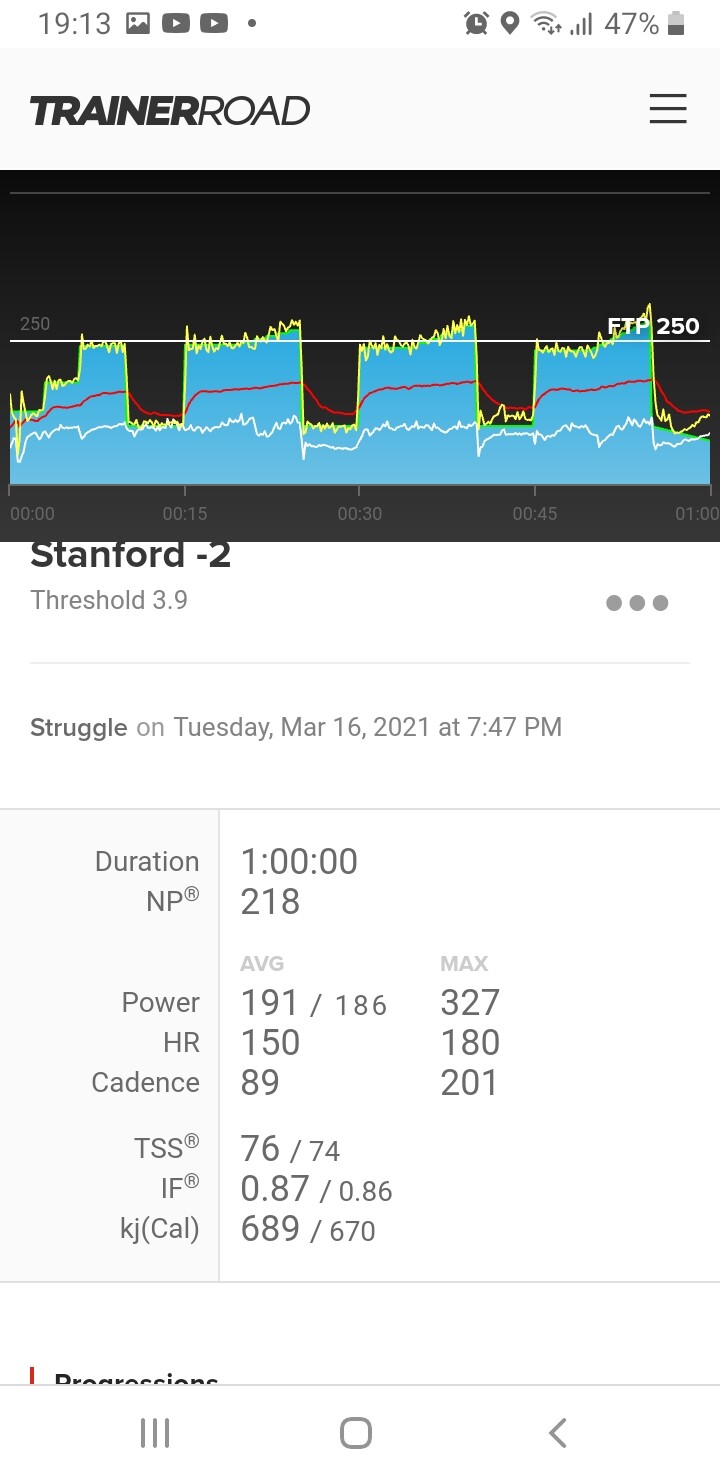
Apologies if this has been asked before but how does AT populate surveys? This one back in March was marked a ‘Struggle’ by the system and not me (I only got into the beta last night); it doesn’t look like it was a struggle either 
The progression levels look a lot like progress bars in a video game. When confronted with them, I naturally wanted to make them go as high as possible, as fast as possible in hopes of maxing them all out.
Blame an adolescence spent in World of Warcraft.
I don’t think it’s necessary to go through all past rides and redo the surveys, I could be wrong. I have recently been added to adaptive training Too so; im taking it on from here, kind of approach. I have an upcoming FTP test so I assume all my levels will drop as long as I get a bump in my FTP.
- Not only unnecessary, but impossible.
- You can only enter or edit a survey for a ride within 7 days of completion.
- After that, they are locked forever.
I haven’t had to monkey with many workouts at all. The Adaptations and Level’s have been spot on.
I haven’t had an FTP change since starting AT, and replace some/all of the Sweet Spot workouts with ones from “More Sweet Spot”.
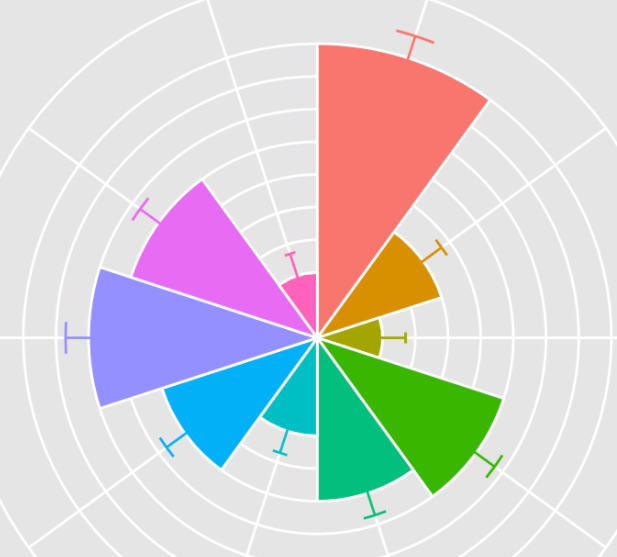
Yeah, I don’t find the bar-chart visual for PLs very useful. Seeing the numbers in a table would be fine for me. If current values must be visualized graphically, I think one of these radial plots would work a lot better:
Ivy,
Not to beat a dead horse, but besides workout compliance / workout failure rate, it would be good to understand what else AT is designed to optimize for. If it is simply workout compliance, then the degenerative case would be to make every workout something like Lazy Mountain -1. No one would ever fail a workout, but neither would anyone get faster. So 100% workout compliance / completion is not the only objective. And I would argue that “failing” a certain % of workouts is actually healthy / leads to improved fitness, as if you never challenge yourself, how will you (or AT) know what you are really capable of doing? And this by definition means that sometimes the challenge is too great a challenge, but you won’t know that till you try.
Boy, talk about sympatico. On my 90 min endurance ride yesterday I was pondering my experience with AT beta, and found myself asking a similar question: If the purpose of TR is to “Make you a faster cyclist” then what is the TR team looking at to know that those who are following AT are getting faster “more better” than those who are not? (That would also be using AT as designed without trying to game the system [not a judgement, as I am so tempted to try to ramp up PLs post-FTP change, and sometimes think “oh, and can do something harder than what’s on my plan for the day”])
@IvyAudrain Without disclosing proprietary/competitive info, what insights might TR be able to provide – perhaps at least to those in the beta pool…
Pretty sure they hit on this in the release podcast (maybe others). It is far from just compliance. They looked at multiple factors and used the ML to try and find the “right mix” of progression in workouts that got appropriate gains matched with desired compliance.
I highly doubt it’s as simple as we might think if we were looking at graphs and charts of the many thousands of workouts, training plans and such. Because of that, I also expect we won’t get much in detail there since that is likely a huge piece of their project and not something appropriate to share (where competitors might leverage the info).
Definitely hearing you all that you’d like some more transparency about how Adaptive Training ‘measures its success’, I have to present that to the team and see how they’d like to speak to it. Thanks for your patience!
Plus I’d love AT to be able (some point in the future) give me actionable feedback. For example, I’ve done Festive 500 for the last several years, and this is a pretty large training block - 7 straight days, and ~1,400 TSS. Is this “good” for me? Or does this big a block ultimately harm my performance because it takes so much out of me that I suffer a big post Festive 500 training implosion?
I still might do Festive 500 because its a fun challenge, but I might try and reduce it / employ other strategies to try and minimize any negative impacts.