My experience using Trainer Road for the 2025 Tour Divide

TL;DR…Trainer Road Works

Fall of 2024 I started listening to the Trainer Road ‘ask a cycling coach’ podcast and I was hooked. With a few local Bikepacking races (with some podiums) and zero structured training under my belt, I thought this was a good opportunity to not only take a crack at the Tour Divide, but go into it as bike-fit as I could be.

I am 36 years old and work as a firefighter in Bellingham, Washington. My recreation background is in bigwall climbing, alpinism, fast packing/trail running, and of course riding bikes. I am no stranger to sleep deprivation and long multi day pushes where physical exhaustion and high consequence decision making are the norm, so the Tour Divide seemed right up my alley…if I could muster the pedaling chops.

How I set up my ~6 month training plan: (running from December 1 2024-June 13 2025.)

I opted for a gravel, high volume, masters plan. I selected my A race as the Tour Divide with a June 13 start and posted it in my calendar as a stage race taking 18 days, with a scheduled 18 hrs a day of riding. On the TD this would average out to about 150 miles and 10,000’ of climbing a day.

Having no structured training background, I took my first ramp test on Zwift November 1 with an FTP result of 281 watts. I set trainer road to AI FTP detect, and over the next 6 months I would see an increase of 74 watts, with my FTP going into the Tour Divide sitting around 355 watts.

I ate like an absolute clydesdale during the training. I not only wanted to gain strength and power, but I also didn’t mind having some spare calories in store for what I was going to be doing. I’m 6’3” and was hovering around 15-20% body fat. I started at 235 lbs Dec 1 and by race day was 243 lbs. I was a very mortal 3.22 w/kg, and by the end of training my legs felt indestructible.

Over the next 6 months I followed the Trainer Road recommendations almost exactly, with a few ‘bikepacking’ specific adjustments which were as follows:

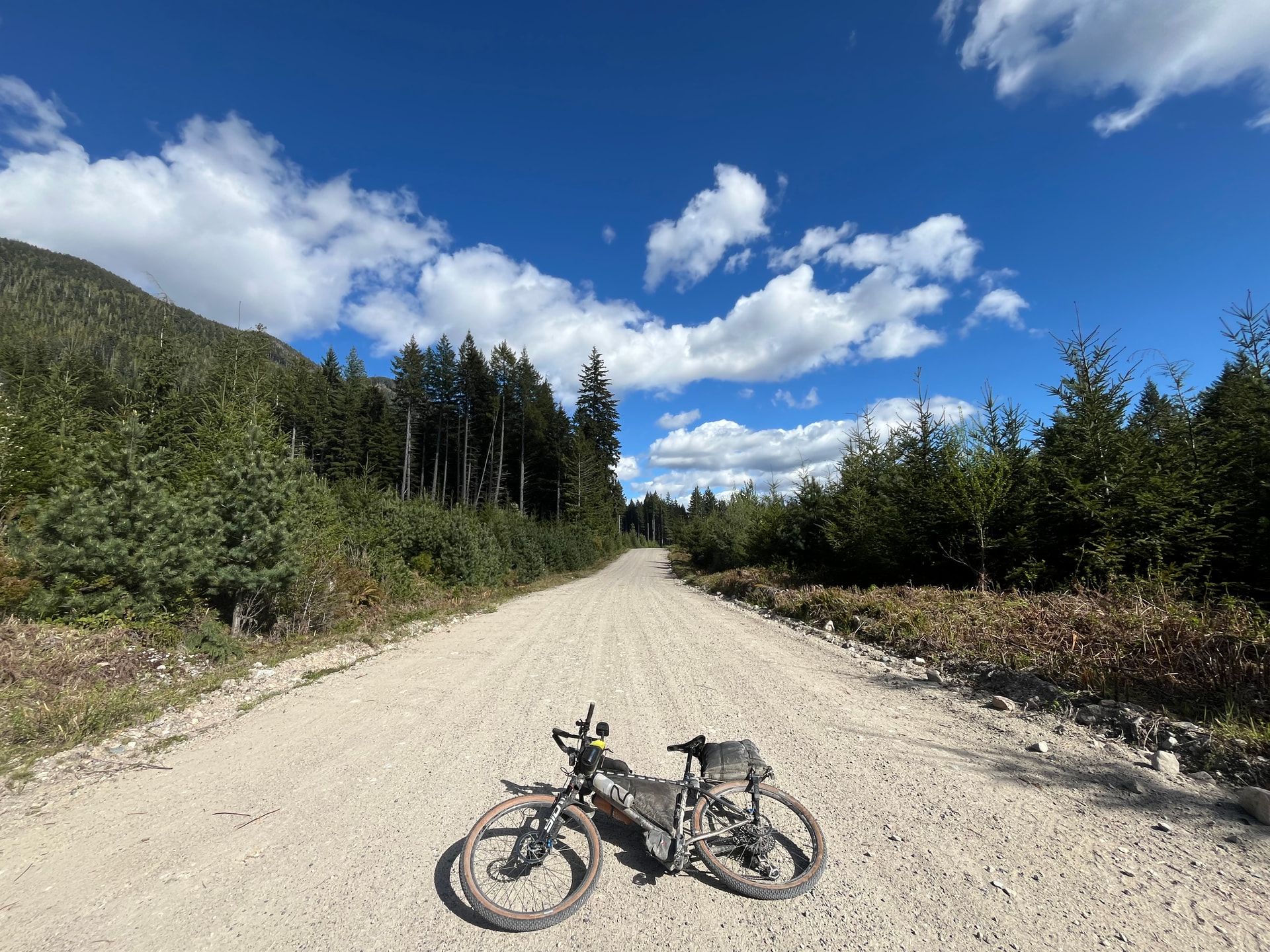
I added into my calendar 2 different weeklong bikepacking training trips at the ⅓ mark and ⅔ mark of my training plan (in Arizona and on Vancouver Island) both around 600 miles with about 60,000’ of climbing. These weeks did not have any Trainer Road rides planned, and I used that time to stack long days and dial in my bike setup and bivy kit, as well as work on increasing my resupply efficiency and general on-bike shenanigans and bush-mechanic aptitude.

In between each of these trips I added in 1-2 ‘big single day’ rides that were around 180-215 miles and 10-14,000’ of climbing. While they interrupted some of my training plan, I let the AI coach just adapt everything based on my TSS etc for a given period and never really got too concerned with how it changed my calendar.

Due to my 24 hour shift work as a firefighter and constantly battling bad sleep, I was very thankful I could move my workouts around all the time. I found that I had a really difficult time doing Vo2 max rides or harder on days after shift. Sometimes I was able to pull off on-shift trainer rides and would move days around to do something like James (and hopefully have minimal interruptions for calls). If I had a really bad night at work I could adjust my workouts around in the coming days and the AI would then adapt accordingly. It was incredible.

I also added in cross training any time I had the energy. I put an emphasis on yoga and bouldering in the climbing gym, but also tossed in weighted hiking, trail running, and general strength training.

There was certainly a learning curve aspect when I first got on the app. Figuring out the difference between a sweet spot 5.0 and 8.0 was eye opening, as well as when to accept an adaptation versus when to ignore. There were times I stressed about doing an indoor ride versus an outdoor, but as time went on I found a symbiotic relationship with the platform. Indoor rides gave me solid sit bones, incredibly high quality riding form, cadence drills, and consistency benefits. Knowing when to balance that with the benefits of outdoor rides was a give and take relationship I built over the first few months and came to appreciate.

After the first six months of using Trainer Road, my stats looked something like this:

4,653 miles ridden since December 1st

16 hours a week training: or 382 hours and 14 minutes total training time

193.8 miles ridden per week on average

74 watt FTP increase (from 281 watts to 355 watts)

217 miles was my longest mileage day

14,601’ was my bigliest climbing day

The route ‘Ring Around the Ritas’ in Tucson was the single burliest day

72 hrs 16 minutes for my longest training week (tucson trip)

8 hrs 42 minutes for my shortest training week (Hawaii trip for anniversary)

14 degrees : coldest temperature recorded

104 degrees : hottest temperature recorded

The days I got to be on my bicycles : funnest days!

Spoiler alert: I ended up scratching from the Divide after 11 days, due to a waterborne illness from the bacteria Campylobacter. I was on antibiotics and it took about 21 days to recover, but those 11 days on route were epic. I got sick due to my water filter having cracked, presumably on one of my earlier training trips.

My first inkling something was wrong was when I was sticking to my power/HR/nutrition/hydration plan perfectly on Day 1 and feeling incredible, but started getting sick a few hours after my first ‘wild’ water top off. I was then sick for the next 36 hours, and put my head down and pushed through. By the start of Day 3 I was feeling significantly better and started putting down bigger days to try and catch up to my original time plan. By Day 11 I had caught up to my original time plan, but the next wave of sickness hit and I was down for the count.

Some stats:

Avg daily mileage 163.1 miles

Avg daily TSS 334

Avg daily calories burned 6,279

Avg climbing per day 11,001’

and for all of you data nerds the daily stats were as follows:

Day 1: 113 miles, 11.5k

moving time 12:30, elapsed time 15 hrs

Avg speed 9.1 mph, avg power 144w, NP 195w

(nausea and vomiting started at mile 100, I stopped at 10pm on the backside of koko claims and tried to recover, vomiting started a couple of hours after my first water top-off with my cracked filter)

Day 2: 138 miles, 12.1k

moving time 14:40, elapsed time 16:50

Avg speed 9.5 mph, avg power 116w, NP 156w

(more severe nausea and vomiting, 3L water of ~600 calories consumed over the entire day)

Day 3: 160 miles, 10.5k

Moving time 14:20 elapsed time 16:40

Avg speed 9.6 mph Avg power 108w, NP 154

(felt recovered, started trying to catch up to my original timeplan)

Day 4: 148 miles, 13.8k

Moving time 16 hrs, elapsed 18:15

Avg speed 9.3 mph, avg power 120, NP 160

Day 5: 137 miles, 13.5k

Moving time 15:11, elapsed time 17:40

Avg speed 9 mph, avg power 100w, NP 157

Day 6: 165 miles, 12.1k

Moving time 15:30 elapsed time 17:15

Avg speed 10.7 mph, average power 122w, NP 172w

Day 7: 185 miles, 8.4k

Moving time 15:10 elapsed time 17:45

Average speed 12.1mph, avg power 103w NP 154w

Day 8: 135 miles, 11.2k

Moving time 14:20, elapsed time 17:20

Average speed 9.4mph, avg power 98w NP147w

Day 9: 194 miles, 9k

Moving time 15 hrs elapsed time 17 hrs

Avg speed 12.9 mph, avg power 96w NP 150w

Day 10: 146 miles, 9k

Moving time 13:22 elapsed time 16:23

Avg speed 11 mph, avg power 102w, NP 156w

Day 11: 110, 10.3k

Moving time 11:40 elapsed time 14:45

Avg speed 9.4mph, avg power 87w NP 146w

(8pm early stop in kremmling, CO and proceed to become extremely sick in a hotel room for 3 days with constant diarrhea and a fever of over 101. The initial diagnosis was giardia)

Day ‘15’: 55 miles, 4.2k

I tried to ride more and just leaked all over my chamois. I spent another few days in silverthorne trying to recover more, but I ran out of time. When I got back home and was still having issues, I finally got my test results back and it turns out it was campylobacter and so I was put on a different antibiotic that worked much better.

Starting weight: 243 lbs, weight at doctors office when I got home: 216 lbs

For the bikepacking race-plan/pacing side of things, I opted for this strategy:

I found I could hold 200w more or less indefinitely with an HR of 100 bpm. While my stats above do not reflect this per se, anytime I looked down that was the number I was shooting for, unless I was above ~7,000 (it then dropped to like 150-175w for 100 bpm) or if it was over ~85 degrees. On climbs I hovered around 250w. I had my computer setup to only show my routing map with HR and Power at the bottom. I wore a chest HR monitor and used a quarq spider PM.

Everyday I set an alarm for 5am, did all my breakfast, caffeine, packing, potty time, etc and was rolling by 6 am. I rode until 11:30pm, then set up camp wherever I ended up, and was in bed by midnight. Then up at 5 am to start it all over again.

I made this work a few ways:

-I brought a tent so i could comfortably sleep in the rain (and avoid the epic bugs) and have a dry sleeping bag

-I used a dynamo hub and could reliably charge a battery bank enough during the day to meet all of my electrical needs, so I never needed an outlet. (it was worth the 5w penalty to me)

-I carried 1 spare set of bibs and socks, and would wash the dirty pairs in gas station sinks every day and let them dry, so by the next day I could rotate into the ‘clean’ ones and then wash my now dirty ones.

-all but a couple of my resupplies were no more than 15 minutes of stopped time.

I found with this schedule my body adapted really well by day 3, and I never really buried myself, It felt surprisingly sustainable. I saw a lot of people blow themselves up having to ride until 4am because they had to get to a hotel to charge electronics or do laundry or dry their sleeping bag or whatever, and then they got all messed up on their sleep schedule. Or they had to stop early (for the above mentioned reasons) and ended up having multiple shorter days than planned. I didn’t stay in a hotel a single night and found I maintained well on having some semblance of a sleep schedule I could stick too. Had I not gotten sick the second time, I like to think I would have finished in just under 18 days, but so many other things could derail an effort like this that I don’t dare to assume.

Never in my cycling career have I put down back to back big days with this much consistency, and I believe I owe so much of that durability and repeatability to the Trainer Road programming.

Overall I was disappointed about getting sick, but so stoked that all of my training and preparation paid off immensely. I have never done anything quite like this, and it was a wild and formative experience. I am looking forward to going back some day, however, the training took a lot of time and focus and so I will not be going back in 2026 (I also would really like to stay married). Someday I will return, and I will be using Trainer Road to help me get to Antelope Wells.

If you have any questions or are curious about detailed gear lists, bike build, or personally built cue sheets, I am happy to share.

Cheers!

-Parker
45 Likes

Congratulations! It sounds like you prepared super well. Just a pity sickness stopped you completing it.

I’ve used iodine drops or chlorine tablets in the past to make water safe to drink. Maybe worth having a back up for the water filter next time.

Also, is it a super flat route? If it’s not, then lowering your weight would bring big benefits to the climbing.

Whilst this is obviously true I think the OP has gone about it in the right way.

Bodyweight has less of an impact when you are carrying a load of gear around with you and a 355w FTP will be fun on the flat.

You have to factor in other goals too - if he’s a fireman I’d rather him still to be able to carry me down the stairs in a fire :slight_smile:

21 Likes

Checks out.

Nice writeup and thanks for sharing the pictures. I’ve known a few people who have done Tour Divide - big challenge both physically and mentally. And sometimes things are just out of your hands. Congrats on making it as far as you did…and pretty wild given the circumstances.

1 Like

Welcome to the forum, @parkerkempf! :partying_face:

You’re starting off with a great contribution to this space. Thanks for sharing!

I’m glad we were able to help you prepare for such an incredible journey!

It sounds like you had a great plan and executed well. I’m sorry that things didn’t end how you had planned, but I’m sure you’ll get redemption one way or another. :laughing:

Stay in touch and let us know what you’re up to next!

4 Likes

Hey Andrew, I considered trying to be lighter overall, but i wanted to hang on to as much lean mass as i could. I burned an average 6,500 calories a day on route so having a little spare body fat wasn’t a big concern. Also eating like i did while training meant I could go as hard as I wanted and not try to cut weight at the same time and lose adaptation benefits.

As for whether or not it is a flat route, i guess it depends on your definition. 11,000’ of climbing felt like a lot each day, but it was over 160 miles a day so on average not too bad.

4 Likes

Thanks for the detailed write up and pics of your experience!

3 Likes

This is so awesome and really makes me wish they still did the Successful Athletes Podcast because I would love to hear more about this. If you get a chance could you give some info about your bike and setup.

6 Likes

UWDawgs, thanks!

I’m glad that it’s interesting to some of you :sweat_smile: I found that when I surfed these forums last year looking for bikepacking specific training tips, I came up pretty empty handed. I figured I would do my own thing and report back here on how it went, so that others can use my experience as some kind of reference or starting point.

As for my bike setup, I’m going to re-post my bikepacking dot com ‘rigs of the tour divide’ writeup, and I’ll stick a photo of my rig on the bottom with some of the bike changes I would make for next time.

BIKE: On my rookie attempt of the Tour Divide, I’ll be aboard Sunflower, my Ti Sonder Broken Road. Keeping the front wheel pointed in the right direction will be a Rockshox Sid Ultimate SL 100mm fork and an Enve M9 flat bar, along with SQlab Inner bar ends and Profile Designs T2+ aero bars (mounted on a Fred Bar, of course). Sunflower is sporting some home-built We Are One Revive hoops laced to a Son 28 front and OneUp rear hub. 2.2” Conti Race King Protections because I subscribe to Bicycle Rolling Resistance and I just couldn’t help myself. I opted for SRAM Mechanical Transmission as the software gave up on all of my electronic drivetrains. Gearing-wise I’ll be pushing a 32T chainring on a quarq power meter spider paired with an XXSL 10-52T cassette. Spinning up all of that will be OneUp Clip Pedals. Hope Tech 4 V4 mega-stoppers for my hefty clydesdale-like stature. Sqlab Ergowave Saddle is a must as it is the closest thing to heaven my backside knows. A Klite adventure front and Qube rear, along with a Fenix HM 65rt, will round out my lighting package.

BAGS: Frame, top tube, and feed bags by none other than LOAM Equipment here in Bellingham, a stellar company with high quality bags, excellent customer service, and an eye for the details (like the radical bear spray holster on the drive side of the frame bag). Tailfin Aeropack for my soft goods. I’ll also be wearing a Salomon Adv Skin 12 vest for gas station shopping sprees and the big carries.

GEAR HIGHLIGHTS: My personal favorite has to be the Cyclewerks bottle cage adapters on my downtube, allowing me to run two 34oz Trek Vodas easily within reach, opening up storage space in all of my bags…no knee interference, no fuss. I’ll be rolling with an MSR ebivy (11/12 edit to add: I actually ended up bringing a tent instead and am SO GLAD I did), 30 degree Zpacks bag, Therm-a-Rest xLite, and a camping pillow (I read somewhere that good sleep equals more watts). Showa Temres 282 ‘fish gloves’ are the cheapest, warmest, and waterproof-est gloves ever invented (11/12 edit to add: I ended up just going with 100%’s brisker gloves and waterproof shell mitts), and my Smith Pursuit sunglasses tan speaks to their absurdly functional design. Last but not least, mounted on my stem will be a felt rendition of my little 12 lb chihuahua/terrier Noodle to keep me company, as well as custom head badges of Noodle and his sister-doggo, Zoe.

GPS DEVICE: Garmin 1040 Solar for extended navigation and an inReach Mini for tracking.

Overall this setup worked extremely well for me, here are some more notes about it:

The suspension fork I was torn about not because of weight, but because of reliability. I heard some horror stories from past riders and ran into at least 1 person on route who had their fork sh*t the bed on them and had to ride it bottomed out for days to get to the nearest shop. I did a 200 hr service full rebuild on my fork right before starting so that gave me some peace of mind. However, I would only consider riding this route on a rigid fork if I was running a wider (2.4”) tire, for the sake of my wrists. But plenty of people run rigid forks no problem.

I was very happy running a mechanical drivetrain because I have killed both generations of AXS drivetrains software so didn’t trust them for the long haul. I would consider a 34t chainring with a 10-52 for next time, the 32-52 was a little too spinny on the climbs, even loaded up.

I was glad to be on flat bars because of the amount of descending every day. I knew I wanted to avoid Shermer’s Neck at all costs and thousands of feet of chunky descending in drops all day would spell disaster for me personally. Aero bars are a must for me. I probably spent 60+% of the entire route in aero bars. Inner bar ends were amazing for putting me in a neutral shoulder position for upright riding. One thing I regret was not running outer bar ends. I found on super long climbs I got out of the saddle a lot and having the outer bar ends to hang onto would have been nice, this is the biggest change I would make to my setup.

I can follow up with a comprehensive gear list and details later if y’all want, I just don’t want to spam the forums too hard though :joy:

Cheers!

-Parker

10 Likes

Parker wazzup! Great meeting you just before the Washington High-Lite race not-race forest-fire smoke-fest in Sept!

I appreciate the details in your post. There is a ton of “how to do ultras with TR” threads, but a lot of those are older. A lot of times, folks explain their non-TR approach. Or, especially in older threads, I often see people recommending doing a low volume plan and adding outside endurance volume on top of it. But those older threads might be before red light green light, “check volume”, AI FTP, and adaptive training. These days I wonder if, in practice, a modern TR high volume masters plan is in effect what people have cobbled together manually in years past.

For example, I find with the Gran Fondo plan, it is currently telling me to do a 2.5 hour outside ride every Sunday, and that is on a mid-volume plan. If I purposefully do a bit more progressively longer, TR is going to bump those times up over time (as I learned from experience after doing a 12 day bikepacking trip followed by the PASL bikepack race … TR thought I must therefore be a God and put me on a high-ish volume plan with 90 minute interval workouts a 5 hour weekly outdoor ride).

You are too modest. Those events are impossibly hard for most everyone on earth.

Curious: by this you mean you set up the Tour Divide as a gravel stage race race and let TR do its thing?

I often see gran fondo as a recommended race type for bikepacking races. I wonder what the practical differences are between a “gran fondo” and a “gravel” stage race in terms of how TR sets up the plan.

Ahh, firefighter…so that explains your healthy respect for the wildfire smoke at the WA High-Lite back in Sept! I paid the price – after four days riding in those occasionally “unhealthy for sensitive groups” wildfire smoke levels my voice sounded like I was a toad. The whole ride tore into me and spat me out harder than I think just the pure physical effort could explain. I think the smoke did me physical damage. I was coughing for a week, I couldn’t complete any TR intensity days for about three weeks, and my AI FTP dropped 13% after it was all said and done. It has only been the past few weeks that I feel like I’m back in the groove again, and I expect it’ll be a month or two before my AI FTP is back to where it was. Lesson learned. I saw that Lael Wilcox scratched from the TD this year due to smoke and maybe dust induced issues with her asthma.

For context, I’m a 53 year old, until-recently sedentary, and newly early-retired (lucky me) ex-software engineer, and my fitness reflects it. So I’m both 17 years older than you but also had none of the base fitness you had going into your first “season” with TR.

My first AI FTP detection was 197 watts in March 2025, which rose to 227 watts by late August. I rode “a lot” of unstructured stuff over that time, but also kept TR active and tried to hit intervals when I could when bikepacking trips with my wife, unstructured training rides with her, etc., weren’t happening. Pretty huge interruptions in my adherence to the TR plans during this time, but my FTP still kept going up (probably newbie gains).

I find the AI coach pretty useful too, but figuring out exactly how I want to “self coach” it through an irregular schedule did take some figuring out.

If 3.22 w/kg is “very mortal” then I am “sub-mortal”, or maybe just old(er) and comparatively out of shape!

Any tips to share with that? I tend to always accept an adaptation.

Despite my lower FTP I end up doing a similar TSS per day to you on bikepacking races, so I suppose we’re each going similarly hard relative to our FTP. That makes sense.

2 Likes

I do the same. My ultra cycling events are setup as Gravel - Stage Races. Mine are a shorter than TD though (usually around 800-1400km).
I did a few events on road last year, which I had set to Gran Fondo. I was under the impression, that the Gran Fondo plan trains for shorter burts/sustained efforts, that you might need on hilly terrain, where as the Gravel was longer sustained efforts (which is more my in line with my terrain where i live and the events). But this is purely speculative and subjective perception, I didn’t compare the training plans, nor do I have the proper background to do so.

I do fair bit of long rides outside trainer road on weekends. Trainerroad is in my opinion not much of help there. My rides get synced to Trainerroad and upsets the red/green light, but it goes away, if you keep up the same volume over time, the red phases become green phases. Usually, I up the volume over time, about every 6 weeks or so.

Hey Matt!

It was great meeting you and the rest of the crew over there for the High-Lite. Yeah that would make sense about the other folks plans, it’s essentially what I did. I definitely appreciated the AI adaptations, and guessing my red light green light before checking each day became a game I liked to play.

Thats interesting about the Gran Fondo and adjusting your longer solo rides for you, I haven’t played with that plan yet

XWA and PanRam are definitely not for the faint of heart, but also I don’t have a ton of other races to compare them too!

And, yes, exactly, I set it up as a gravel stage race and let TR do its thing from there. I would guess that the gravel version has more hard sustained sweet spot riding? I felt like my ‘all day chill spin’ was pretty solid, but I knew I was weak in sustained harder efforts (like sweet spot and above) so the gravel calendar worked well for what I wanted.

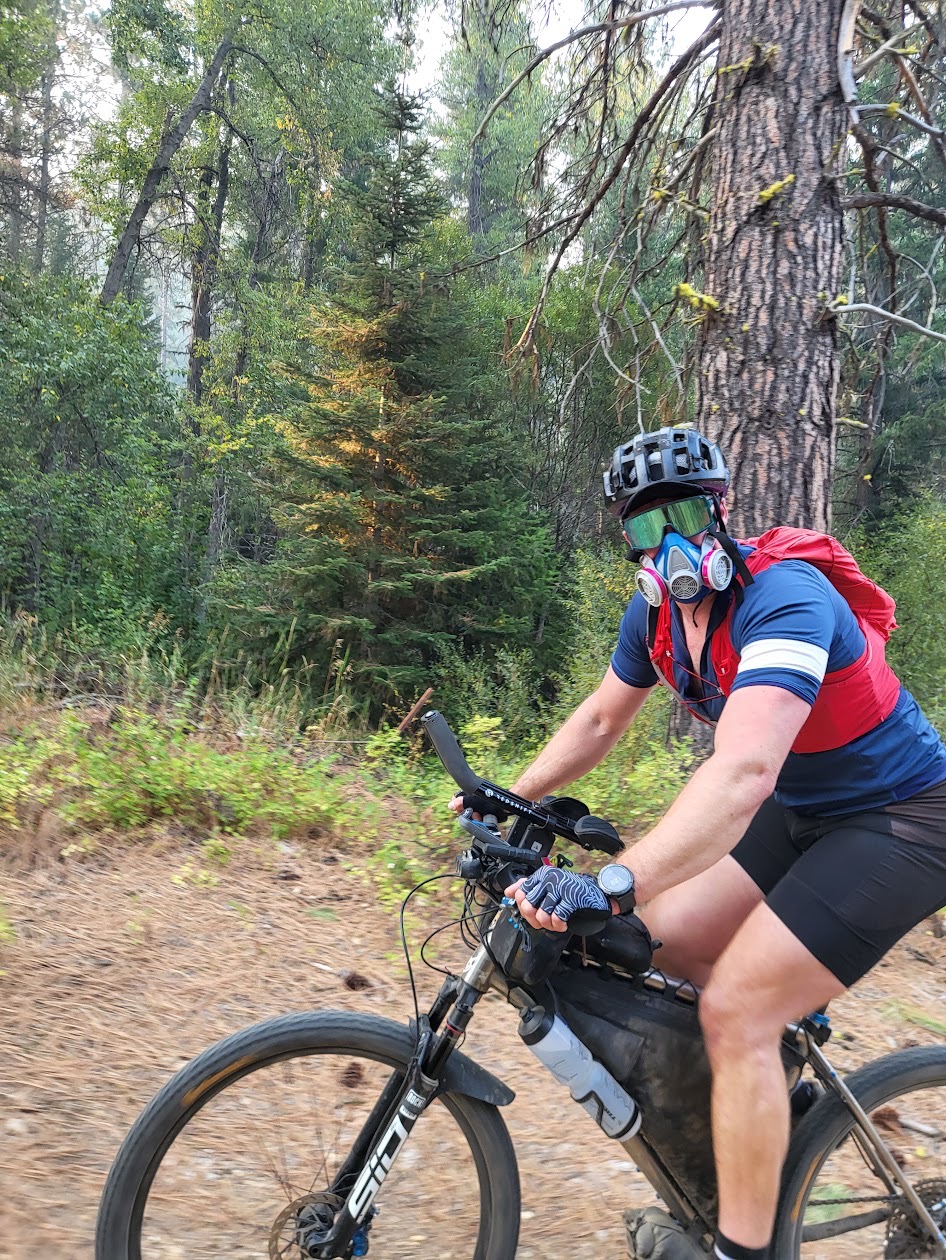
That smoke on route was no joke, sorry to hear about your breathing problems. I told myself that it’s either I wear that half mask when it gets smoky or I’m not going. While I certainly had to use some accessory muscles to breathe fully, it helped me keep my power and HR in check and kept my lungs happy! Here is a photo of my mask setup for folks wondering what we are talking about :joy:

As for your w/kg, it feels like whenever I read these forum everyone here is like ‘oh, you know, I’m 4 w/kg off the couch so I thought I should do some training’ and Im over here barely hanging on :joy:

As for accepting adaptation vs ignoring, I would pretty much just base it off of perceived ‘what i have left in the tank’, so I’d accept/ignore adaptations up or down based on if my overall energy levels felt like I could hang. I would guess I accepted like 90% of them though, TR did a good job gauging how tired/strong I was feeling.

My TSS varied a lot on the Divide, my highest day was around 439 on day 1 and lowest 287 (on a 195-mile day). I kind of feel like it’s a hard metric to pin down on these bigger days. It almost feels like TSS decouples from how deep of a hole you are digging yourself…I am curious how TSS is calculated for days like these, like hours moving+NP+HR etc?

3 Likes

To nerd out a bit…

Training Stress Score (TSS) measures training load by combining intensity and duration. It is a power-based metric and does not use heart rate.

  • Intensity: This is represented by the workout’s Intensity Factor (IF), which is calculated as IF = NP / FTP.

    • Normalized Power (NP) is a weighted average power. For steady, even efforts, NP is nearly identical to average power. However, for variable rides with power spikes, NP will be higher than average power to reflect the greater physiological cost.

    • Dividing by your FTP (Functional Threshold Power) makes the intensity score relative to your personal capability.

  • Time: This is simply the workout’s duration.

These components are combined in the formula TSS = (Duration_hours * IF^2) * 100.

Since IF = NP / FTP, I was thinking we’d both have similar daily TSS for equivalently hard riding, but you’d be going a lot faster than me since you FTP is higher. In other words, by the “laws of FTP” we both can’t ride at or above FTP for long, so our all day effort, riding at endurance paces, relative to our FTP, is likely to be similar. You’d just be going faster at the same IF.

The math works out such that riding for one hour at threshold (your FTP) gives 100 TSS. Riding for one hour at 0.5 IF (“recovery ride” endurance) is 25 TSS, so it’d take 4x longer to get to 100 TSS at that intensity. So TSS is pretty sensitive to the ride’s IF (i.e. NP / FTP). But it is also imperfect at capturing the true “difficulty” of a day’s ride. I think riding 4 hours at 0.5 IF, recovery ride pace, is much much easier on the body than riding 1 hour at FTP, yet they have the same TSS.

Anyway, if your TSS ranged from 439 to 287 on the TD I’d go and look at the NP and total duration of those rides, as those are essentially what TSS is combining.

This is all very nerdy and mathy. Not sure what to use TSS for other than a rough measure of how hard you’re going. I think it is more typically used over time to compute other metrics of training “fitness”, “fatigue”, etc., over a season.

1 Like

Hey Y’all!

I wanted to throw my packing list on here in case someone is specifically planning on the Tour Divide or any other extended bikepacking race and wanted a list for reference. This is my comprehensive packing list, and there is almost nothing I would change for next time. Below I added notes/stories on the reasons for my choices for my items. Seriously, I absolutely nailed this kit for my use case.

While it may seem like a lot of stuff, my XL titanium hardtail with aaallll of this stuff on it + water and food for Day 1, weighed around 45 lbs, so while it was heavy, it wasn’t too bad considering how well prepared I was for most conditions/problems.

My goal was to be prepared for temperatures/conditions ranging from 10-110 degrees F. I was able to test ride this kit in 14-104 during my training, so I knew I could survive with these layers. On the divide I saw temperatures from 16 to mid 90’s F and was reasonably comfortable. Weather-wise I experienced rain, snow, hail, winds to 45 mph, and lightning. I had minimal mud riding (in the great basin) and essentially no snowy hike-a-bike.

While may repair kit may seem like overkill, it gave me the confidence and ability to fix the gamut of most field-fixable issues without carrying insane things like extra wheels :sweat_smile:

Camp:

  • 30 degree down bag - zpacks hoodless extra long

  • Sea to summit Aeros pillow - I used to use stuff sacks full of clothes or just my shoes/helmet as a pillow, but I wanted to maximize good sleep so I rocked a camp pillow and don’t regret it in the slightest.

  • therma rest neoair xlite pad - didn’t pop

  • Terra nova solar photon 2p tent, poles and stakes - very light (2 lbs with everything) and functional 1+ person semi freestanding tent for tall people. body packs down to 1 liter size.

Clothes:

  • clipless shoes - 5.10 Trailcross Lite, dry super fast when wet and good for hiking

  • POC ventral lite helmet - because ~aero~

  • 12L adv skin hydration vest with 2L bladder - comfy to wear in aero bars

  • Gore C3 jersey - comfortable and not too tight

  • pursuit sunglasses - unbeatable for clarity and anti-fog. side shields were clutch. I opted for the non-transition as I have really sensitive eyes and wanted the lowest VLT

  • OR sun neck cover - I would just bring a full buff next time, the dust was really bad and I would have liked to have some kind of breathing filter.

  • Patagonia duckbill cap - low profile bill with mesh upper, this is my go-to cycling hat. I modded it with soft velcro on the bill and wire in the brim so it can be folded to deflect the sun/rain/snow/hail at any angle and velcro’d back to my helmet (which has hard side velcro) for full breathability, 10/10 works amazing.

  • amfib lite shell booties - allowed for using lighter socks and more breathable shoes but kept my feet warm in the snow

  • 2 pairs handup socks - thin and dried fast, rotated daily for washing

  • Shell mitts - MLD 3-layer event rain mitts. I sized up so they would fit well over my other gloves while letting me still reach and use my brake levers.

  • 100% Brisker gloves - super warm and packable

  • Fingerless gloves - Hand Up shorties for day to day use, super thin and breathable

  • Gore rain pant - the Endurance series fits really well for riding

  • Gore rain jacket - the Endurance series fits really well for aero bars

  • Insulated Jacket - Arcteryx Proton. I opted for a synthetic insulated jacket because its still warm when wet. This one is also much more breathable than something like the Nuclei FL, so this let me ride harder while wearing it and not start sweating a bunch.

  • Patagonia Airshed pullover - love this layer, wore all the time, like a fitted stretchy houdini.

  • Rapha gilet - versatile warmth

  • pearl izumi thermal leg sleeves - 10/10, wore these on and off every day

  • pearl izumi sun sleeves - 10/10, wore these all day every day, saved me sunscreen weight

  • 2x patagonia dirt roamer bibs - fit me well, love the huge thigh pockets. Technically a liner so very breathable and only minimally revealing :sweat_smile: rotated every day so I could wash

Water:

  • 2x 34oz trek voda bottles - best bottles on the market, substitute the stock cap for a fidlock cap for extra giardia protections

  • 2L hydrapak bladder w/ hose

  • 4L hydrapak bladder + befree filter - check you filters, y’all! If I had tested mine before the TD I would have bought a new one and had no issues.

Electric:

  • garmin watch

  • Fenix hmr headlamp - don’t love the beam pattern (i want more flood) but battery life is primo

  • edge 1040 solar

  • inreach mini

  • 20k mah battery

  • 60w charger block from Anker: usb C 3x usb A 1x

  • usb A/C cable

  • 4x usb C/C cable

  • HR chest strap

  • klite/qube dynamo lights - amazing.

  • Usb C/tips (apple, fenix)

  • 2x 2032 coin cell

  • spare fenix headlamp battery

  • wired headphones

  • airpods - would just go wired next time, maybe shokz?

  • spare GPS: Edge 840 - I’ve had my gps crap out twice on me before, so I carried a spare for peace of mind and would do it again.

Ditty:

  • Wallet

  • bearspray

  • Pad patch kit

  • 3x Blistex Gold chapstick upf 50 - the best chapstick in existence

  • Neutrogena sunscreen - cream just for my legs

  • Shiseida sunscreen stick - 10/10, clear, easy to apply, would bring more next time.

  • tooth brush/paste/flossers

  • hand sanitizer

  • ear plugs - never needed them

  • Chamois Cream 4oz - Muc-Off Luxury. My evening routine consisted of a full wet wipe cleaning, a few minutes to air dry everything, and then application of this cream. I never applied any during the day. no saddle sores, it worked super well for me.

  • eye mask - never needed it

  • Spoon

  • nipple chaff bandaids (20) - if it happens to you, you know. The best are the Mckesson Ovals.

  • caffeine pills (60) - would bring more

  • wet wipes

  • bug spray - I brought 100% deet, would bring a more skin-friendly one next time.

  • head net - so so glad I brought this, the mosquitos were epic, especially in northern wyoming

  • gallon zip lock - for gas station pizza or whatever messy food I wanted to shove in my feedbag.

  • iPhone ziplock/paper towel - A pacific northwest trick, you keep your phone in the ziplock, dry your finger on the paper towel, and use your phone as normal as it pours rain on you.

  • bike lock - peace of mind, especially at the butte resupply. Abus Steel O Chain, would maybe get a lighter one next time.

  • printed/laminated cue sheets - backups for if my electronics go down

  • 15L mussette - Exped Splash Pack, this was so good for washing clothes in the gas stations and being used as a shopping bag. Also, I never needed too, but if I wanted to overstock I could carry this over my hydration vest no problem. would absolutely bring again.

  • Passport - because…border crossing

First Aid:

  • inhaler - so much dust and smoke. Used nightly to quell my cough so I could go to sleep.

  • Swat T bandage/tourniquet - really they only thing I need for soft tissue injuries. Its a splint, tourniquet, pressure bandage, etc.

Repair:

  • allen set (2.5-6mm, 6->8mm insert, t25, t20, 8->12mm)

  • seatpost bolt - I stripped one once, deep in the westfjords of iceland, and it was a hilarious franken-taping to get my seatpost high enough to ride. That scar has remained so I always carry one now :joy:

  • paint stick - SO GLAD I had this in the great basin for mud clearing from tires and drivetrain.

  • tailfin transmission nut - because 35nm is insane, and If I had to pull my derailleur I wanted a spare nut. I used a robert axle tailfin axle which requires a special mounting nut for transmission derailleurs.

  • driver body bearings - I go through driver body bearings on all of my bikes like every 3 months, because #bigwattz ?

  • small electrical tape - see ‘seatpost bolt’ above

  • Valve core remover

  • Co2 inflator

  • 1x 25g Co2 - for reseating a tubeless tire

  • 2x Valve core

  • super glue - For glueing a re-sewn sidewalls’ stitches or big cuts

  • 2x clipless cleat bolts

  • Mini chain breaker

  • Shift cable

  • spoke wrench

  • 3x spokes - Used 1. I broke a spoke ripping down priest pass and burying my back wheel in a square edge rut. It took me exactly 13 minutes total from stopping, pulling my rear wheel and 6 bolt rotor, replacing the spoke, and then rolling again.

  • thread spoke - FiberFix is a universal dyneema spoke. I used one in Arizona when I pulled a rock into my wheel and broke a spoke on the AZT, and it worked so so well. Love this thing, you can carry 1 and cover everyone in a group pretty much.

  • Chain rag - for wiping off excess lube

  • 2 oz Silca Synergetic Wet Lube - the BEST lube I have found for midday application that doesn’t clump up and works in all temperatures adn conditions

  • 2 sets brake pads - Running Hope Tech 4 V4 brakes was a gamble on finding spare parts anywhere, but they work really well for me.

  • quick link pliers

  • 2x quick links

  • tire boots

  • sidewall sewing kit - On one of my training rides deep on vancouver island, I put a 2” gash in a sidewall. I sewed it, superglued the stitches, added sealant, and reset the tire using Co2. I then rode another 300+ miles on the tire no problem. Incredible stuff.

  • dynaplug racer and spares - love. way better than bacon strips. I did get a puncture on the first day but the sealant sealed it for me. I saw 2 people get sidewall gashes on day 1, its sharp up there in Banff, y’all!

  • tube patch kit

  • sealant (2oz) - orange seal

  • Sealant applicator - the orange seal applicator is the easiest to use in the field for sure

  • Silca Gravelero pump - chuck style and flexible hose, love it for pumping up in the field.

  • 2x tubes

below are some photos from Arizona and Vancouver Island training rides, plus the fiber fix spoke in use and my sidewall sew job!

8 Likes

Thank you for this fantastic write-up! I’ve used TR for many bikepacking races, and it works. I generally make similar modifications to the ones you have made. The main one is getting out and doing long rides, ensuring your gear and body can handle that many hours on a bike.

Your approach to sleep and bringing a tent is the fastest way, IMO.

Thanks again for sharing :slight_smile:

PS I scratched from the TD on day 10 in 2017 with a similar illness - I think I drank some bad water or food poisoning. I haven’t been able to get back to the start line yet! :frowning:

2 Likes

Thanks! Yeah I agree its super important to know how you function at hour 18 on a ride, also how well your bike setup works for your needs. It can be a tough balance though to not dig a hole so deep you have unproductive training for the next like 2 weeks :joy:

Bummer about the 2017 scratch, its so funny how no matter how prepared we might be, there are infinite variables to take us out of an event like this. Keeps it exciting I suppose, one of the draws to doing it is because I don’t know If I can.

1 Like

Both the Gravel and Gran Fondo plans would be great for this type of event as they’re very similar. :slightly_smiling_face:

They can certainly take slightly different paths to get you where you need to be, but not necessarily more so than how each individual’s plan adapts uniquely to their training, schedule, and abilities.

If anyone’s ever looking for more “punch,” then something like the Rolling or Climbing Road Race plans would work well.

If you’re racing gravel and expect a race with more intensity, the Cross Country Marathon plan would actually work really well. :flexed_biceps:

There are a lot of nuances between some of the plans, but again, it’s really hard to compare one individual’s plan to another because of how unique they actually are along the way.

This will only become more true as we continue to develop things over here at TR. :cowboy_hat_face:

2 Likes

Since we’ve come this far I’m going to keep going :joy:

Another aspect of my training for the Tour Divide was ensuring my bike was as mechanical-shenanigan-resistant as I could make it. Below are all of my pre-divide bike overhaul items that helped ensure a smooth and (relatively) mechanical-free event.

Being able to do all of these services myself gave me a lot of confidence in knowing what to do if something goes wrong, as I’d be able to troubleshoot fixing it in the field and get back to riding that much faster. One aspect of all of this was that I wanted 100 miles put on my bike after all of these items were overhauled to help shake out any forgotten bits or potential issues. A kind of ‘break in’ period to ensure things are all running smoothly. I would not want to do all of this the day before the start!

Tour Divide Pre-Ride Service

  • New chain ring

  • New chain

  • New cassette

  • New derailleur jockey wheels

  • Replace shift cable and housing

  • Check shifter barrel adjuster for bends/cracks

  • Replace bottom bracket

  • Replace transmission mount bushing

  • Clean brake pistons

  • Brake housing inspection for wear

  • Brake bleed

  • New brake pads + bed-in process

  • Re-grease axles

  • Re-grease seatpost

  • Front/Rear wheel tension, true, and dish.

  • Check rim tape

  • New valve cores

  • New tires

  • Fresh sealant

  • Check rotor wear, clean rotors

  • New grips

  • New headset bearings

  • New pedal bearings

  • New rear hub bearings

  • New driver body bearings

  • Replace rear hub endcap seals and internal seals

  • Clean and regrease rear hub drive ring, check for broken teeth

  • 200 hr fork service - Full rebuild of Rockshox Sid SL

  • Replace shoe cleats and loctite-blue cleat bolts

  • Tailfin rack bushings/bolts inspection

  • Test hand pump for leaks/seal issues

  • Inflate and ensure spare tubes are intact

  • New power meter battery

  • New heartrate monitor battery

  • Torque all bolts to spec: stem, brake levers, shifter (check barrel adjuster for bent tension bolt), aerobars, inner bar ends, fred bar, topcap, seatpost, saddle rail mount, pedals, bottom bracket, spider 8 bolt, chainring 4 bolt, crank spindle, crank preload adjuster, derailleur mount, dropouts, axles, rotors, calipers, bag mounts, tailfin mounts, light mounts, inreach mount, quadlock mount, garmin mount.

6 Likes

I appreciate the thoroughness of the details! And consolidating so the varied info in one place.

Like you said, it’s critical to ride the bike after making changes or doing maintenance to make sure it’s good. Although I know better I still managed to route my chain through the RD pulleys wrong once. If I were overhauling the bike so thoroughly, I’d not only ride it once, I’d do it a few times including over rough terrain to make sure it doesn’t have a rattle or creak. And do so at least a week ahead of time in case you find out you need to get something replaced.

Plus make sure that you know when to use grease, loctite or nothing on an interface. Grease can cause problems if you use it where you shouldn’t.

1 Like

Thanks Emma! It was a ton of work, but I think its one of those things where the journey is just as fun as the destination.

I wanted to throw in my nutrition/hydration/resupply logistics as well so folks could get ideas for training their guts for their own bikepacking adventures. Overall this strategy worked really well for me and I wouldn’t change a thing.

Nutrition/Hydration/Resupply Strategy

Considering the nutrition options on the Tour Divide, I did not plan on having any specific carb mix drinks or sports bars or gels. While I used these for my shorter rides and trainer rides, I generally fueled my outdoor training rides with gas station food as this is what I would be using for the event and I wanted to be comfortable fueling off of what a minimart has to offer. I opted to go stoveless for this ride, as on my previous training trips I went stoveless and learned what worked for me for daily meals on the go, without needing to cook. My setup looked something like this:

My two 1 Liter stem mounted feedbags held sugary snacks on the right and salty/savories on the left. Some examples of common snacks were the right side consisting of sweet tart straws, paydays (because they don’t melt), nerds clusters, cookies, brownies, peanut butter M & M’s, etc, and on the left side I had beef jerky, cheese sticks, pickle flavored cashews, chex mix, peanut butter filled pretzels etc. I know that I can pretty much fuel one entire day (excluding breakfast and dinner) off of 1 of these feedbags, so if they were both completely full I had enough calories and macros to hold me for two days without a top off. As an aside: I learned to avoid sour gummies or roughly textured foods, you eat so much so often your tongue and throat get rubbed raw if you eat too many sour patch kids day after day.

ALL of my trash went into my hydration vest, either in the under-arm pockets or the main zipper pouch. This made it easy to pack my trash away while riding, and really easy to empty at gas stations. Have a trash storage location and stick to it so you can keep track of what food you actually have left, and so you don’t accidentally carry an empty can of red bull for 2,000 miles.

My frame bag and aero pack would hold chocolate milks and gas station burritos/burgers/hotdogs/sandwiches/pizza whatever for lunches, dinners, and breakfasts. Generally I found I could store something like a gas station burrito wrapped in my puffy coat in my aeropack to keep it cool enough during the day that I could eat it for dinner and not worry about it spoiling, same with the chocolate milk which i would save for an afternoon ‘snack’ or reward for finishing a big climb or section. Pro tip: At night I wanted to be in bed and asleep within 30 minutes of stopping so to make dinner go down faster, I would eat my burrito/sandwich and drink chocolate milk simultaneously to help soften the usually very doughy nature of the bread. It sounds gross now, but trust me on the day it was immaculate.

At each gas station resupply I would show up with a plan in place so I didn’t get decision fatigue and could be as efficient as possible. I often took notes on my phone while riding as I neared a resupply so I could remember all of the things I wanted to get done while off the bike. On top of my regular resupply foods, I often would drink a gatorade, a milky coffee (or redbull), and eat whatever hot food the gas station might have while I sat outside for a few minutes to give my body a break from riding. If I was feeling the need for fruits I would get the kids squeeze tubes of applesauce and stuff them in my vest, and if I wanted veggies I would get a pop-top can of progresso chicken noodle soup and slam it back, the salty noodles, chicken, carrots etc made me feel like I was ‘eating healthy’ for a least a few minutes :joy:

Then I would fill one of my 1 Liter bottles with water, the other 1 Liter bottle with gatorade, and my 2 Liter bladder with water. Generally I carried 4 liters whenever I filled up as this let me go longer between water topoffs in the wild and I’m a big dude so I drink a lot of water while riding. I had an additional 4 Liter hydrapak bladder with a befree squeeze filter attached, so my total carrying capacity was about 2 gallons. I never actually carried that much, but I also never made it to New Mexico. I carried Nuun tabs with me and used them frequently as I like the fizzy, and I wanted to stay on top of replacing electrolytes. I managed to make 2 tubes worth last until Pinedale, where I bought more at the outfitters there. I only used them if I ran out of my gatorade bottle between resupplies and had to use wild water.

Overall I ate and drank to desire. I’ve noticed in the past that if I set eat and drink alarms they make me feel sick because I end up eating too much, and my natural inclination to eat and drink works really well for me in these kinds of events and during really big days. Also on the divide I noticed my mouth, tongue, and throat got really tired of eating so eating larger portions with longer stretches in between gave my palate a break.

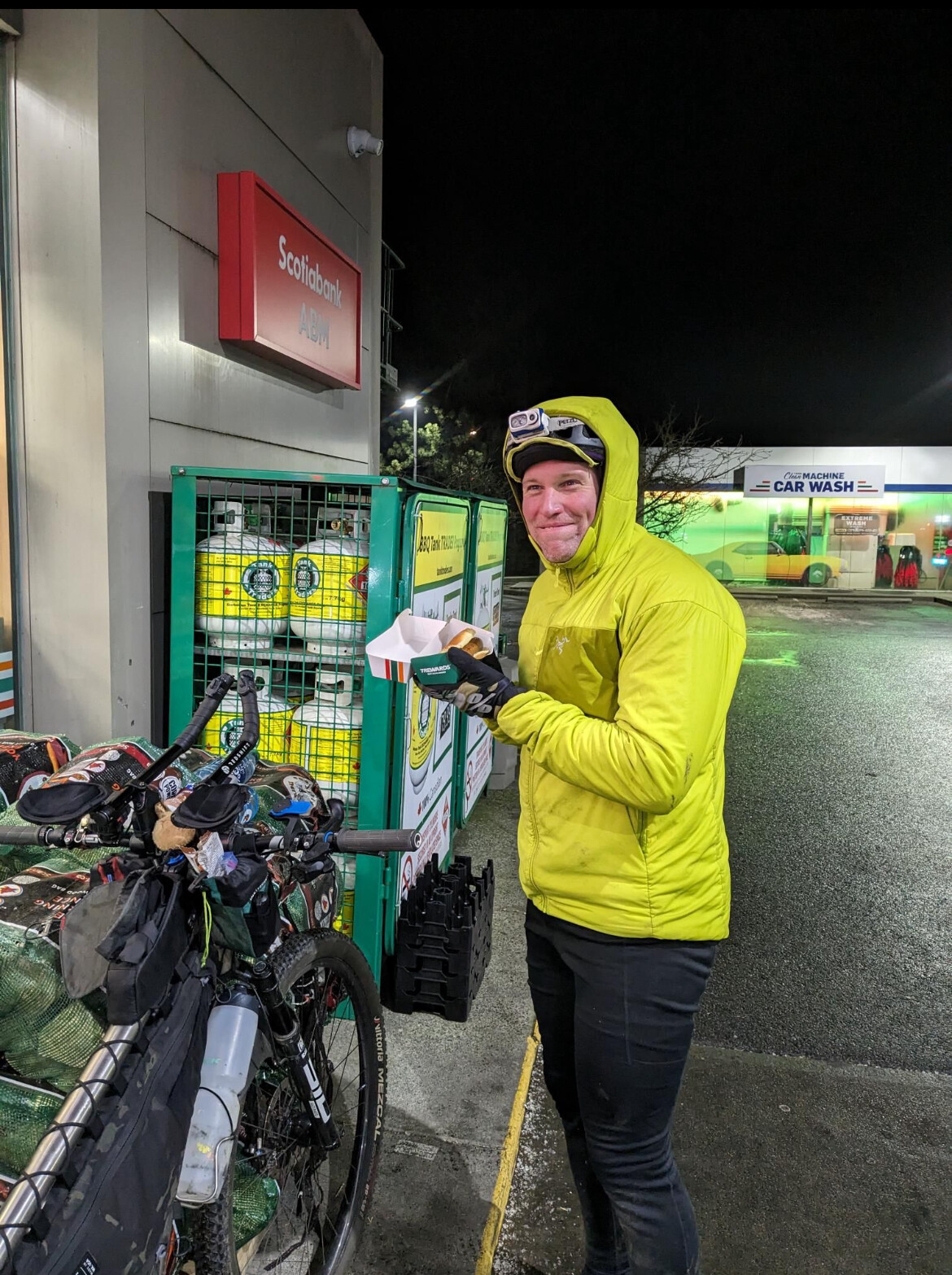
Below are some examples of my resupplies on the divide and during training:

6 Likes