Even more confusing to me has been that in running “tempo” is basically threshold or MLSS. I’m still wondering how cycling adopted tempo as the intensity below threshold.
Steve seems to be using NIRS (Moxy, etc) these days for intensity control. I’m still fascinated and want a NIRS device but I’ve been too cheap to spend $900 on one.
BTW, Steven Henderson mentioned NIRS two or three times in the last FastTalk podcast. They should have had Steve on that episode.
Being a former serious runner I was tempted to make a little side comment to the effect: “ask three runners what tempo run means and you’ll get six different answers”. Definitely an overloaded term in endurance sports. And yeah, in running it’s more like threshold….in the usual hand wavey kind of way: what do YOU mean by threshold blah blah blah hahahaha.
I think you mean Neal (last name is first name and first name is last name) lol Neal Henderson. And yeah, he seems pretty bullish on NIRS. Cheaper muscle ox and continuous lactate would be a logical next step. Cool stuff.
These are all valid thoughts, but the whole “talk test” thing is a different thing.
As you kind of hint at, there’s not really a great description/definition of what it is. I do think it has value though if people can use it.
I’d like to pick up a lactate meter, but the costs don’t make sense. I’m able to use RPE, HR, Power, and breathing/talk to work out pretty well where my limits are.
Moxy seems to be gaining some traction finally. Andri Feldmann is doing a ton of research with the device, too.
I was eyeballing the device for a few years before I bought a 3-pack. They’re fun to play with and pretty easy to use. It’s a shame there aren’t more places you can rent one. I’ve considered renting mine out since I know I would have liked to “try before I buy” when I was researching them.
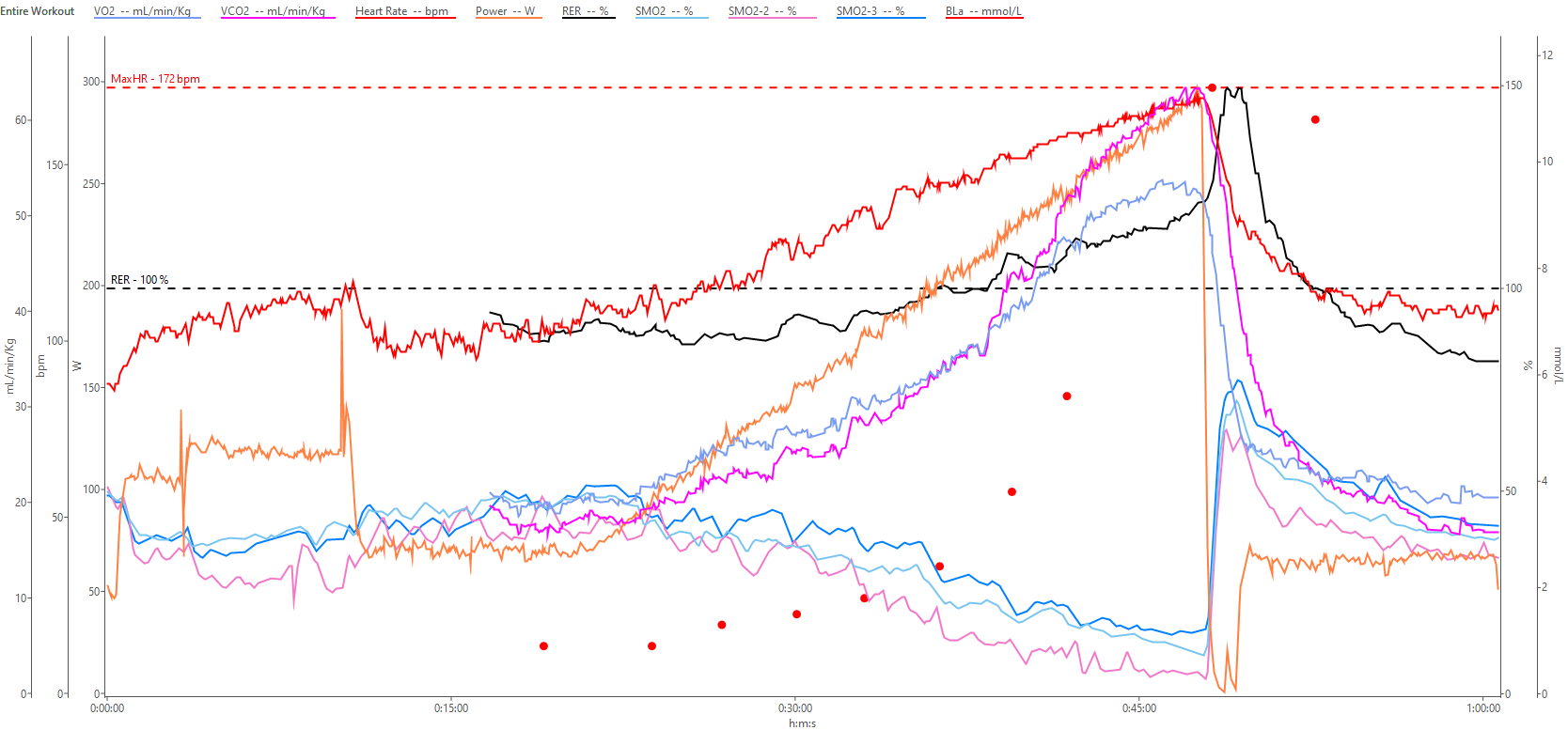
Here’s an example chart from a ramp I did in February. It’s pretty busy, but gives you an idea of what you get. I was lazy and put the Moxy’s all on working muscles. It’s better in my opinion if you put one or more Moxy’s on non-working muscles so you can see oxygen desaturation from you body farther away from the working muscles.
So this is me reaching a lot, but it’s Saturday night on the internet so why not: all of those guys have athletes at varying levels. Using NIRS regularly these days is cost prohibitive, as you say. But not for pros and near pros who aren’t paying for it. Neal has more pros than the other guys on the podcast. No doubt wahoo has some devices laying around as well. And who knows, behind the scenes I wouldn’t be surprised if he was chummy with a NIRS device maker.
My point is just that he is likely the guy within that group who has been dorking around with it the most and ALSO has more of an interest in touting it. The guy who has been using it a bunch that I would love to hear is Steve. I think that would be a good podcast.
Thanks all for the summaries. So then am I correct in thinking that tempo is zone 3 in a 7 zone model? For instance this
3 Tempo / Sweetspot 84-94% 76-90% 20 mins to 1 hour
Zone three – tempo / sweetspot
Heart rate (% of threshold HR) – 84 to 94%
Power (% of threshold power) – 76 to 90%
Typical duration – 20 minutes to one hour
Breathing is getting sharper now with more concentration required to maintain the effort. It’s harder to talk and starting to feel uncomfortable.
Consecutive days of zone three training are possible but fuelling is important, especially if you are doing back-to-back days. The duration of zone three blocks depends on the intensity and experience of the rider. The lower end of zone three is known as [tempo]
So, has Iñigo commented on the fact that one of his own collaborators showed that “raising blood lactate to 3.5-4mM neither suppresses lipolysis nor increases overall carbohydrate oxidation during exercise in humans”? Thought him and the proponents of his theories would have at least a slight interest in that.
 Neal Henderson. And yeah, he seems pretty bullish on NIRS. Cheaper muscle ox and continuous lactate would be a logical next step. Cool stuff.