How to train for a DOUBLE century (200 mi or 320-350km) on one day?

You can find a lot of advice if you look into randonneuring websites and forums on google/Facebook. Much has been said and written.

I did a 400k last year in 14h moving time, 16.5 total time. The last 270k were solo, and it was all unsupported.

My usual season is a 100k ride to start the outdoor season, then do a 160k ride, then a 200k ride, all a week apart. From that point on do a 100-200k ride weekly, 100k on the week between 400+ or longer events, 200k on the week between anything less than 400s.

In your situation I would consider doing the 100, 160, 200, but then a couple of 200-250k rides 1-2wk apart. Then a rest week, then hit your double denture. This will build your base, let you fix fit issues, let you figure out nutrition, etc.

Just remember that going slowly on the bike, even really slow, is infinitely faster than being off the bike. If you feel tired, just go slow for a bit first rather than immediately stopping.

4 Likes

Best? Don’t know. After consistently riding outside for months (Oct-Dec), I added in some harder vo2 work 3-4 months ahead of time helped lift my FTP and that fitness was fully baked about 6 weeks ahead of my double. Did two ‘warm up’ fast-paced solo centuries in the 4 weeks ahead of the double. Ended up completing the ride (mostly solo) with a 0.67 IF so your FTP and IF will determine how long it takes to complete. Mine was 16.5 hours elapsed, 12.6 hours moving, 8500ft / 2600m climbing, and 202 miles / 325km.

More than half the time I was in the drops on an endurance bike, and that required a lot of core stability and upper back strength. Probably spent at least 6 months doing things like renegade rows and face pulls in order to prepare for a long day in the saddle.

I did a supported event with rest stops every 25-30 miles (40-48km). Beyond making fueling easy (7000 calories burned), it was important due to the mid May temps. Left at 5:11am and on the first third the temps rose from 52-80F / 11-27C. Then as typical around here, temps shot up fast and for the middle third of the ride it was hot at 90-102F / 32-39C. Then evening offered some relief on the last third of the ride at 86-73F / 30-23C. So hydration was really key. Finished at 9:40pm.

Finishing is really more about having the right mental attitude, assuming you can feed yourself and stay hydrated. Seriously, how many people do 100 miles / 161km and say “that was so great I’m going out right now and do another 161km” :rofl: I got foot cramps about 3/4 into the ride and that forced me to take an hour break in the late afternoon heat. Probably best anyways, I hate the heat and it was one of the first hot rides of the season.

Even though I had a power meter, I paced this on HR as I’ve done with most long days in the mountains. My all day pace target in the mountains is 135-142bpm (z2 / z3 depending on zone model), and on this ride I ended up (Coggan HR zones) at 64% z2 HR and 34% z3 HR.

Prepare for the unexpected. Early in the day I met some guys and we were trading pulls in a flat area with a light tailwind, making really good time doing 22-24mph just before sunrise. And then we started seeing people fixing flats, and I hit a large expansion joint and double flatted!

102F / 39C in the shade at mile 132, at the top of Resurrection Pass the last climb of the day:

Here are some old school training tips, from the California Triple Crown website: Training Tips
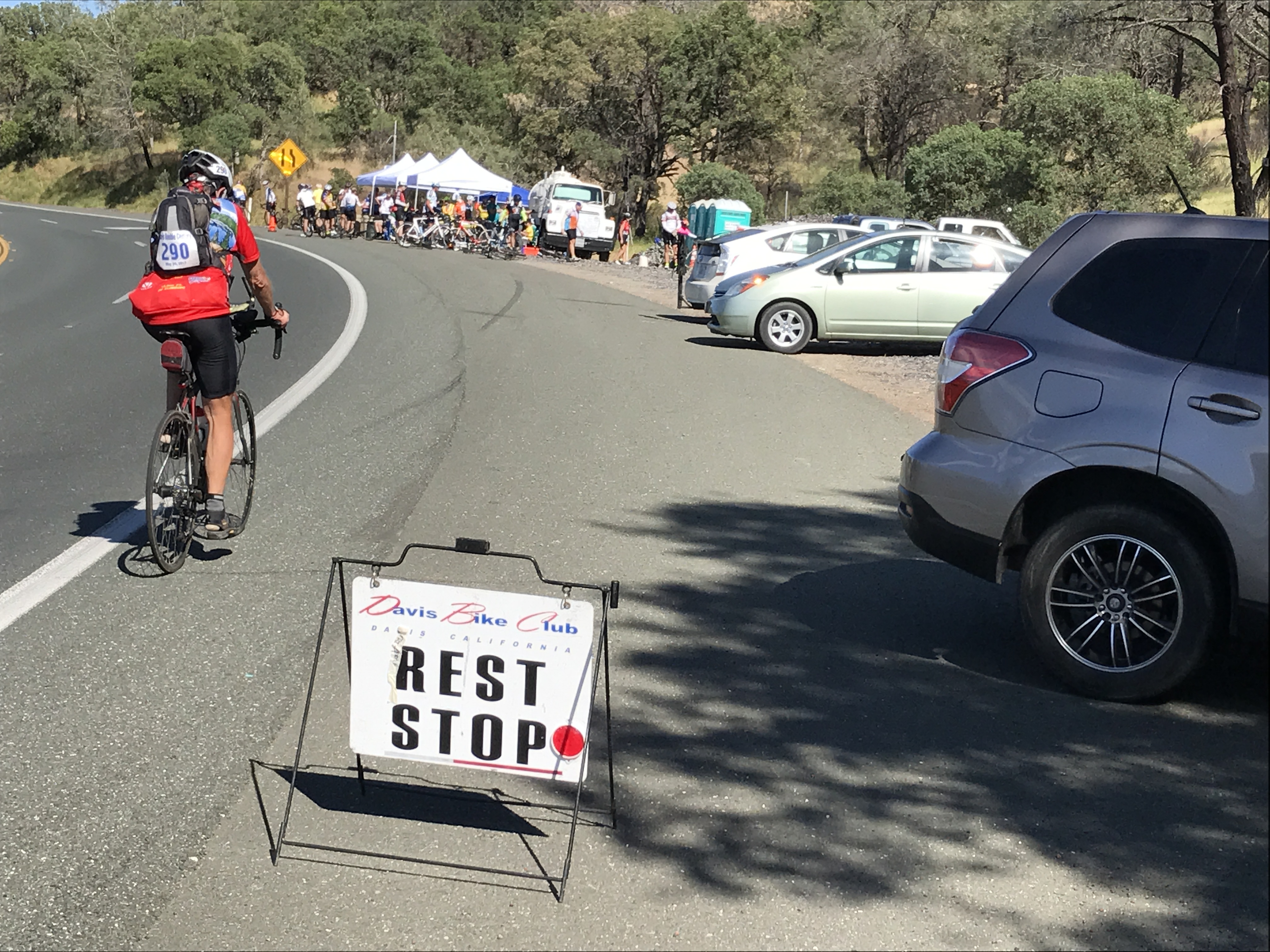
3 Likes

yeah sounds nice, but with covid i wouldnt recommend that :stuck_out_tongue_closed_eyes:

Bumping this thread for a refreshed perspective on planning for a double century.

I’m looking to attempt my first double (I’ve done a good number of regular centuries) in October.

How have others programmed your TR training plan? I’m on a LV build phase but I’m going to have to change it for this new event I’m putting on my calendar, and want to pivot my training to focus on the double. I’m thinking to make the event basically double the time and TSS of a recent century and then let TR create the plan. Any tweaks or phases I should focus on?

How would one integrate outdoor training (miles, etc.) with the plan? I suppose I could work backwards and drop some on my calendar. I’m wary of relying too heavily on indoor training rides but not sure how much outdoor training is too much for a double.

Thanks!

I would suggest including a century ride once a month ( so two more if it’s early October) just to remind/familiarise yourself with fuelling and body positioning. And keeping in mind you want to aim to finish these feelings reasonably ‘fresh’

If the weather is bad then I would suggest doing a long Zwift ride, there was club BMTR which does a long Saturday ride.

1 Like

If you plan to go through with your event no matter what, It might be be good to get used to bad weather as well:

  • it improves mental toughness. Goal is to not to care, or even learn to enjoy it little bit. For rides with no sleeping, I don’t bother with rain jacket anymore, always using only thin base layer with Castelli Perfetto vest. Of course, if your planned event is in October, you need to prepare better to preserve warmness as well
  • brings out weak spots in your gear. For example, I have two pairs of cycling shoes. One of them triggers hot spot under big toes when wet, other does not, etc etc
1 Like