My post was referring to the two guys on here who state TrainerRoad wouldn’t allow for a pyramidical training distribution. Something it does especially if you follow their recommendations and workout notes. So yeah, you are the one not distributing.
1 Like
I am not sure that is a fair assessment. Is age particularly relevant here? Isn’t experience and results more a predictor. He has degrees in exercise science. He also was a CTS coach for several years. More to the point, he has had massive success on the ultra endurance MTB circuit, for quite some time. I don’t think Dylan’s age is a fair factor to judge. The guy is legit. What if we apply the same criteria to the Chad, Nate, and Jonathan? Two of the degrees are in marketing and computers. Only one has coaching experience and any exercise science background, and unless I’m mistaken he hasn’t any pro riding experience. I’m not in anyway dismissing their credibility, just making the point that it’s not fair to undercut Dylan’s on the basis of age and a claim of lack of experience (since there is evidence of it).
11 Likes
I explained it on multiple occasions. Not my bad if you don’t read. Also, TrainerRoad isn’t recommending the high volume plans to anybody but very seasoned athletes. As per my anecdotal evidence their not so optimal plans work pretty well for many here (and me). I had linked to one of the post summarizing people’s gains.
A fair question - I would guess that he didn’t know beforehand but thought it was worth trying to stretch himself. That’s the reasoning I’ve used to try mid volume plans. Sometimes it’s worked, other times Ive struggled with it.
The learning for any TR user though is that there is no need to continue a plan you are struggling with. Start low. Switch down when you need to. This has been consistent messaging from them.
2 Likes
“Here’s a good-enough product, it’s up to you to make it better.”
No thanks.
Guess that’s the reason I stopped doing TR plans in the first place and got far better results designing my own via info from coaches who don’t have to adhere to a set training philosophy/modality in order to be commercially successful.
6 Likes
If you wanted to follow a Polarization approach would the easiest way be to just follow Traditional Base and either replace a Endurance with Threshold, or Just Add an extra Threshold workout each week?
That seems like it would get you pretty close to 80:20, yes/no?
Seems pretty easy to use TR to create a Polarization program. I’m going to give it a try as I haven’t started my Base training for 2021 yet and Past years I feel pretty burnt out after SSB. I never seem to make it thru the Build Phase.
I see no reason why TR shouldn’t/cant create a new Polarization Plan using their existing Library. Seems like all the tools are there, just have to put it together to offer us customers this option. I’m all for it.
3 Likes
Question, in the video Dylan says a polarized plan can provide results in as little as 6 hours. My current low volume plan is only 3.5 hours of training. The rest of my rides are occasional outdoor rides and weekend fun rides and group rides, plus juggling all this with work, kids and everything life throws at me and maybe even fit in a strength training session or two.
So if I went polarized I would have to basically double my time training to see results?
5 Likes
There must be a breaking point based on time you spend training. If I have 6 hours of training a week then that gives just over an hour of intensity if I stick to the 20%. I know I could manage and recover from much more than that over a training block. If training time increases and someone has 20 hours to train then 4 hours of intensity seems reasonable. What is the benefit of someone with limited hours rolling around at lower intensity when it isn’t as productive?
There must be a ceiling for how much intensity you can handle (I guess very individual) but I doubt for most people who are time poor they would hit this by following the 20% rule.
2 Likes
I find it ironic that DJ’s vid about bad Zwift plans from two years ago was what encouraged me to ditch Zwift and sign up to TrainerRoad. This time I think this video just muddies the waters more than anything else.
5 Likes

The End
7 Likes
His point is more that 6 hours polarized > 6 hours SS.
If that amount was reduced to 3.5 hours? Not sure.
1 Like
You could have left out the last sentence and still made your point. 
Bruce
3 Likes
Fascinating thread, more because of what it says about the dogmatic posts that have dominated throughout than because of anything I’ve learned about either Dylan Johnson or TrainerRoad.
A few observations based on my experience training (three-ish years with nearly 100% compliance on TR plans and base->build->specialty progressions followed by two years of self-designed plans)
The best ‘generic’ plan is going to be the plan that gets the best overall compliance
Generally, everyone agrees than adhering to a non-optimal plan will yield better results than failing to adhere to an optimal plan. I encourage everyone to keep this in mind when looking at any off the shelf plan (be it from Dylan, TrainerRoad, TrainingPeaks, or anywhere else). These plans are being designed to be a good plan that will work (meaning both in structure and in the possibility of being completed) for everyone
As such - the data that TrainerRoad likely has, is not necessarily showing them ‘optimal structure for the largest % of athletes’ but is instead more likely showing ‘optimal structure that can be followed for the largest % of athletes’. The difference here is small, but important. This means some people are being burned out by them, but that others are motivated to come back and crush themselves 2-4x a week.
Repeating the same basic training structure will eventually lead to plateaus in fitness
Periodization if encouraged in many places by TrainerRoad and others, as is variation. They regularly advocate for not repeating the same stimulus and say even if you aren’t planning on an A event you should still complete specialization, take a break, and restart base - as opposed to repeating base over and over again.
The, somewhat, logical next step on all of this would be to recognize that many of the TrainerRoad plans provide very similar stimulus (from a zone distribution perspective), and that moving away from them periodically is a good idea to provide a change of pace for your body.
There are a ton of extremely vehement opponents and proponents of TrainerRoad plans on this forum
I feel like a ton of people in this thread would benefit from taking a step back from their personal feelings about the plans (either pro or con) and considering that different things work for different people. It makes a ton of sense to debate the different training methodologies, and I love participating in those debates, but a lot of the claims and positions being taken in this thread seem to take all of this as a black and white issue - it isn’t, and recognizing that might help quite a bit.
My personal opinion? Two days of intensity a week is plenty, four days of 55-60% of FTP helps a ton, pyramidal distribution works best for me, and I love the process of training nearly as much as the events I am training for.
Keep in mind that both TrainerRoad and Dylan Johnson are representing their financial interests with their plans - they are advocating for what they think will work for their athletes because it is in their financial interest to do so. They are not attempting to destroy people’s fitness and burn them out, they want them to improve, and perhaps more importantly, they want them to keep paying them money for future services.
Debate Sweet Spot vs Polarized vs Pyramdal - but don’t blindly defend Dylan or TrainerRoad default plans
Personally, I don’t see myself stopping my TrainerRoad subscription because I value and get great ROI from the non-plan based functionality. For me the plans were what got me onboard, but the app and other functionality are what keeps me as a paying customer.
65 Likes
To the point of why TR offers no Polarized plan…why do they offer a TB/SSBHV/anyHV plan if they only recc those to 1% of their users?
That’s A LOT of dead baggage to carry around.
2 Likes
Yeah, I don’t have a dog in the fight—but Johnson’s one of maybe three Americans who look capable of wresting the crown from Jeremiah Bishop’s head. Not well-known among the West Coast criterium, triathlon, or XCO crowd, but he’s the real deal.
Having said that, there’s very little that has less relevance to the great majority of TR users than “what the pros do” unless you’re interested in cosplay. Like 99.99% of TR users I want to know how to optimize a mediocre physiology within extreme time constraints. Any resemblance to a pro training regimen is going to be purely coincidental.
7 Likes
We’ve had 5 users join the forum just to post defence of the YouTuber and 8 users post after months/years of silence - so kudos for enriching the forum! 
Edit - 9 users back from silence.
8 Likes
Fair enough. That’s what I’m trying to figure out. Granted, on my week off from work I rode every day. Most of it was mostly easy low-intensity riding, on a normal week that might not happen. So I’m seriously curious what Dylan would prescribe for the time-crunched folks who aren’t racing but are just trying to improve performance in general.

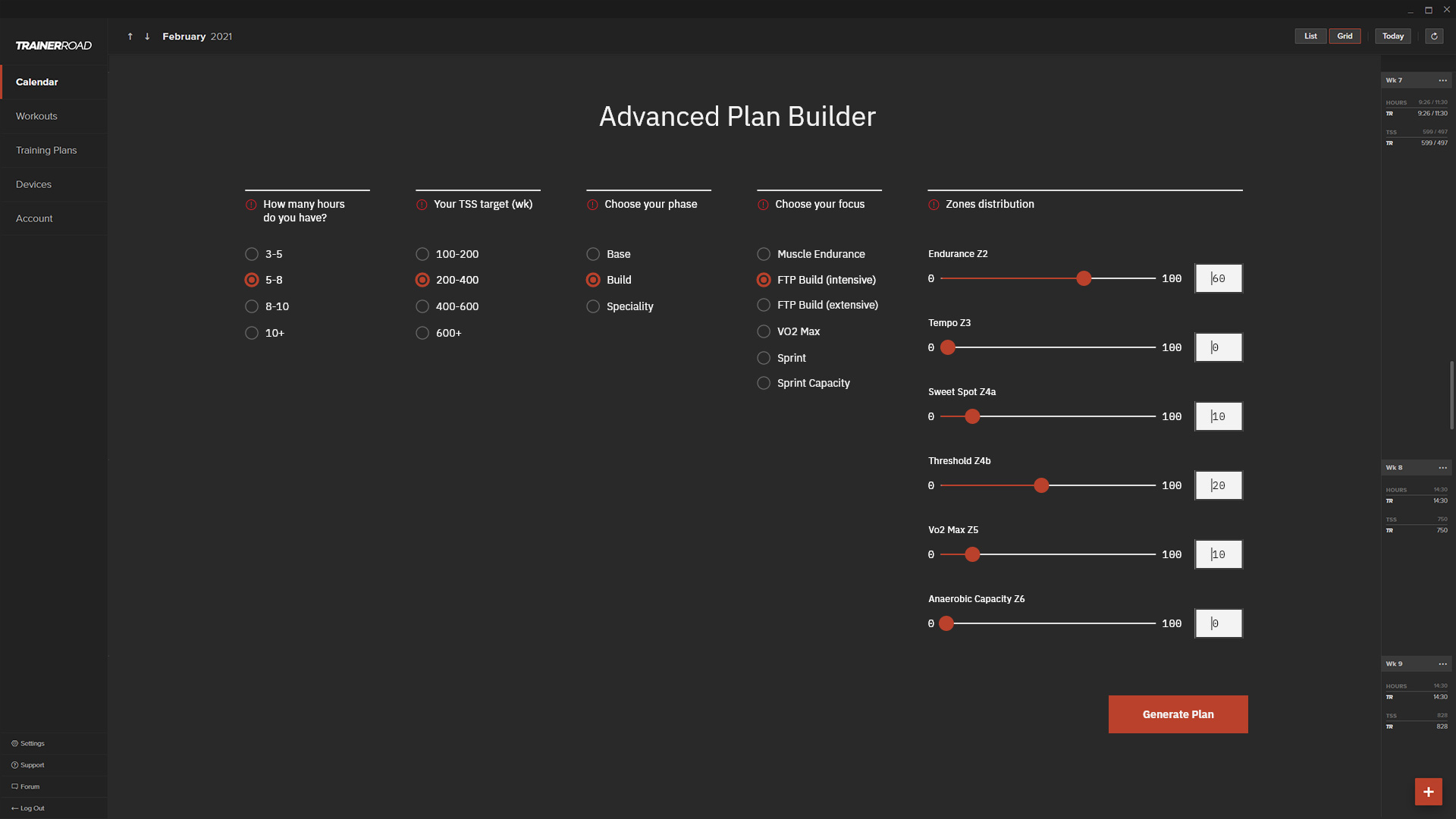
Well they don’t without customizing their workouts, that’s the whole point.
That’s what you got out of that, that I was basing my justification on his age alone. I inserted age only as an indicator that he hasn’t had a lot of time to gain said experience. I’ve been at my job for over 18 years and what I believed to be truth even 10 years ago looks a lot more grey then black and white. Look into DJ’s experience as a coach and his own admissions during interviews.