Good to start with my FAQ if you haven’t seen it:
Thank you @mcneese.chad !!!
1 Like
I’m experimenting a bit fit my fit, I have lowered the saddle 15mm as it was too high. This feels “good in the saddle” but is it too low


Sure looks a bit low to me from quick look and CAD angle swag.
What made you feel the saddle was too high before the 15mm drop?
1 Like
I have developed a 60:40 leg imbalance and I always felt a lot of pressure on my right sit bone occasionally getting sores there too
I raised the saddle 1cm (so 5mm lower than the original position) do my hips rock too much?
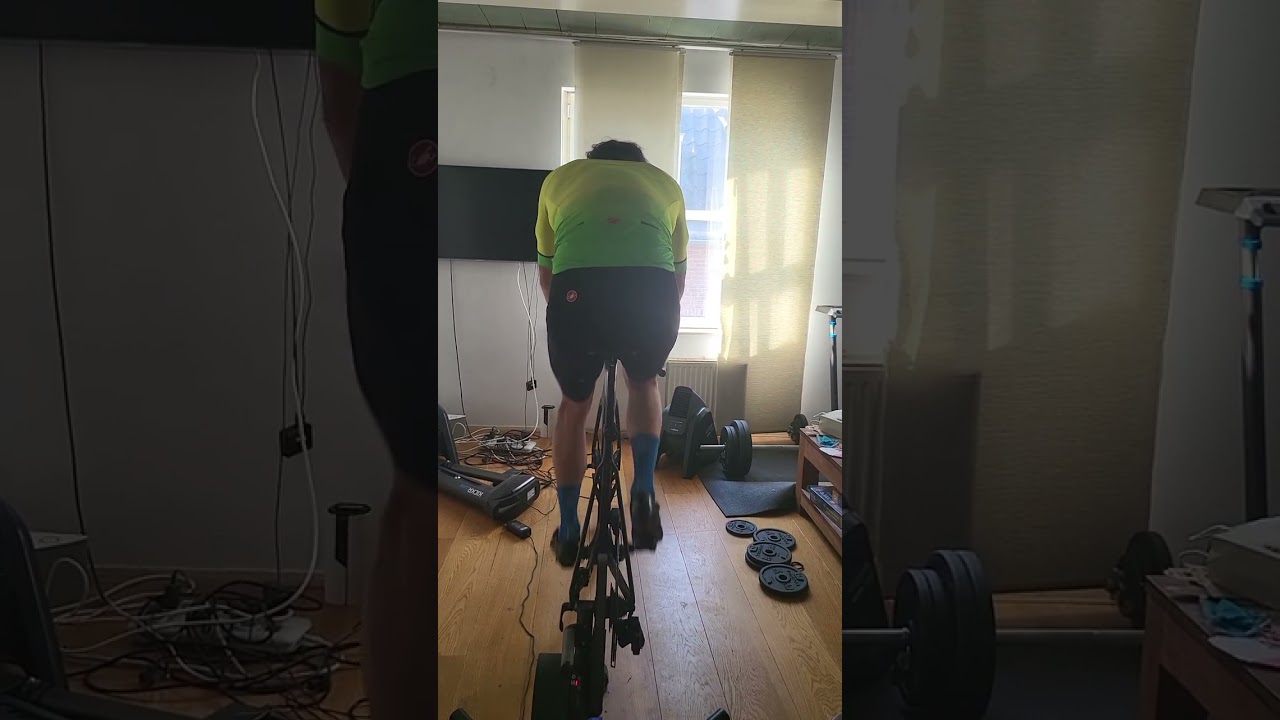

Hard to say from just a few short clips, but the height still looks low-ish to me. I don’t see “hip rocking” sideways lean, as much as what seems more like “hip bouncing” up & down. Not sure if you have any load on the trainer or are spinning a very light gear, but that can sometimes show with more “action” than a decent pedal load.
With these changes, and in light of your 60/40 comment above, are you checking to see how that split is changing along with the different heights?
1 Like
Agreed.
2 Likes

That definitely looks (and measures better on CAD) from what I see, at least within basic saddle height guidelines. As always, there can be reasons to deviate from that guidance, but we don’t have enough info to know one way or the other in this case.
1 Like
When switching to a new saddle that’s a little shorter in length is there a good way to determine the correct fore-aft position. I assume it’s not as simple as just placing the nose setback distance from bottom bracket same as old saddle
Yeah, nose measurements can be flawed particularly when swapping from “normal” length saddles to “shorties”.
- When practical, I’d suggest measuring the Fore-Aft placement (horizontal distance rearward behind the bottom bracket) to the widest part of the current saddle.
- Swap saddles and set the initial point of the new one at that same Fore-Aft to the widest point.

This is also subject to variability since this is not a concrete point with respect to where you may actually land on the saddle. But it should be a decent starting point at least, that you can then adjust fore-aft as needed once you ride the bike a bit and evaluate your actual position with the new saddle in place.
1 Like
Great. Very helpful.
1 Like
Please excuse my beginner question: I developed hot spots in my cycling shoes. It doesn’t hurt, but it’s uncomfortable.
How do you find/found your fitting cycling shoes? Try out in a cycling shop and buy the best fitting one? I mean it takes some longer rides to find out if a shoes works out, doesn’t it?
No different than buying any cycling product, we don’t usually get to do fully fledged tests before buying them. Many brands offer 30-day return options if a product doesn’t work well or meet expectations, so I’d suggest checking that option for any products you review. Outside of that, you just have to do your best when slipping shoes on in the store. Use your prior experience as a short judgement.
Beyond the issue of having acceptable shoes, you need to consider cleat placement, insoles / footbeds, and wedges as possible options for fine tuning your setup in any shoe. These are seemingly minor details, but any one of them may be the key to making even the right shoe setup acceptable or problematic. These are often the things that are covered in a fitting process and really need a trained and practiced eye to diagnose and adjust for best setup.
1 Like
Hi Chad 
Yes, in my last fitting (1.5 years ago) the fitter looked at these things and I got insoles. It made things better as far as I remember. But now either I’m getting more sensitive or I developed new hot spots. 
The thing with the return policy is: Putting cleats on shoes will make notches and the shoes won’t be “new” anymore. It surely depends on the policy. But I thought there is an alternative way.
Thanks for the reply
- None that I know. Some shops offer things like “demo saddles” but I have never heard of anything like that for shoes. Just not the same when it comes to use and number of options that would require.
1 Like
@mcneese.chad
When you see someone on a mountain bike that wants to bring their hands in closer to the stem, do you think that is an indication of something else?
Reach too long, or is it just the natural location that the hands are migrating to?
My bars on 740, but when I ride, I’m always coming in closer. When I measured the location I end up, it’s a narrow bar, 680 at the most.
Hump
Sure could be a sign that bars are wider than needed. Always depends on when and why someone moves inwards.
-
There can be short times for climbs, extended flats and such to get a different position for the wrist or get a more upright back angle (due to narrower arm spread) as two quick examples. These might be fine and not a reason to go narrower.
-
If someone is going narrow in actual tech riding up and down, especially if that is for some form of comfort (better arm, wrist and/or neck angle) then. Others might light narrower to have more control vs a wider reach that could be a tad too much for them. Either of those could mean narrower might make sense.
Along with bar width, stem length may be worth consideration. Some may be fine with the bar width if they tweak stem length. So there’s more than one possible way to deal with possible fit or control issues.
With the advent of so many thru-hole grips and clamps, it can be possible to get the controls narrow while leaving the bar full width. Just for testing initially and to dial in a final width before making any cuts. Just have to watch that excess if you ride on trails with narrow trees and rocks 
I hear you on the trees. We have those tight trails on the East Coast.
I’ve got another bar that’s exactly like the one on the bike. Could just cut one down just to see.
Hump
Yeah, we have some tight spots that keep a few riders from using wider bars. A bit like some other trends, I think the WIDE bar trend sort of overstepped and is not the right answer for everyone.
I am glad the days of 600mm and narrower bars are done, but we sure don’t need everyone on 750mm+ bars. Much is personal preference along with area of use like you mention. But it’s a “fit” aspect that often gets missed, so I think it’s great that you are considering what may be best for your needs. 
1 Like