Awesome stuff! Thanks for sharing all the info, details and your experience. Great job 
Thanks for posting this! I’m not on Facebook, so I can’t join the group there and feel a bit starved for ideas :-).
2 Likes
Seeing this thread reminded me to update my progress with standing technique mentioned previously.
I was finally able to get this working by not staring at my front wheel  and just kind of keep my gaze out in front. I think dropping the PSI on the balls helped too because it helped keep my cadence nice and relaxed.
Anyway, feels much better than back in December. 
1 Like
Awesome!!! Glad you are set now, and thanks for the update. Happy rocking!
1 Like
@mcneese.chad I think it very cool how you have built such great interest and creativity in this area of Rocker Plates! I would bet that the aggregate is substantially better than what a corporate engineering department could do on its own. They’d be well served to read the posts here and on FB.
Personally, I’m looking forward to when the weather turns warm to review the ideas in detail and come up with my own extracted from the ideas you have spawned. Why when the weather is warm you ask? That’s when I fill my driveway with my power tools and the neighbors come by to watch me having fun 
3 Likes
Glad to be a spark in the evolution of these great products. I am excited to see where they go over the next few years. And I am curious to see what you come up with as well
1 Like
Reach out if I can help with anything.
M.
1 Like
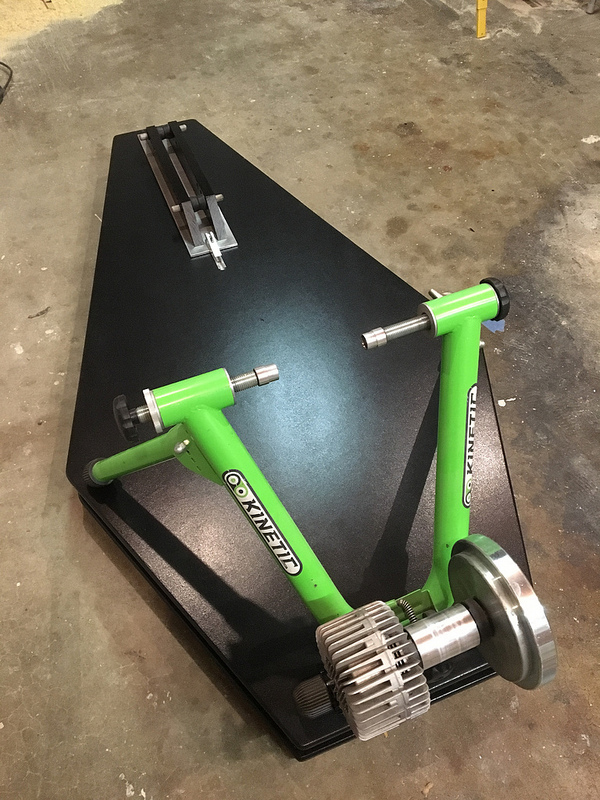
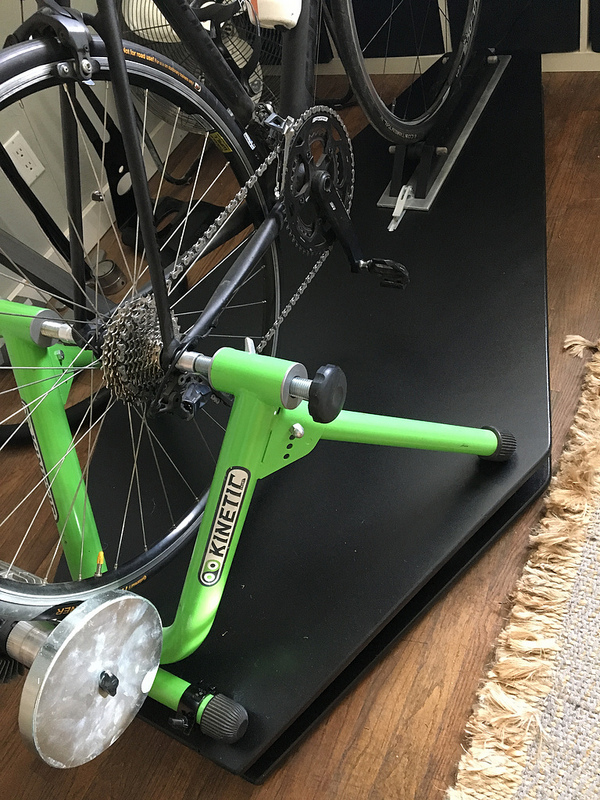
I found the idea of a rocker plate pretty compelling, and decided to give it a go. I’ve been on mine for about a month and a half now. With this winter having been pretty rough on us, since December 1st I’ve logged only 4 outdoor rides to my 53 indoor rides. This has made that stat much more enjoyable and comfortable, without question.
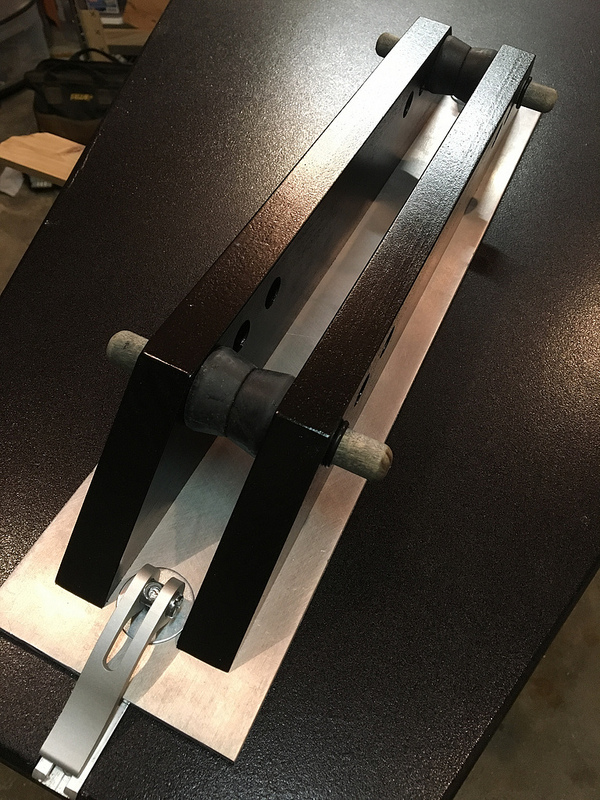
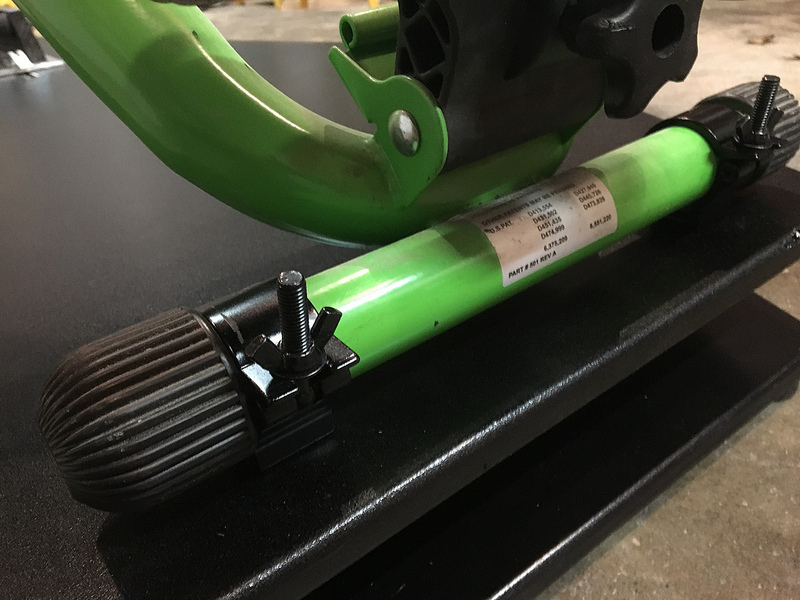
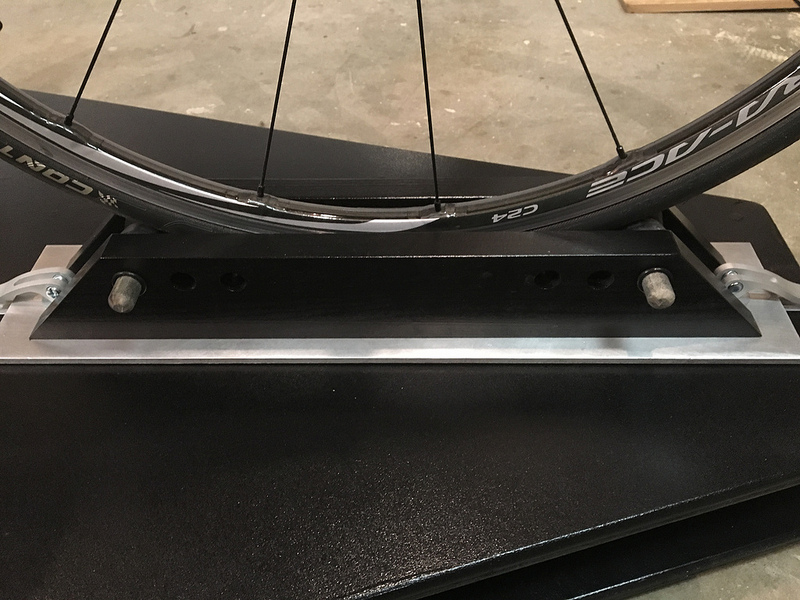
My design is pretty standard aside from a few bits that I thought through. The clamps for the trainer are quick release stage rigging, and are the sleekest hold down method I’ve seen yet. I also made my own front wheel block. It’s adjustable fore and aft for different wheelbase length via a T-track and quick cam toggles. And the height is adjustable by moving the pegs closer together. The range of the front wheel is adjustable from level to about 2.5" elevated.
I coated the top board in brush on bed liner, and thus far it’s held up great to cleats and sweat. I used 8 large rubber feet under the bottom board to absorb some of the vibration from the trainer and it’s definitely quieted down the whole system.
The whole setup weight about 50lbs without the trainer mounted, so not terribly bulky to move and store out of the way, although I’ve just left it setup as the footprint isn’t much larger than the trainer and bike itself.


4 Likes
Great looking build! What are the clamps you used? I haven’t seen those particular ones.
So glad to hear that you like it so well. Happy rocking.
For the Trainer hold-down it’s these truss clamps…
1 Like
@Juarez did you build v2 design? As a 95kg rider, wondering what you thought of the full bottom plate versus v2 design.
1 Like
I scrolled back through the chain but couldn’t find anything.
Do you think the rocker plates create more friction that wears on the bike’s rear dropout where it connect to the trainer? Or maybe it’s less with a plate…
I don’t think “friction” is an issue at all.
If you mean “stress” (as in the structural loading on the tubes and joints that comprise the bike frame) then I have strong opinions.
-
When a bike is locked into a rigid trainer, it is essentially transferring any side loading directly into the frame. So, if there is any shift from the rider, it is forced directly into the frame and can be much higher loading that what we see on the road.
-
I can’t prove yet, but firmly believe that the maximum stress applied to a frame mounted in a rocker plate will be lower than that of a rigid trainer.
-
The increased degree of freedom in the Roll-Axis will allow the rider to actively control and “ride” the bike much more like outside. It reduces the peak force and stress applied to the frame when compared to a rigid setup. It may be a bit more than we see when the bike is outside, but it will be far lower than a rigid setup.
4 Likes
Thank you!
1 Like
The new BKool Air Trainer claims 6 degrees of side to side.
BKool at CyclingWeekly.com
Yup. It’s good to see more motion added to trainers, but I dislike the apparent method of motion control.
- It is effectively a triangle connection to the ground, and it lifts and pivots to one leg of the triangle.
- From what I have seen in the videos (and what I would predict via the geometry) it is a very “blocky” motion. It seems too stable in the vertical position and requires considerable force to roll it off-center.
- I may be wrong, but the riders I’ve seen on them make it look more awkward than what I would like to see in an optimized design.
- I welcome the new direction, but I don’t think that concept will lead to the best “feel” when compared to other designs.
bbarrera,
V2 completed last week.
I have completed 2 x V02 workouts on it.
Notes:
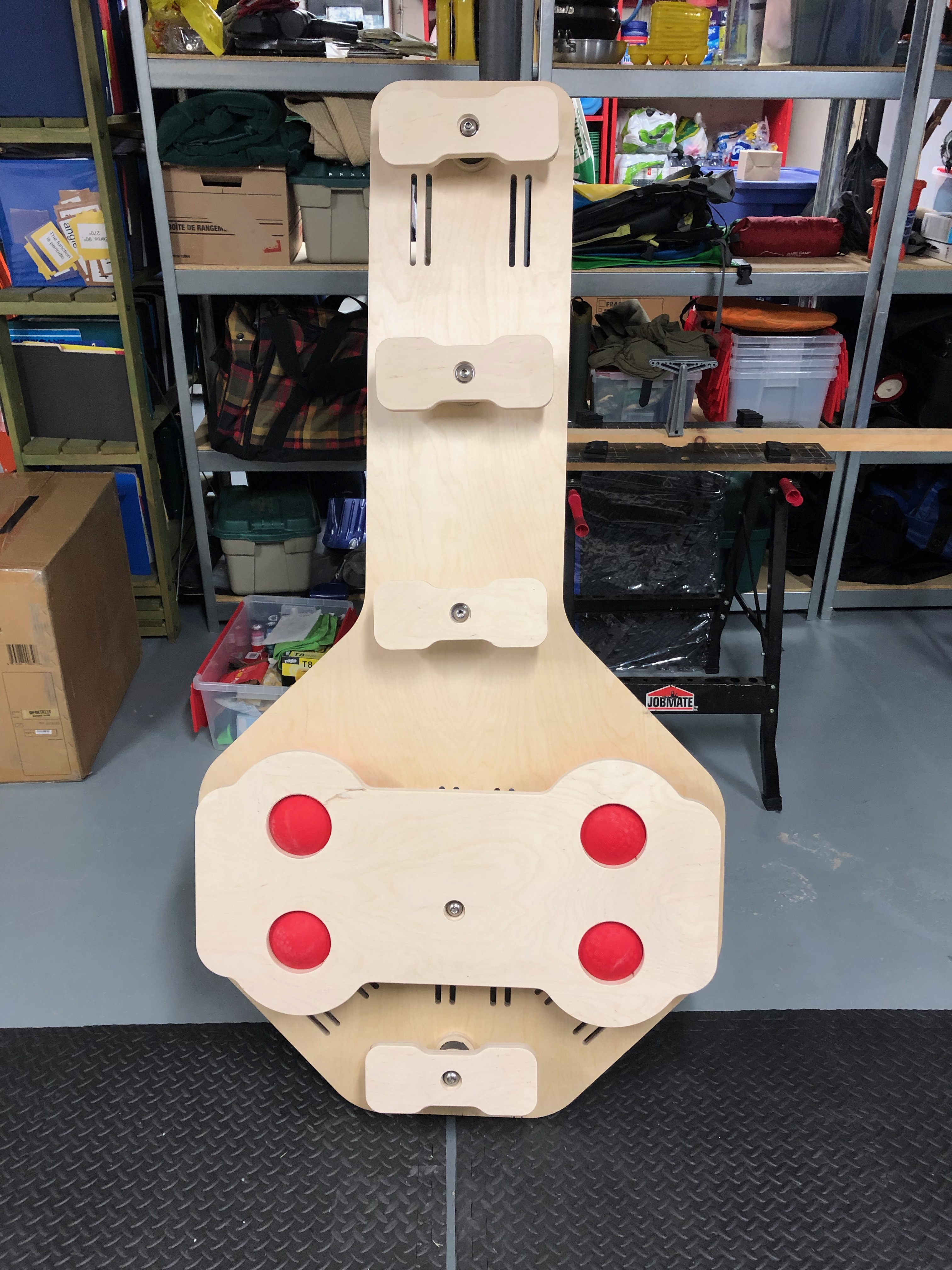
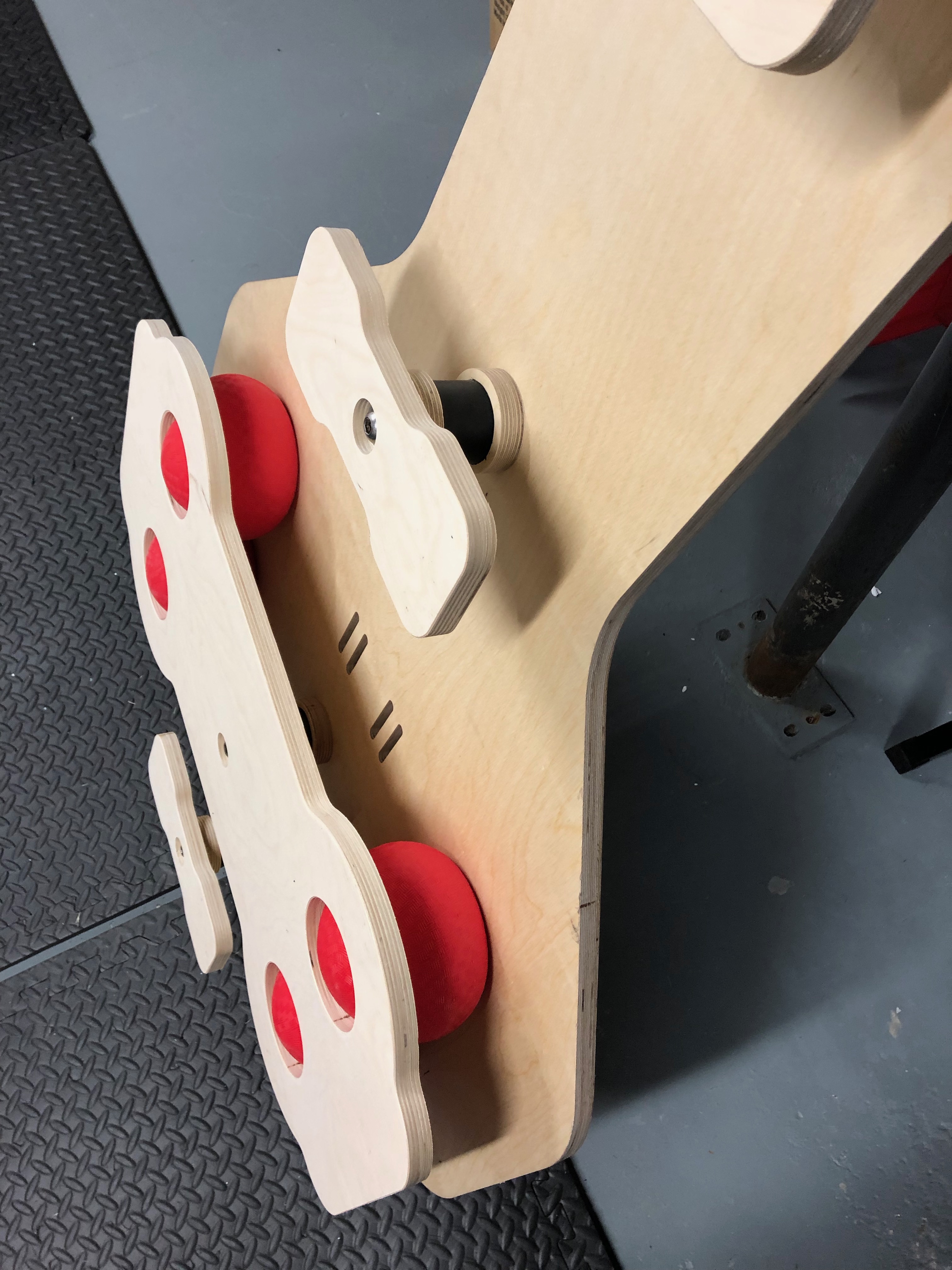
- The removal of the bottom plate makes the unit much lighter. When you add a trainer, the front end becomes slightly unweighted and is easy to shift around. At first, I was worried that the unit would be unstable in use.
- With a rider on the bike, the plate balance is restored, the front remains grounded, and it feels the same as the dual plate design when riding. No instability during my 2 hard sets. I was also worried that without the bottom plate, the side-to-side forces would not be transmitted to the front 2 dampers; this was not the case when loaded with a rider. With the rider in place, the feet essentially become “connected” via the floor. (In retrospect, the dampers at the back manage more of the load than those at the front)
- V2 tested with 4 x 5" balls at a 5-7psi + 10lbs counter weight feels good. I like my plate fairly stiff. The rocking motion is typically 1/2" - 1.5". Out of the sale still requires good balance between cadence and gearing.
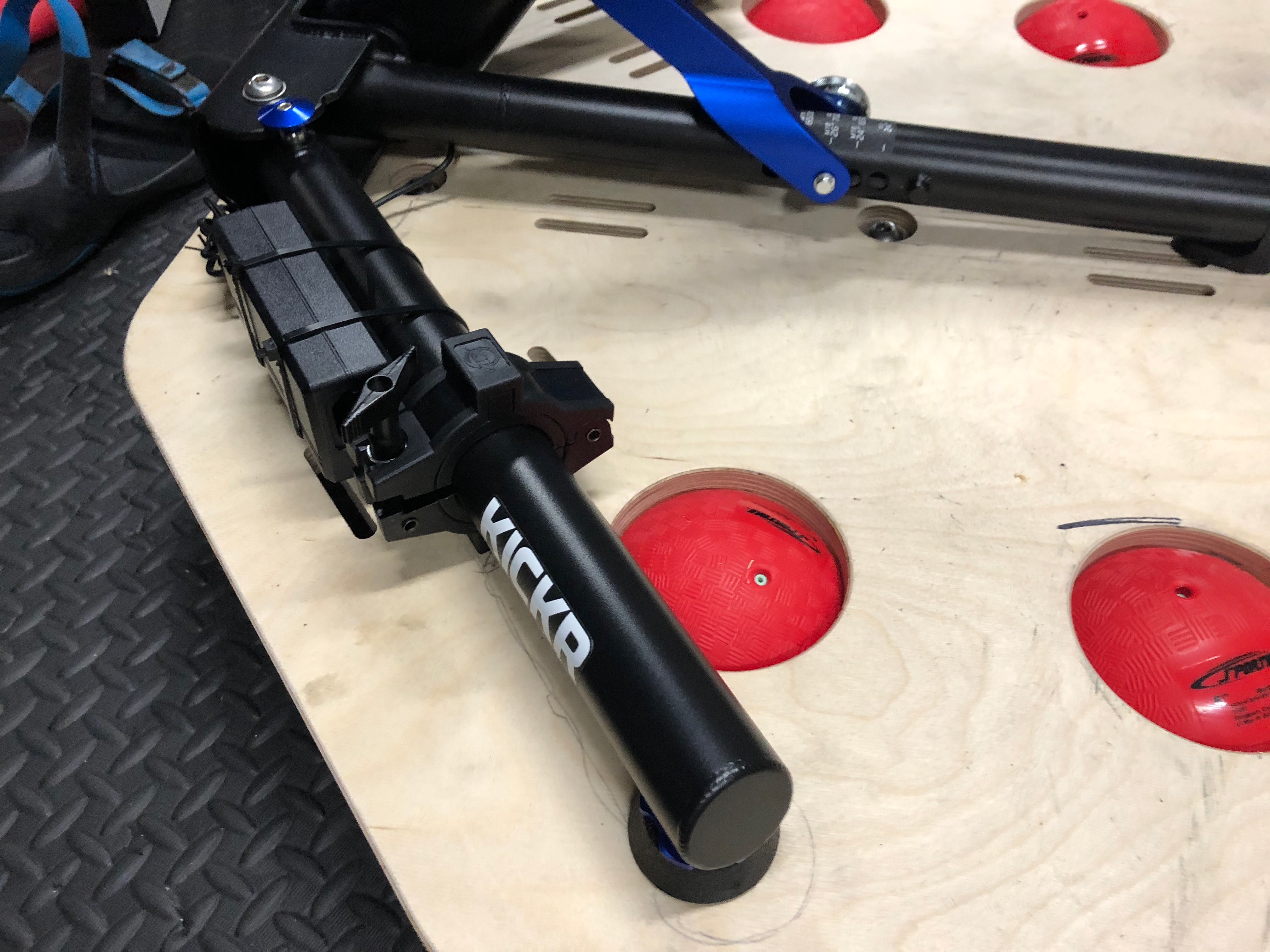
- I added 2 x AV Bar Clamps to the 2 side legs of the Kickr. These secure the unit perfectly and prevent any motion of the trainer + bike. (But the Velcro worked fine with a foam top sheet.)
Overall I’d say that eh V2 design works exactly the V1 design.
I sealed the plywood and cut the rubber top sheet today.

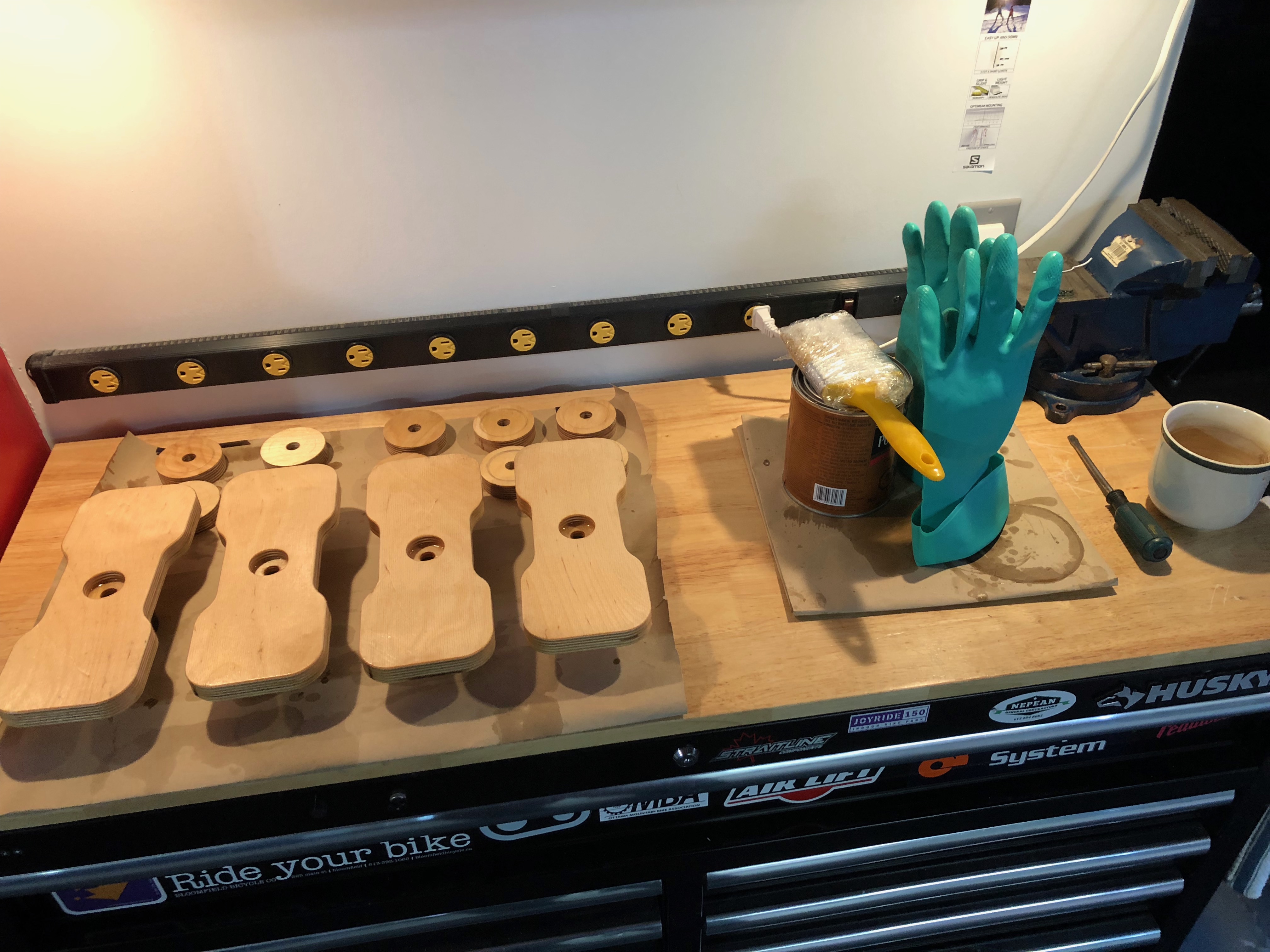
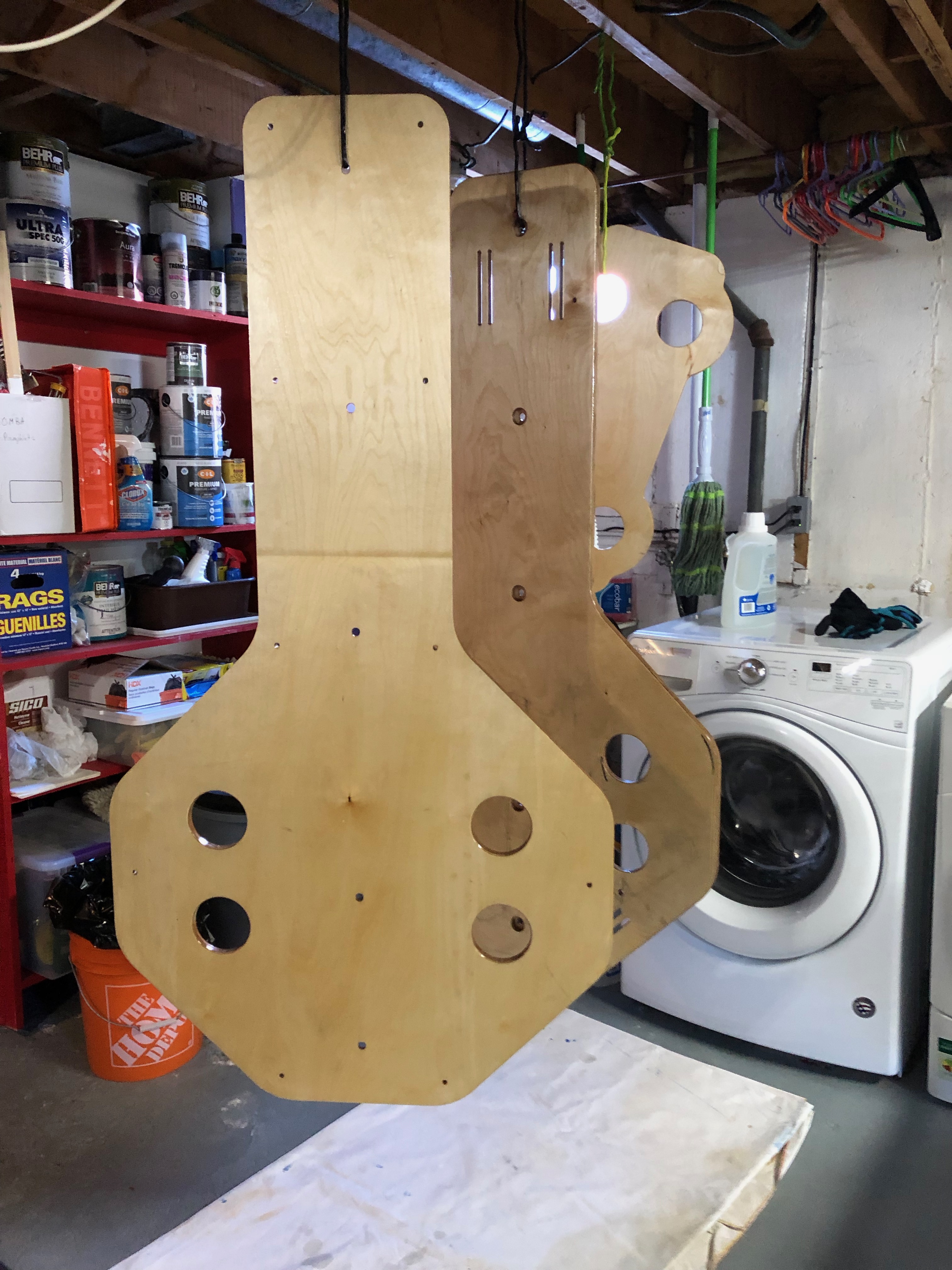
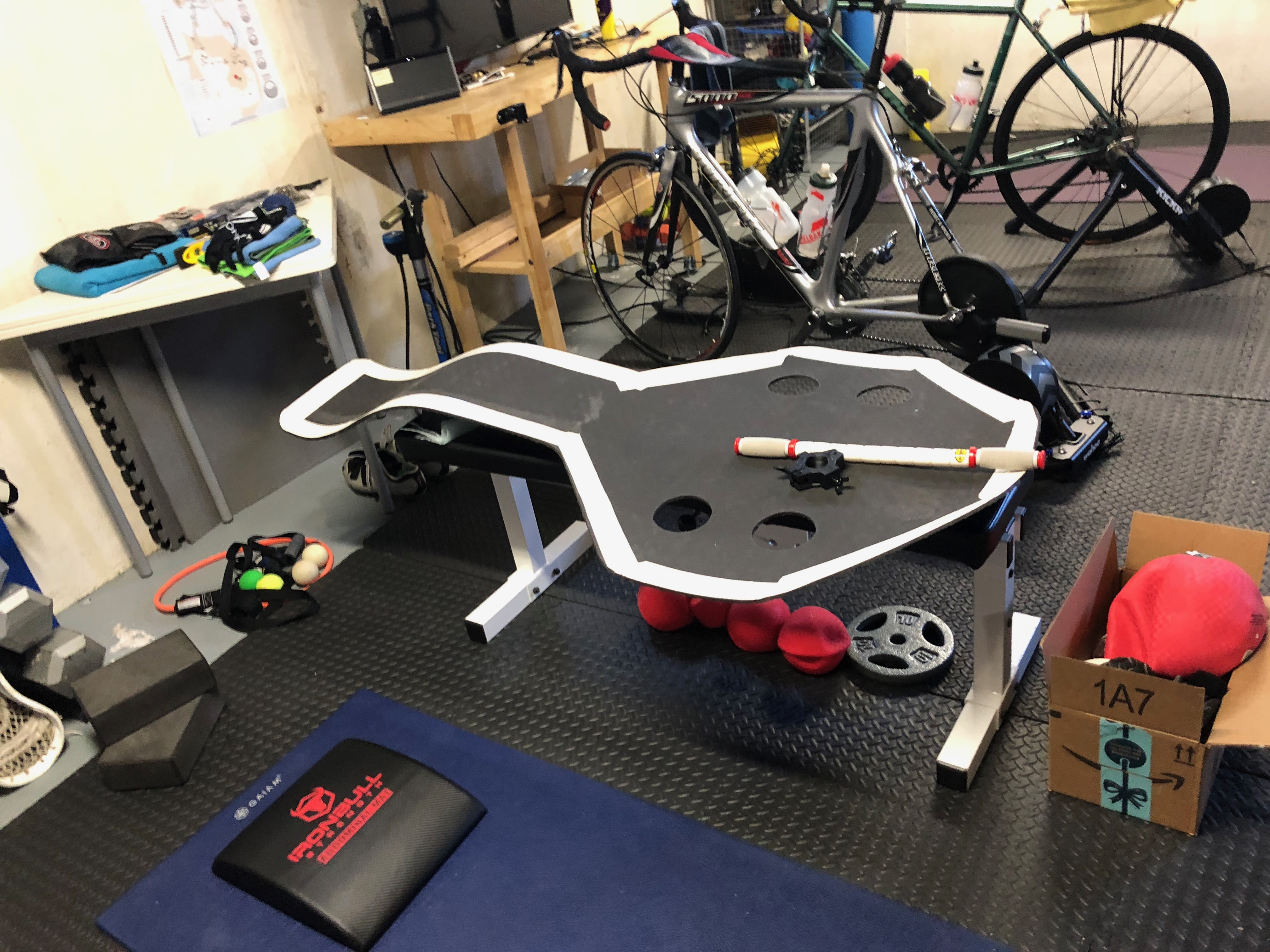
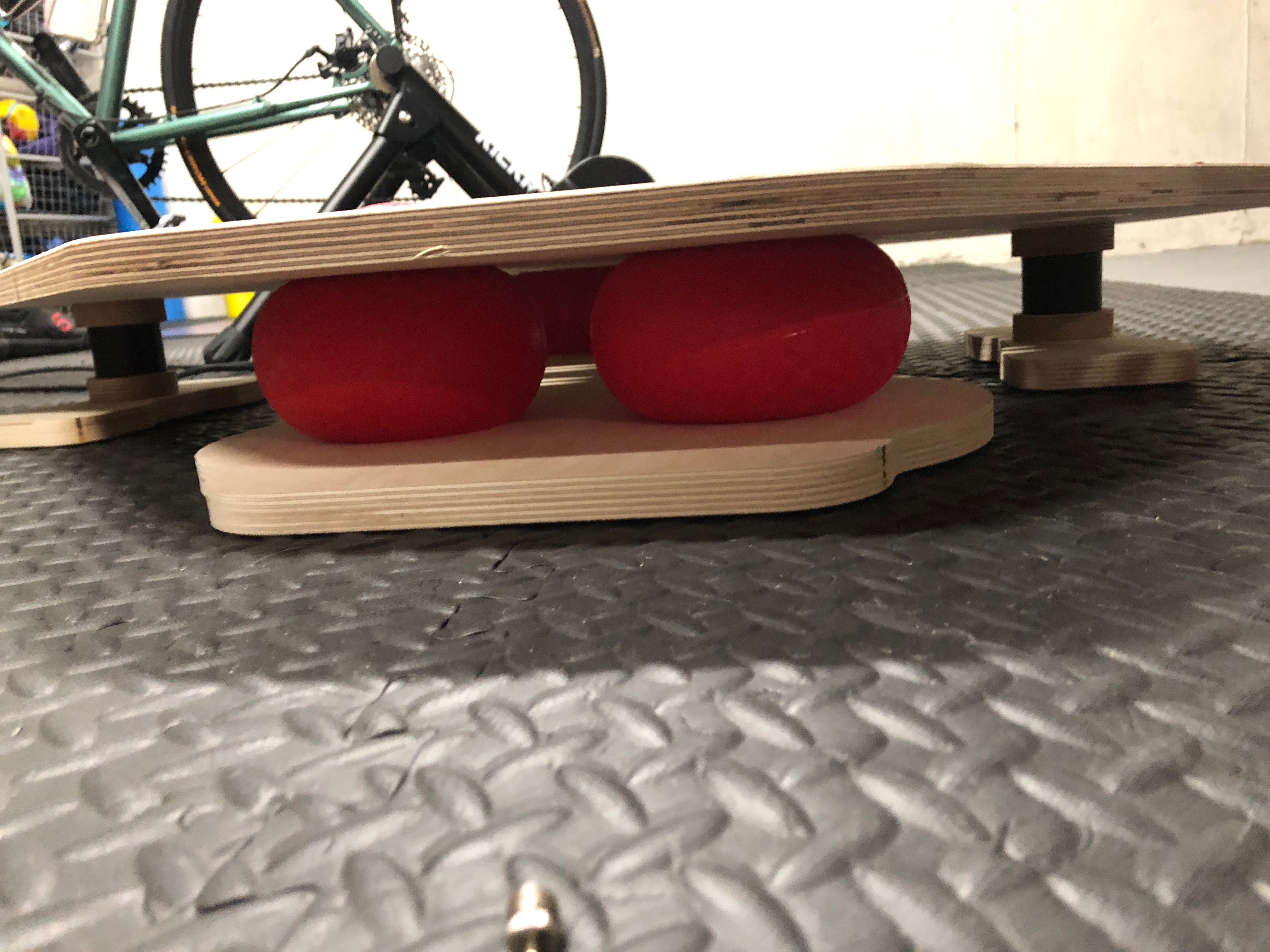
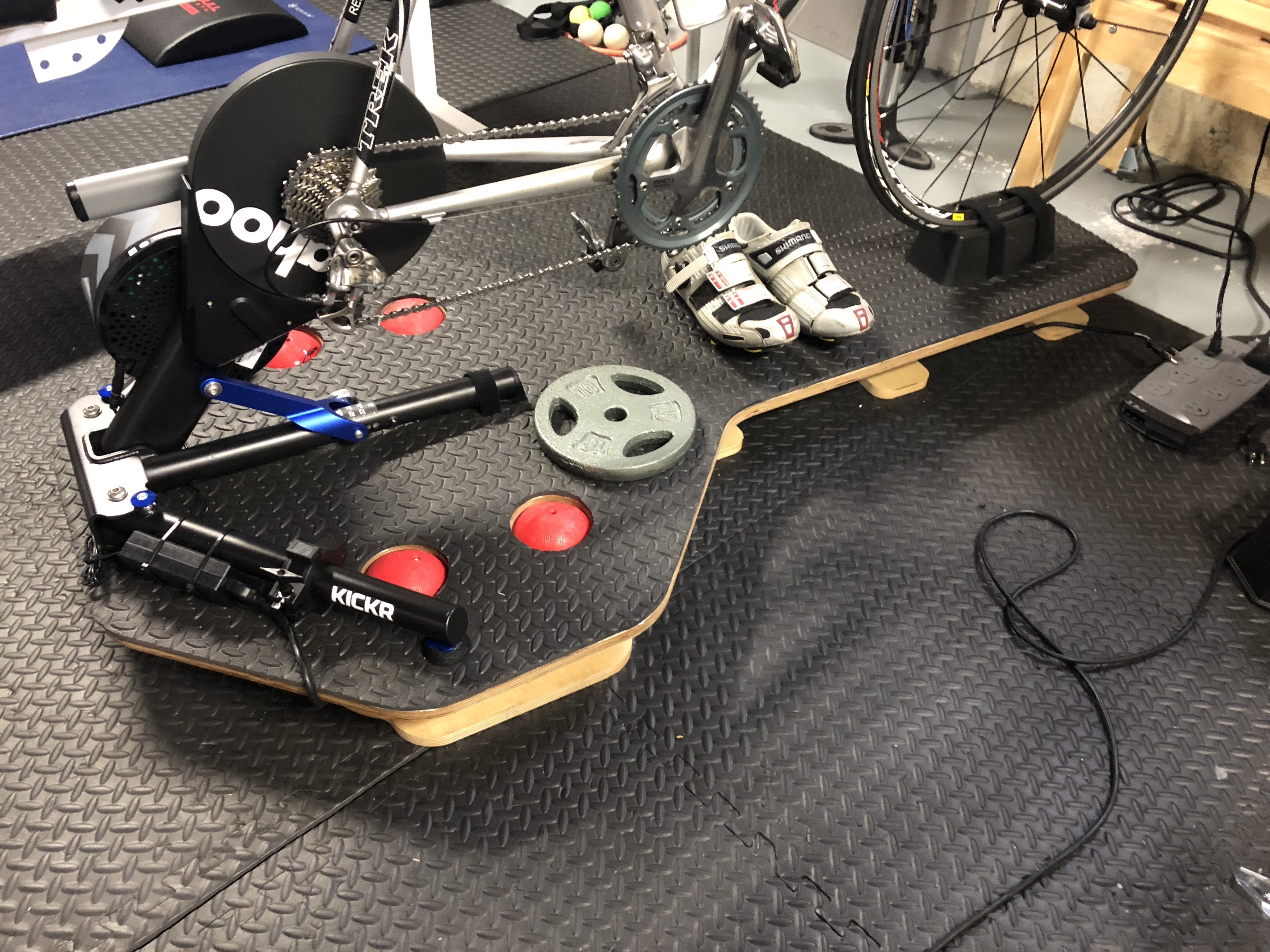
4 Likes
@Juarez thanks for the update. Just curious, the Kickr is pretty heavy and your design is symmetric. Any left/right balance issues, or do you adjust via ball inflation?
The 10lbs plate is to counterbalance the Kickr flywheel. And you can adjust the ball inflation. I use a small level and addd a few more pumps of air to the left balls.
M
1 Like
I just came up with an idea to use pneumatic cylinders for springs. Same springs for fore/aft and side to side. I’m sure it won’t work at first, but I think the concept is sound.
1 Like