… continued


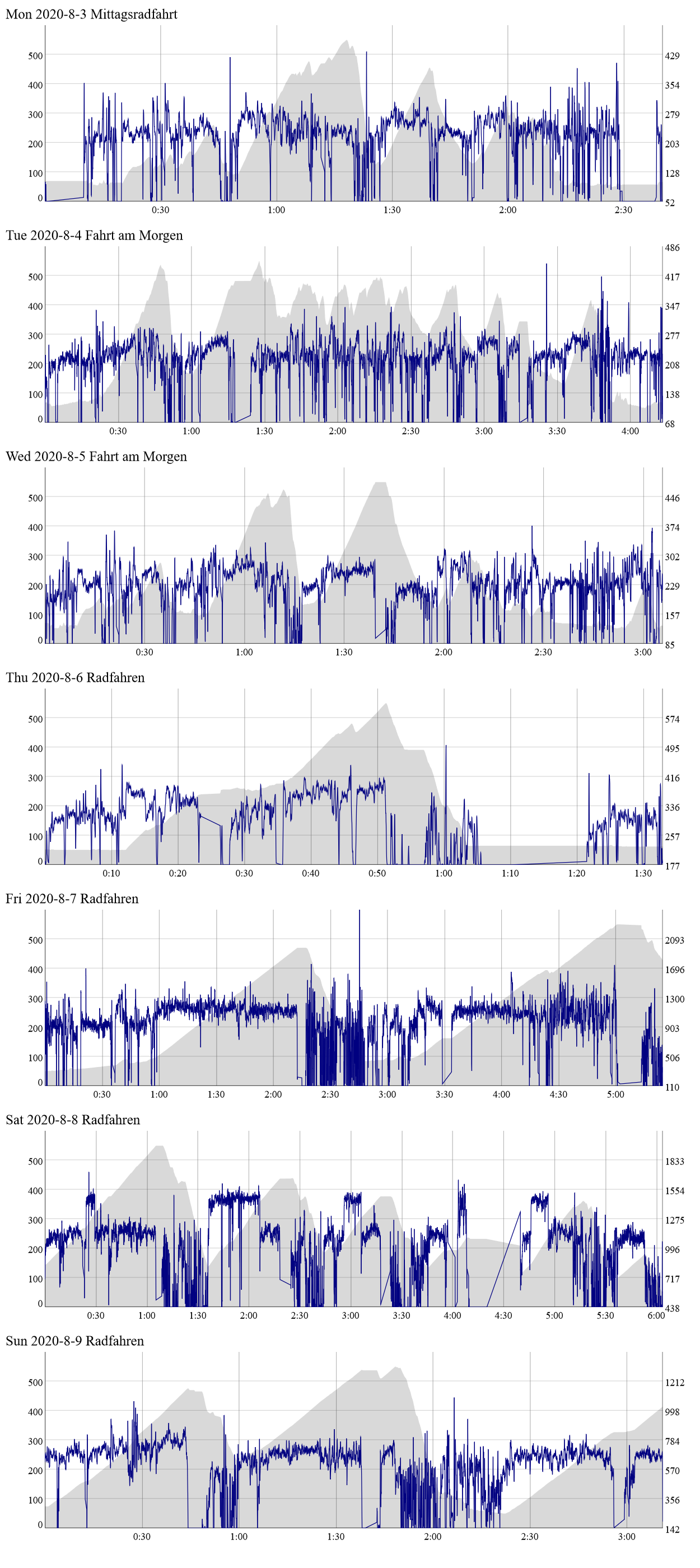
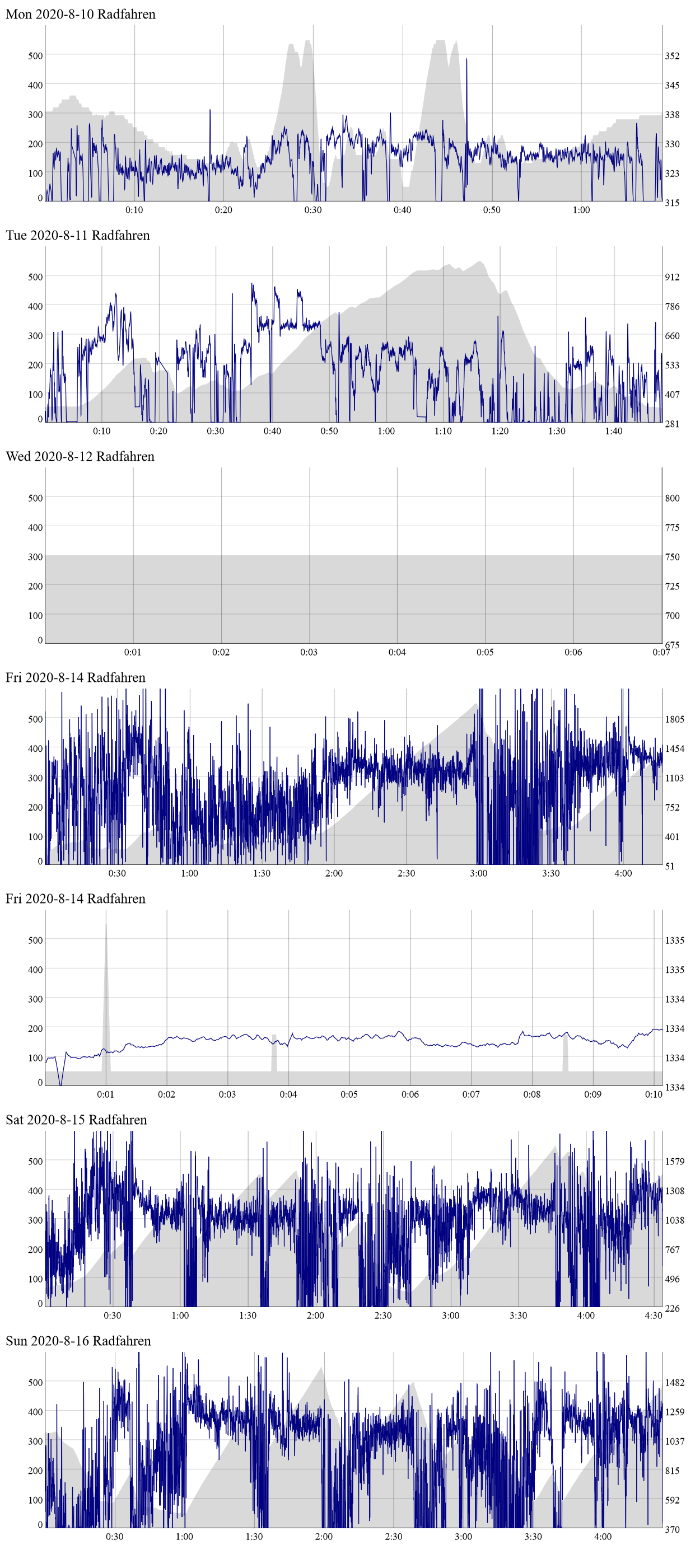

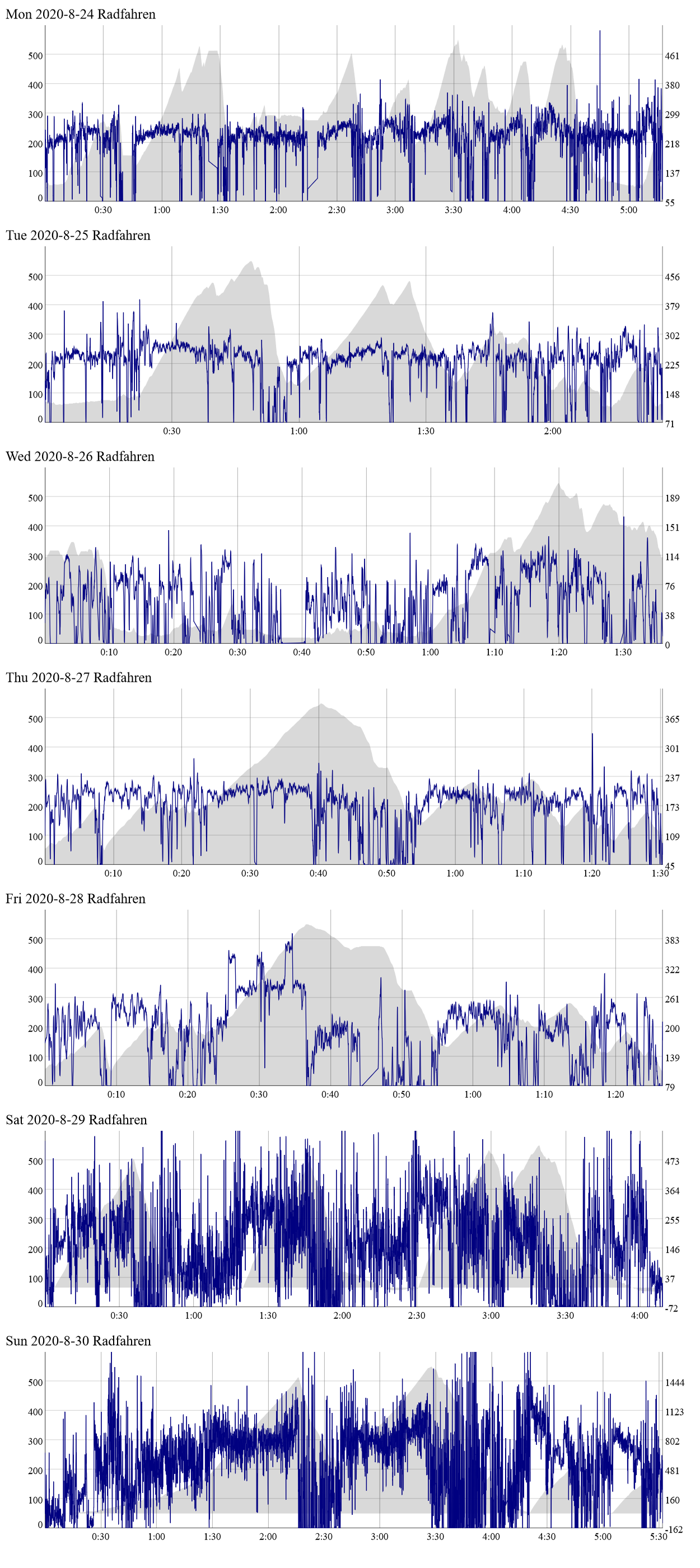

Kämna’s prep would be the death of me.
His recovery days looks fairly doable  But honestly his FTP is quite low as a rider of this calibre? Around 341W according to strava and his workouts and that puts him around 5.2 W/kg.
Strava zones may not always been set up correctly.
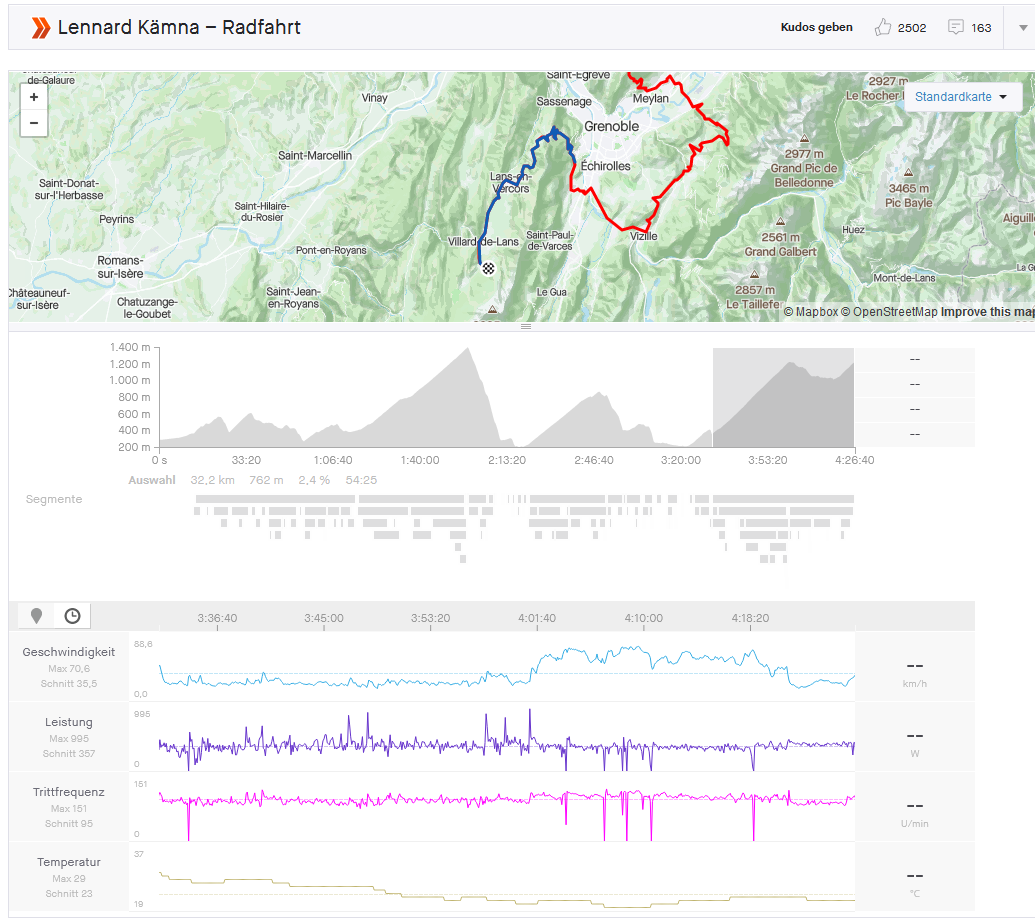
Here Kämna’s final ~hour of his stage win day. This is after 3.5h of racing. And with some descending:
54.5 min, 357 W, ~5.4 W/kg
The time trial on Saturday took him 1h. With an average power output of 368W (~ 5.6W/kg). However, we don’t know if he went all out or if he held back. Looks a little bit like he went for the mountain points only, the flat section was signifcantly less intense (361 vs 393W).
San Millan discusses Pogacar’s training on this podcast. Key takeaway seems to be long but not slow z2 rides to boost mitochondria, sometimes sprinkled with harder efforts to boost glycolytic capacity.
Seems fairly straightforward.
This may or may not have already been posted in here (Millán research):
Seems to have been pacing himself to minimize total time, i.e., somewhat easier on flats, somewhat harder on climbs. If he had been targeting just the Strava segment ( ) he’d have gone even easier to the base of it.
Which is arguably just as coveted as a stage win, these days.
I’m not always a big GCN fan, but I did appreciate their recent video where Hank tries to train like a pro while holding a 9-5 job. Shows just how much riding the pros do.
I also really enjoyed the comments made by Bradley Wiggins and Larry Warbasse about keeping things in perspective for a general cyclist… And that you don’t need to train like a pro does.
What’s just as, if not more interesting than pro/elite training to me, is the training the pros did before they became pro, rather than while they are pro
Just listened to this on my ride this morning. Was interesting, but nothing really informative for the layman. As is usually the case with San Millan…he’s clearly very bright, but I never glean anything from him that I can directly apply to my training. More so just generalities.
Also, cliff notes: Pogačar has an amazing ability to buffer lactate
IME, elites just rise to the top starting at the lowest levels. They are those kids that are almost running 4 minute miles in high school, or the kid that goes from cat 5 to cat 2 in one season.
I knew an ex-pro that decided he wanted to race again. This was 15 years after his pro career and after 10 years of being totally off the bike and being 30 pounds overweight. Within six months, he could go off the front of a masters 1-2-3 race and lap the field. He didn’t have secret training techniques or bother with any marginal gains. He just had the genetics to respond to basic training and get way better than everyone else in a short amount of time.
+1. People often tend to overlook the genetic component.
The other thing many people don’t realize is that it takes more than just having the physiology and being able to ride a bike faster than most to get the opportunity to do it for a living. Unless you are the rare individual who is destined for greatness and is automatically head-and-shoulders above the best, you need to have the right connections.
For example, I know a guy with a VO2max of 79.9 mL/min/kg and an FTP of well over 5.5 W/kg who never made it beyond local cat. 1 races. Why? Because he started cycling in his early 20s, weighs only a little over 60 kg, and is from midwest where criteriums are the norm. IOW, he has all the talent and potential of other U23s on developmental teams who due, e.g., to family connections are being groomed for pro contracts, but simply due to fate did not get the chance. Short of giving up everything else in life to move to someplace where climbing ability was far more important than in Iowa, there was nothing he could really do.
Biggest takeaway for me (besides, of course, lactate FTW) is that he’s more specific and individual with defining Zone 2. That’s something I almost never hear except from top coaches.
Dirk does a good job later in the interview of trying to tease that out. When he first asks about this (~10:50), San Millan just responds with “yes, it’s the Zone 2”. As you hear later though, it’s not the typical Zone 2, a fixed percentage from FTP or a vague notion of “riding at low intensity”. It very well defined and specific to the rider. Granted, it’s his own system that he’s not going to just spell out in a short interview, but it suggests that many riders and coaches are overlooking targets/metrics/gains below threshold. They simply don’t feel the need to break it down as precisely as he does.
I agree with just about all of your comment except for this part here. I think it’s almost the opposite. Cyclists have a weird relationship with genetics and talk about it all too much. [Cyclists] love finding needle in the haystack examples of cyclists like the comment you replied to of people who won the genetic lottery and then using it as a cop-out for lack of work ethic. Even lower training-responders can go a very long way in sport through training, discipline, balance between recovery/nutrition/endurance/strength .
I could go on about this, but the point is that I rarely see cyclists overlooking the genetic opponent. It’s the most common excuse and one of the most talked about “fetishes” in the sport besides weight and equipment
If you listen to the Peter Attia podcast with San Milan from last year, he says his zone 2 is 1.3-1.8mmol. There is quite a long discussion about this in the interview.
From my experience 1.3- 1.8 mmol would be tempo/ medio pace.
@Kipstrong Love that Peter Attia interview. I will re-listen because I didn’t remember that range (it’s been awhile), but I do remember that being a rather long interview. Looking at my numbers 1.3-1.8 mmol/L puts me in low tempo.
So I think to your point (and certainly to my point), not Zone 2 (Coggan).
Probably referenced here already but in case anyone missed, this is what @Kipstrong is referencing:
Irregardless of the prevailing views on the topic, the fact remains that unless you have above average genetics, you are highly unlikely to make it above Cat. 2 no matter how how diligently you train.
How do you quantify average or above-average genetics?
In an aerobic sport like cycling? I’d say baseline VO2max.
We really do need to retire this sort of thinking in cycling. I’m not even one of the David-Goggins-style bullshitters where everything is achievable ‘if you want it bad enough’, but honestly everyone could race p12 in their local area if they put forth the effort. Maybe not nationally or even regionally, but they would do fine in the race down the street.