Learning to listen to how much training your body can absorb is not easy. Recommended.
3 Likes
I did a 1x63 yesterday at 84.5% HRmax and 90% FTP and zero decoupling. Clearly I broke the 83% HR cap and killed all the gains 
4 Likes
I know what you’re trying to say here but it’s not really the point. And of course you didn’t “kill the gains” LOL. You are making the “all intensities are valuable” argument. All intensities are valuable, but they aren’t sustainable day over day. If you want to figure it out a different way (and you have), cool.
Now do the same thing but double the duration, whatever 63x2 is. Keep doing it. Stack days. One session doesn’t prove anything. How’s the decoupling after a bunch of those sessions. How’s the DOMs. You can figure that out with “feel” (and you should), but nothing wrong with also using a system to get to that point.
What’s my point? Over the course of 6 weeks I would rather have 900mins of 80% FTP than 600mins at 90% FTP. If I want to maximize time-in-zone (and that’s the name of game), I’m not going to find the balance with threshold intervals. I’m going to get tired on fewer total minutes and not maximize my time-in-zone.
Is that why you’re such and advocate of Zone 2 now?
2 Likes
LOL just having a little fun. Honestly I think this field test protocol:
is a good idea and solid system. I’ve done something like that, without the HR cap, and can recover and absorb over 400 minutes (>6.5 hours) a week at around 70-75% FTP with an average HR of 79-81% HRmax And on top of that layer an additional two days with 2 hour workouts that involve endurance + “stuff” - yesterday’s 1x63 was almost entirely “stuff” because of a time crunch. Week after week, month after month. Nailing 3.5 hours of endurance at ~69-71% FTP / 75-78% HRmax and zero decoupling. Or 90 minute climb at 85% FTP and 83.4% HRmax and no decoupling.
Making endurance a first principle (another reason I went with FasCat) has led to so many improvements - RHR, HRV, consistency, raising volume, increasing ftp, power at short durations, and a bunch of other metrics. It wasn’t easy learning to listen to my body, kudos to my coach.
5 Likes
This is why I brought it up in the first place. ISM high Z2 intervals sounded an awful lot like the work I did with Steve … and with everyone trying to figure out how to find LT1 without a lactate meter, I inserted the Steve Neal methodology for finding a super high, but incredibly repeatable intensity. Steve and I found my LBP by lactate testing, but even at the time he told me the lactate meter just confirmed where he thought it was based on HR and power.
Lol, for sure! I felt like the prom queen of the bike nerds for a while
I got a ton of questions after that and tried to be helpful, but honestly I think I understand it better now. Which is to say, I understand it enough to train really well for 2 months and then f*ck it up by thinking I’m smart …. then realize I’m not at all smart, and start throwing water out of the boat 
6 Likes
HR is a weird measure to care much about due to drift. For example, if you ride an hour at 80% ftp, your HR will drift upwards as you become less efficient (for multiple reasons) further into the session, despite your constant power and even if RPE is also constant.
Drift like that? Rarely happens to me, or should I say, both power and HR increase because I’m usually doing a negative split.
Apparently it happens to some.
I could share several examples of working at 80%+ FTP for an hour with zero drift.
I think I shared one on this thread.
At a certain point it will drift, but after one hour?.. nope.
EDIT: And I think that is the point … work at +/- 80% for an hour until you stop drifting with a 83% of MHR governor. Aerobic adaptions will be happening.
2 Likes
Yeah I guess that makes sense but my point is that it drifts upwards. Maybe not at 60min at that particular power for you because you’re fit to that stimulus, but I’m pretty sure it’s a scientific fact. I was a participant in a exercise science / kinesiology lab study once and they explain it to me
That’s why you increase the stimulus. Either in duration or intensity.
Not sure I understand the question … ?
Yes, eventually. How long is dependent on fitness.
2 Likes
As I got closer to an event the training started to incorporate less tempo and more vo2 work … so I got re-acclimated to the hard stuff.
1 Like
Hahaha, sad but true. I’ve raced triathlon for 20 years and absolutely nail April/May races every single year. Well obviously if I’m flying in April/May off of base/tempo I’m really going to roll in mid-summer once I add “real intensity”. Real intensity gets added, back/hips act up or I’m flat smashed, get mad, “quit the sport” for a couple days, get back to it, repeat.
Thanks for your posts though. Your prom queen moment caused me to really dig into Steve’s thoughts as soon as you posted.
3 Likes
I believe ism’s z2 target is right near the ltb, which should also be close to 1 mmol over baseline, and vt1. Those three won’t converge at the exact same wattage or pace, but describes the same thing physiologically measured different ways. Ism talks about his ideal racer as being metabolically flexible, equally strong with high fat oxidation, and high ability to metabolize lactate.
This comes back to how we’re using different terms to describe the same metabolic points.
2 Likes
what if 80% of my FTP is nowhere near 83% of HR max. At 80% of FTP my heartrate is around 73-75% of max. Should I increase power of my the intervals until I reach 83% of HR max? At that point I’d be riding in sweet spot.
I’m an aerobically very gifted 5 w/kg rider with weekly volume around 18-22hours.
1 Like
Simple: don’t use FTP for this stuff.
Use it for other aspects of your training. It doesn’t apply here.
(often percentages of FTP are thrown around from Steve’s riders informally or because you’re trying to make a point or communicate with other riders…but in practice, we never discussed FTP per se…MAP, lactate curve, LBP, and these sub-threshold low(er) intensity steady state assessments, among other things…we never multiplied .95 or .75 by anything).
He would train you differently. Still with tempo and endurance (everybody gets that), but not quite the same as <10hrs week old dudes.
5 Likes
“Nuchtern” can indeed mean “sober”, as in not having ingested alcohol. But it also means having an empty stomach, so “fasted” or “on an empty stomach” would be a better translation. No link with having ingested alcohol in this context.
No, you’d find your balance point with testing (metabolic cart, lactate, moxy) and then the 78-83% would only be a maximum. At your level of fitness, you might be extending out to 3x30, 4x30, etc. And if that is absorbable, then you’d stack the workouts two days in a row.
If you can’t do the testing then just ride middle of zone 2 power with the HR cap in mind.
You should probably get a good coach if you want to go as far as you can with this. Do it now rather than trying to figure it out on chat boards while spinning your wheels for a a few years.
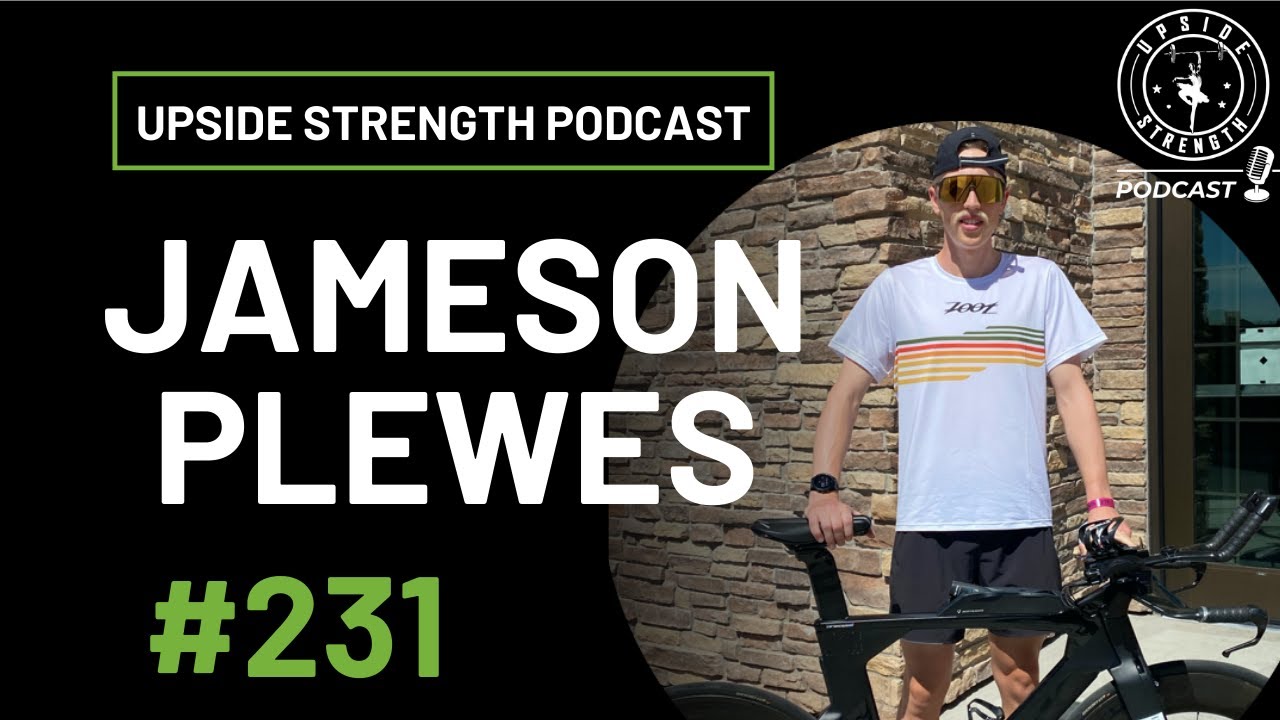
This might be a good podcast for you. Plewes is the U24 ironman champ. His coach is Luke Way @ Balance Point Racing. Way, Andrew Sellars, Steve Neal all had the same mentor in Juerg Feldmann. The way Plewes is training is probably more similar to the way Steve Neal might train a 20+ hour athlete. I only say probably because I’m extrapolating here. Contact Steve if you were interested in him.

2 Likes
Unfortunately my financials don’t allow for a coach at the moment. I’m also not even in my third year of riding a bike (2 year anniversary coming up in march) , so I feel it’s still kinda early. Also I don’t race yet, so no pressure really.
2 Likes