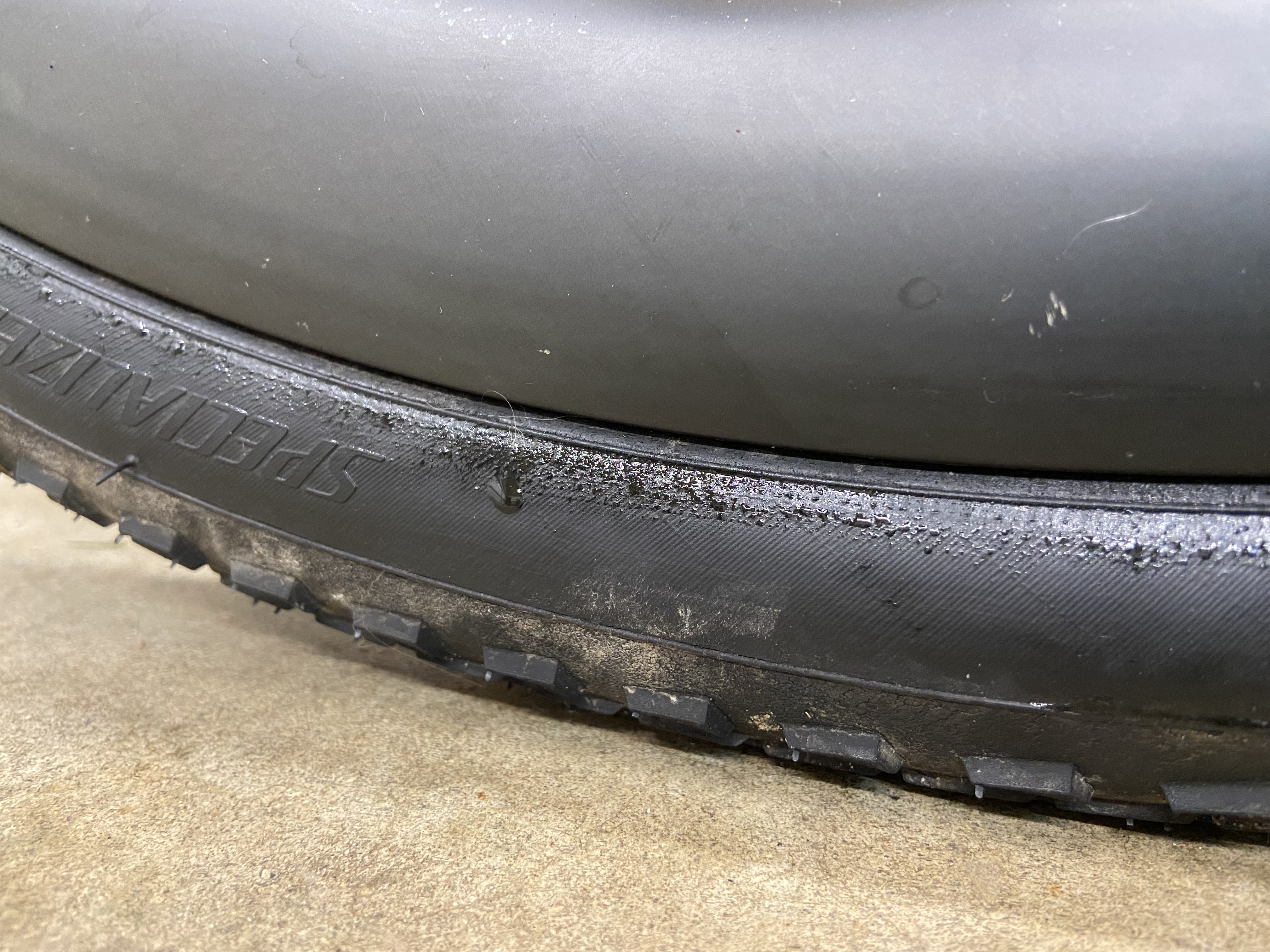
With the way they stretch out, do you feel comfortable using them? I know it’s a bit of a different tire than the Pathfinder which is flat center with side knobs - the Tracer Pro does seem to have thicker knobs on the side so wondering if they have become part of the center tread stretched out.
I don’t want to buy 42MM Pathfinder Pros and then have to sell them second hand if the side knobs become part of the center tread but I might just have to bite the bullet to see for myself.
Right now, I’m also thinking about 40mm Terra Speeds since they are considered super fast and they have the same type of tread throughout. They also don’t seem to widen out the same way as Pathfinders, but some downsides seem to be low durability and lower puncture resistance.
I was in a similar position about 2 months ago - trying to decide between the LB AR25 or a wider rim exclusively for gravel use.
I ended up going with the AR25 for a few reasons:
For the gravel I’ll be riding (Australia) I wanted to run 35mm-45mm tires, and will start off with the 42mm S-Works Pathfinder. The internal width of the AR25 better suits that range
I liked that the AR25s came with a Hybrid Hook design. I’m not completely sold on hookless for non-MTB wheels/pressures (yet) and like the added security from the HH
Weight - I have spec’d the wheel set from LB with DT180 hubs and the total wheel set weight is 1022g (about 110g less than the XC930s)
Wheelset has been built and waiting on its arrival:
Can I just say that the whole ordering process with LightBicycle has been flawless - great customer service and ability to customise everything to your liking. You have an option (free) when ordering of getting photos of the wheels sent to you after they’re built, and they sent through 10x HQ photos similar to those you see above.
Will let you know what the quality / trueness is like after they’ve arrived
I feel completely comfortable with the pathfinders stretched like that. The tire that virtually lives on the rims is a 35 and has been used over the course of a few seasons on all types of terrains.
The sidelugs are brought more inward on the tire, I will take some photos of it later.
I considered the Terra Speeds also, but ultimately did not go with them because they wear out so fast and I don’t want to replace tires all the time as I ride the bike on all terrain (asphalt a lot).
Mine are on the way as well - I had some custom laser etching done that delayed everything by over a month and they’re perhaps two weeks from arriving. I got the 930’s with DT Swiss 240s and you’re right, they came in at around 1150g with tape.
Interested to see how your laser etching turns out - did you go with text or a logo?
Also I wasn’t sure about whether or not to get the drain hole but I ended up deciding to as I’d heard stories of excess pressure build up
If you only want to run 45-50mm tires, a 30mm ID width can make sense, but I don’t think a 30 ID has much advantage over a 25mm ID rim until you get into bigger MTB sizes (a 25mm ID still shapes a 50mm gravel tire really well). And I agree with the concern mentioned previously about wide rims increasing the risk of sidewall cuts.
A 25mm ID gives some flexibility to run smaller tires if needed, so something to consider depending on how you use the rims. I personally wouldn’t run anything smaller than a 38 tire on a 30mm ID rim and even that is going to give a really flat profile. I find 25mm ID to be a really flexible size. You can run 32mm road tires on them (or even 28’s if I wanted) or 50mm gravel tires. Even running 2.4" MTB tires on 25mm ID is totally doable.
This is a bit weird, and it may be because I come from a road bias and gravel/MTB tires are made differently. Newer road wheel designs have become 21 (or more) mm internal with 28 (or more) mm external. And then we fit 25 to 32 mm tires on them. This internal ratio is 20% to 50% of the tire size.
The sentiment is wider tires are better, and wider rims to support those wider tires are better.
On the XC rim that I picked for gravel, I’m looking at a 40% internal rim:tire ratio (if 42mm tire). So it’s strange that the logic that is perfectly good for road is a bit extreme for gravel.
Yeah, that pic above would suite me fine if we are talking road tires (where priority is aero and you don’t want a tire bulging out way beyond the rim). For MTB, a flat sidewall like that obviously isn’t ideal, you are just increasing your chances of sidewall cuts and you really need a rounder profile to make the handling work as intended. For gravel, I think people are still figuring things out, but my understanding is the aero advantage is pretty blunted in the larger sizes (and chunkier tread patterns), but who knows. I know I don’t want a lot of sidewall exposure for some of the events I do, so definitely not looking for that “road” profile where the rim is almost as wide as the tire. My primary gravel rims are firecrest 303’s, so 25mm ID hookless and I’m normally racing on 42’s (but sometimes 38’s and sometimes 47’s). The 303’s are not very light, but indestructible (based on my past experience with zipps) and reasonably aero when paired with the right tire (I’ll stick 32’s on them for group/road rides).
Your rationale makes a lot of sense to me, which does make the aero gravel argument really weird. If someone (not you) wants aero in gravel, like you said, it sounds like you need to get slicks and match tire size to rim width. But you can’t have both aero with tire dimensions that do offer sidewall protection or can really disrupt the air in exchange for better grip on sketchier surfaces, especially because the front edge of the tire is now so much bigger vs road - it feel like marketing is trying to trick us that you can have your cake and eat it too.
I agree, there needs to be risk/reward calculus here, bulging out sidewalls beyond the tread would not be the way I would approach most gravel rides.
The whole narrative of wide aero rims has been so blown out of proportion, mostly by wheel companies wanting you to buy another set of wheels. Most people are extrapolating results from the research done in early to mid 2010’s, when the 105% rule was determined, but if you dig into the actual numbers, the difference between running at or near the 105% rule vs. not, is only a difference of 2-3 watts. Furthermore, most testing being quoted in such rules was done at 30 mph, which is not realistic for most gravel riders.
“In order to finish first, you must first finish.” - someone smart
There is going to be a lot of opinions on this. These are not mtb bikes and these are not road bikes.
My 35 tires shape the tire even more aggressive/flat but keeps the side lugs just off the ground. The control on the tires is phenomenal, as soon as I lean the knobs dig in and keep the bike predictable, the tire casing and rim deflection keeps the tire planted from that point.
I’ve never cut a sidewall on my tires, I also have not raced super boulder/rock races. The most aggressive race I’ve done is BWR NC and the wheels/tires were amazing.
A quick update, I measured 42mm S-Works Pathfinder on my 30mm internal 37mm internal rims. They were 46mm on 40 PSI. Haven’t finished building my bike but I really like how they look on the rims.
I plan to run closer to 30PSI so I’ll measure them again later.
I posted this on another thread, but there’s a very interesting article on Slowtwitch discussing the advantages and caveats of very wide rims.
Here’s a key quote from Josh Poertner, former wheel designer for Zipp and now owner of Silca. Based on this I’m planning to run ~34mm gravel tires on hooked Light Bicycle WG44 rims for gravel races this season. Should end up with a ~38-40mm tire width with great ride feel and aerodynamics.
“Case in point, the setup that has most excited me in the last few years is a 32mm Continental GP5000TR on the 3T Discus 45/40 rim. This is a 32mm tire on 29mm hooked bead with 40mm outer rim width, totally in violation of ETRTO, but exceeds the blowoff pressure of the same tire on an ETRTO approved 25mm hookless bead. In this setup the tire measures 35.5mm wide and produces a near seamless toroidal rim/tire shape which tests lower drag than most any traditional road racing wheel with 25 or 28mm tire while also showing some of the most neutral aero steering torque values of any setup I’ve ever seen.”