No, 3-hours at 0.6 is not useless. If anything, many people should be doing a higher volume of their endurance work in that 0.6 to 0.65 zone, rather than the higher end of z2.
Conservatively using 240 W as your FTP, your indoor level 2 “endurance” workouts would be expected to average 180-204 W. Anything easier than that would fall in level 1 (“recovery”). It’s therefore not surprising that you find the sessions you’ve been prescribed too easy.
Yesterday was avg 115bpm, max 131bpm. My max HR is 185. Decoupling was 2% over 3 the workout according to intervals.icu. Wednesday was 2:15 Z2, avg HR 111, max 121, decoupling 0.1%.
According to intervals.icu, anything under 133bpm is Recovery. Endurance is 134-147. Which seems high. I think I was using a HR cap of 135ish BPM for Z2.
So you’re saying Endurance should be 75-85%? That sounds high.
I’d definitely recommend learning what your Z2 hr is and using that as a checkpoint. Lots of things impact hr, but if you’re way under, you’re doing recovery, not endurance.
I still can’t understand why PLs for endurance are even a thing.
Level 2 endurance workouts typically result in an average power of 56-75% of FTP and/or an IF of 0.75-0.85.
As I have explained here before (and for the first time, more than 20 y ago), for training sessions with limited variability, such as is typical when training indoors, it is better to go by the latter rather than the former - the average power based guidelines were skewed downwards in recognition of the fact power is more variable outdoors.
Where TR and others get it wrong, and in the process have confused people, is in treating my descriptive training levels like prescriptive training zones.
Ignore “decoupling” in this context. It doesn’t tell you whether you’re working too hard or not hard enough (or whether your “base” - whatever that is - is sufficient).
@silock first thing I would do is re-assess how your training stimulus/volume changed when you moved from Zwift as a primary platform to TR. I would compare 1.) Overall time on the bike, 2.) Time @ ~threshold & 3.) Time @ ~suprathreshold (or ‘VO2max’). I suspect your training load on Zwift may have been higher and when you moved to TR your training stimulus might have taken a step down.
BTW, you mentioned injuries, so maybe this is appropriate. Hard to tell without knowing more about your training history.
Endurance rides feel easy. That’s great! Wonderful! If you were my athlete I’d tell you I don’t think there is much more training adaptation from an hour of cycling at just below first ventilatory threshold vs an hour of cycling at 15% below first ventilatory threshold. If that hour feels super easy, spend some time thinking about your past injuries.
If you want more endurance I would not suggest adding intensity to those rides. I would advise you to block up your training stimulus and maintain recovery time where it is…which is to say add those endurance minutes to the END OF your harder training days. Add an extra half hour of endurance riding to your VO2max workout. That will help you feel some fatigue in your legs!
But, seriously, remember this advice: increasing the intensity of your endurance rides does not increase adaptation much but definitely does inhibit recovery. So you get a skosh of extra training stimulus for a lot of recovery inhibition. Not a good trade off. Walk down the hill…be fresh for your hard workouts. Stay injury free.
That’s bad advice. If anything, increasing intensity has a bigger effect than increasing duration.
“That’s bad advice. If anything, increasing intensity has a bigger effect than increasing duration.”
No it’s not. I know we disagree on this. One day you’ll realize I’m correct.  Or not.
No, you’re not correct, and the entire scientific literature to date would have to be upended for me to agree with you
At the risk of being an idiot, any suggestions on how to do that?
Well, this is a whole different can of worms, but taking one highly regarded person’s opinion into account, here is how Friel defines it. https://joefrieltraining.com/determining-your-lthr/
Hey OP, sorry if it’s been mentioned above already but what are the level ratings for the endurance rides you have been given?
I wouldn’t touch anything under a level 3 for endurance and to be honest most plans I’ve seen usually start with level 3 endurance workout even if your endurance progression level is below that.
Regardless, my advice would to be to pick an alternative that is marked as “stretch” for you and give it a go.
I can’t even GET to that IF level in my list of alternate workouts. At least, not yet. The highest I can get to is like .68, and that’s for Stretch. If I set it to Breakthrough, it balloons my time on the bike to like 3-4 hours. I’m not doing that indoors. I’ll go crazy. I’m hoping that as I do these Endurance ‘stretch’ workouts, it will start giving me more options that are higher IF for the same amount of time.
When I was doing Zwift, I was doing 205-215w for 60-90 min, which equates to like 80% of my set FTP, but my HR wasn’t super high - like 132-136, which is like 65-70% of max, which is where it’s ‘supposed’ to be.
Mostly, I just know I struggle with those mid-Z4 intervals that are longer. I can do zone 2 for what feels like forever, and sprints are no problem. My struggles are with long 2-3 min intervals at like 115%-120% of FTP.
Are my PLs supposed to look like this, or be somewhat more even?

I’m new to TR but not to structured training. I tend to ignore what TR is giving me for endurance rides, and just bump the intensity so that I stay in my zone 2 productive range. There is no way I’m doing an endurance ride with an IF in the 50s. After 2 months, I can look ahead and see TR is starting to schedule endurance rides with IF in the 70s. That’s more like it.

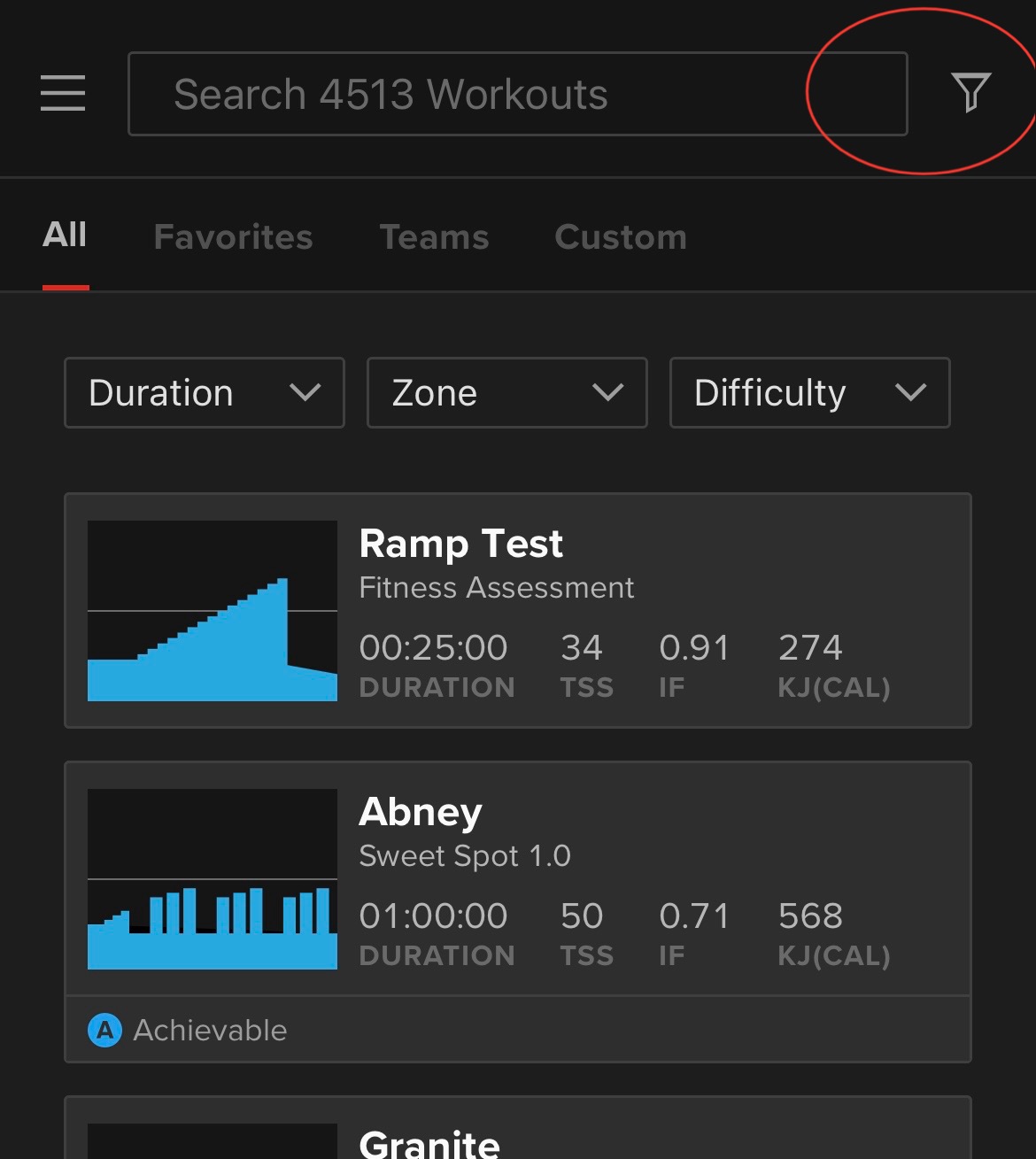
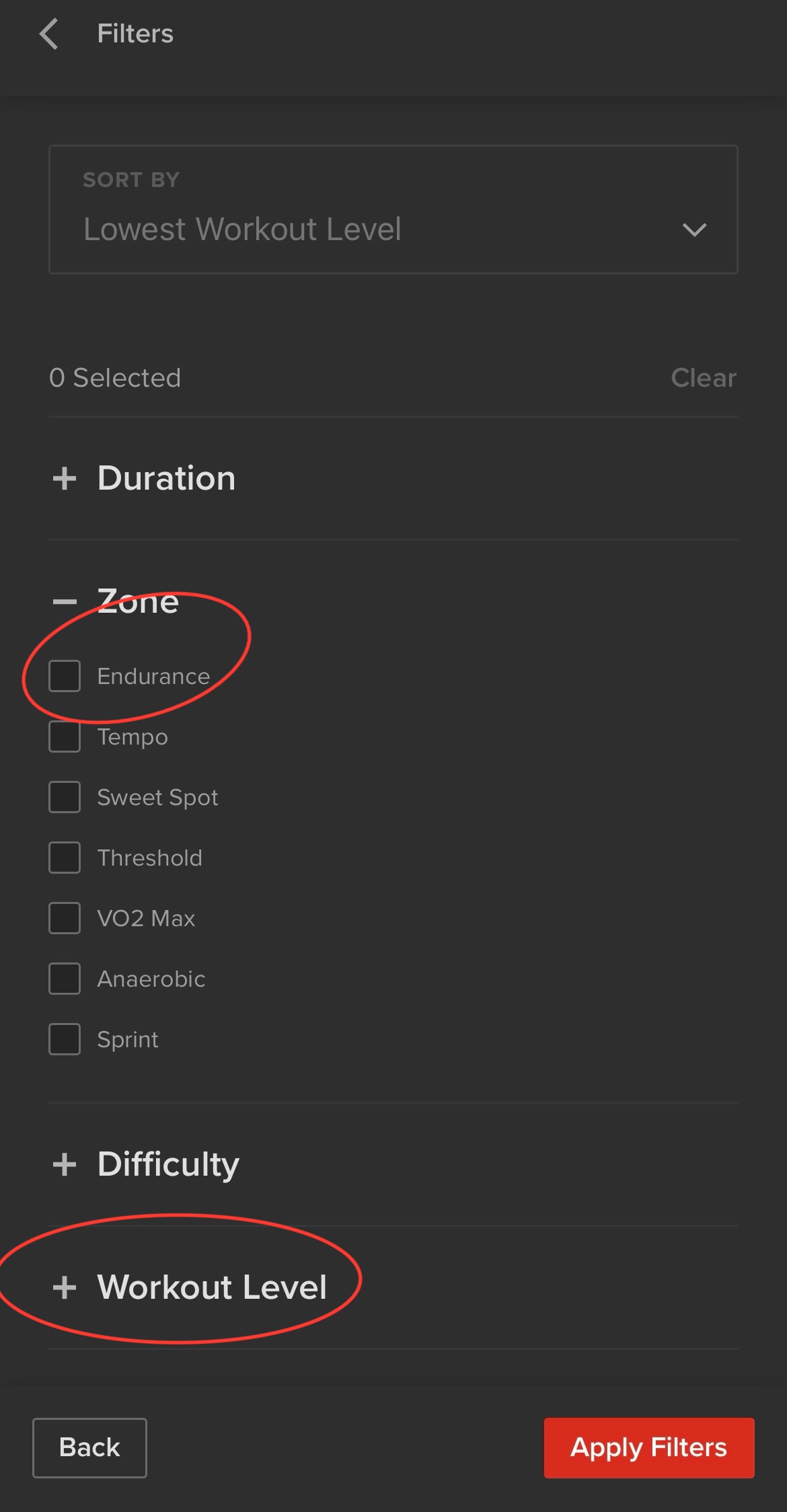
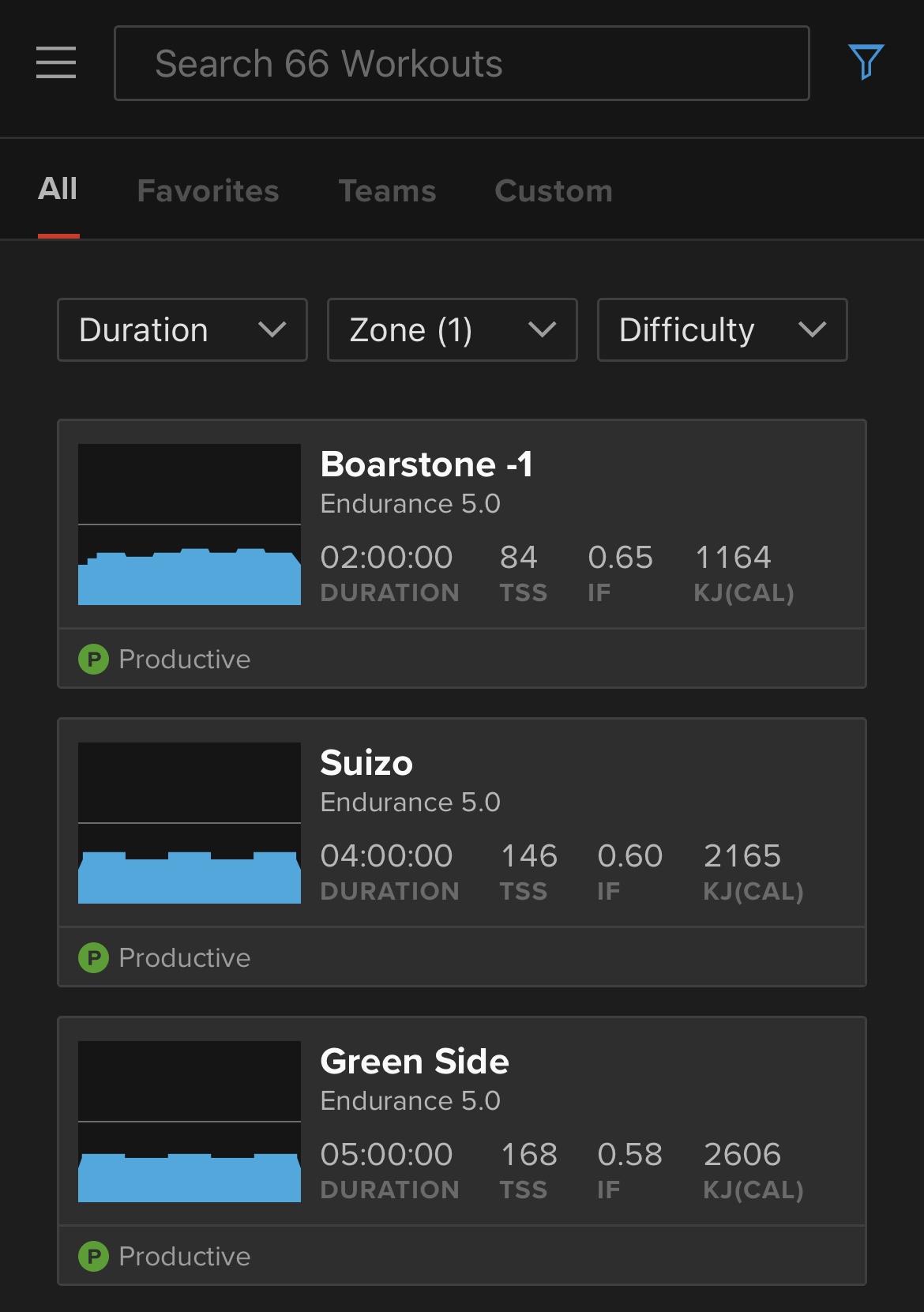
- Edited early Dec 18 to clarify, since I think there are two potential aspects related to the statement above:
-
Manually added workouts MAY affect AT via Progression Levels.
-
Manually added workouts performed in the TR app WILL be considered by AT. They WILL increase a rider’s Progression Level in the associated training zones if the workout exceeds current PL.
-
This also works for TR outside workouts when following their instructions and getting the association between the planned and completed workouts.
-
-
Manually added workouts will NOT get adapted by AT.
- Only Plan Builder created or ad-hoc plans (full plans added manually) to the calendar get altered by AT.
5 Likes
This is just a good point (difference between endurance %’s varying per rider)