Unbound Gravel finish time calculator and race guide How fast could you be at Unbound?
We simulated your ride on the 2026 Unbound 200 course with that day's weather, and added the time athletes spent stopped.
Give yourself the best chance to be faster at Unbound
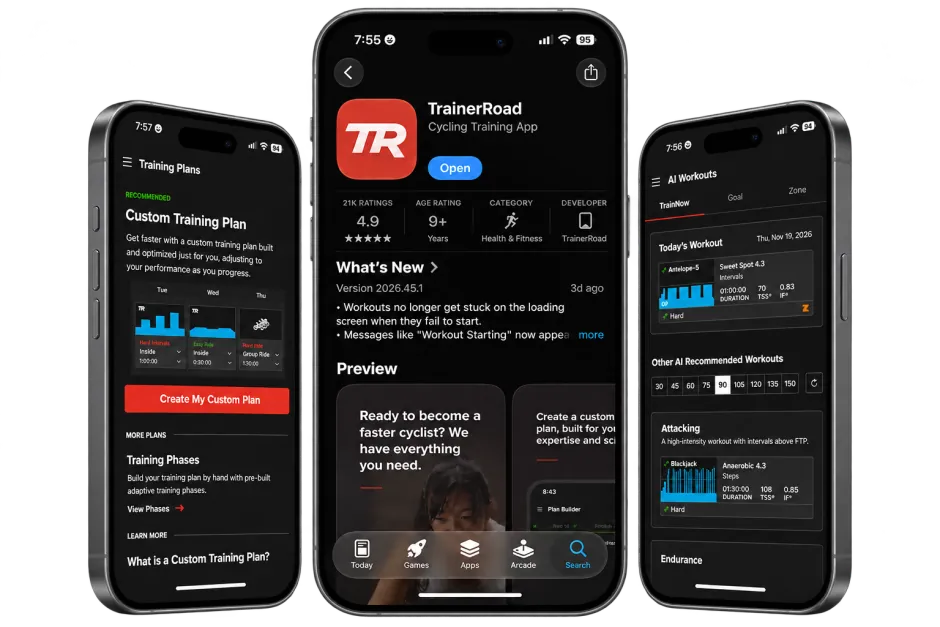
4.9from over 21,000 ratings on the App Store
Already a member? Build your Unbound plan
What is the Unbound course like?

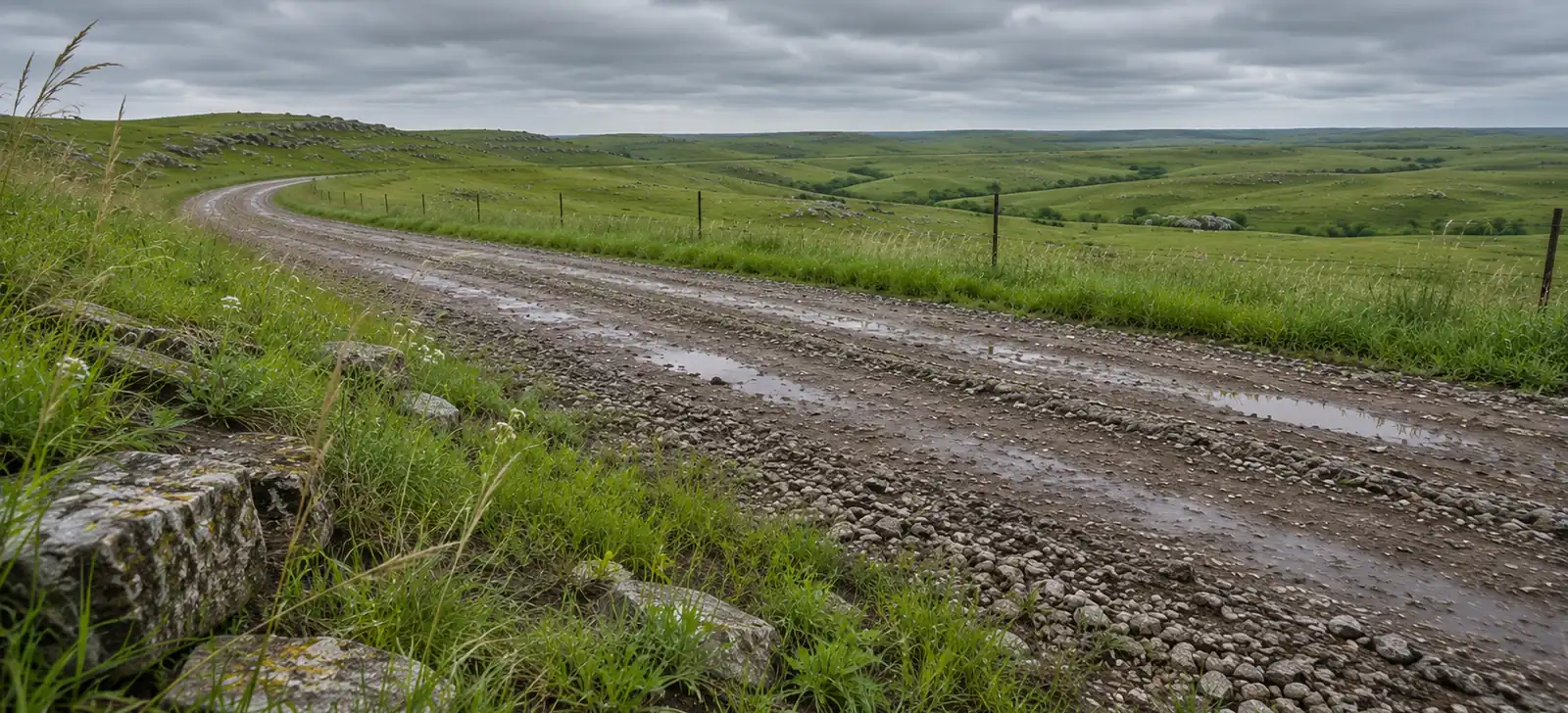
The 2026 Unbound 200 was 207 miles through the Flint Hills out of Emporia, Kansas, and the 100 was 106 miles. The route changes a little every year, but it always runs through the same rolling hills, so the 2026 course is a good guide to what you'll ride in 2027.
-
The 2026 200 was 207 miles with about 9,000 feet of climbing. Its highest point is only about 570 feet above its lowest, so all of that climbing comes from rolling hills. You're almost always going slightly up or down, and there are very few places where you can stop pedaling and recover.
The XL was 356 miles in 2026. We don't have enough athletes who rode it to share data on it.
-
In 2026 the 200 started at 6:30 am and the finish line closed at 3:00 am, 20 hours and 30 minutes later.
-
This is roughly when you'd roll into each checkpoint on the 2026 course, today and with TrainerRoad. Your actual times will depend on how long you stop.
-
In the 200 they rode the first 54 miles level with the rest of the field, then pulled ahead over the next 150 miles. They faded 3x less than the typical rider in the second half of the race. That's durability, the ability to keep riding well late in a long day, and it's what months of consistent, structured training builds.
Unbound 200, the 2026 course
Start20:30
You today14:435 h 47 min to spare
With TrainerRoad13:596 h 31 min to spare
| Point | You today | With TrainerRoad |
|---|---|---|
| Mile 42, Madison | about 9:10 am | about 9:00 am |
| Mile 100, Matfield Green | about 1:20 pm | about 1:00 pm |
| Mile 160, Council Grove | about 5:50 pm | about 5:20 pm |
| Finish, Emporia | about 9:10 pm | about 8:30 pm |
Move along the elevation profile to see that point on the route. We'll add the 2027 course here when it's announced.
How long does Unbound Gravel take?
In 2026 the median finish in the open, non-elite field of the Unbound 200 was 14 hours 40 minutes. A 170 lb (77 kg) rider needs an FTP of about 3.2 W/kg (250 W) to ride that time. The median finish in the 100 was 8 hours 21 minutes, which takes about 2.8 W/kg (215 W).
The tables show simulated finish times for other W/kg and rider weights. If you don't know your W/kg, our watts per kilogram calculator works it out from your FTP and weight.
Official 2026 results, open field
| Fact | Unbound 200 | Unbound 100 |
|---|---|---|
| Distance | 207 miles | 106 miles |
| Start | 6:30 am | 7:30 am |
| Median finish | 14:40 | 8:21 |
| Median finish, TrainerRoad athletes in our sample | 14:11 | 7:50 |
Unbound 200 finish time by FTP and weight
| W/kgPower-to-weight | 132 lb60 kg | 154 lb70 kg | 176 lb80 kg | 198 lb90 kg | 220 lb100 kg |
|---|---|---|---|---|---|
| 2.0 W/kg | Over 20:30 | Over 20:30 | Over 20:30 | 20:29 | 20:05 |
| 2.5 W/kg | 18:28 | 18:01 | 17:39 | 17:21 | 16:58 |
| 3.0 W/kg | 16:15 | 15:48 | 15:26 | 15:08 | 14:48 |
| 3.5 W/kg | 14:36 | 14:13 | 13:54 | 13:39 | 13:20 |
| 4.0 W/kg | 13:25 | 13:04 | 12:47 | 12:32 | 12:15 |
| 4.5 W/kg | 12:30 | 12:10 | 11:54 | 11:41 | 11:25 |
| 5.0 W/kg | 11:45 | 11:27 | 11:13 | 11:00 | 10:46 |
Unbound 100 finish time by FTP and weight
| W/kgPower-to-weight | 132 lb60 kg | 154 lb70 kg | 176 lb80 kg | 198 lb90 kg | 220 lb100 kg |
|---|---|---|---|---|---|
| 2.0 W/kg | 10:56 | 10:38 | 10:24 | 10:12 | 9:59 |
| 2.5 W/kg | 9:20 | 9:04 | 8:52 | 8:42 | 8:30 |
| 3.0 W/kg | 8:16 | 8:03 | 7:52 | 7:43 | 7:33 |
| 3.5 W/kg | 7:31 | 7:20 | 7:10 | 7:02 | 6:53 |
| 4.0 W/kg | 6:58 | 6:47 | 6:38 | 6:31 | 6:22 |
| 4.5 W/kg | 6:32 | 6:22 | 6:13 | 6:07 | 5:58 |
| 5.0 W/kg | 6:10 | 6:01 | 5:53 | 5:47 | 5:39 |
Simulated race times for various power-to-weight ratios at the 2026 Unbound 200 and 100.
How much faster could you be?
Athletes who followed their TrainerRoad plan for six months raised their FTP by about 8% on average.
-
Athletes who follow their TrainerRoad plan raise their FTP by about 4% in two months, 7% in four months, 8% in six months and 10% in nine months on average. For a rider at 250 W, six months would mean going from 250 W to about 270 W.
-
In the official results, the median finish time for TrainerRoad athletes in our sample was about 32 minutes faster than the median for the rest of the field in the 200, and about 37 minutes faster in the 100. That was true for men and women, and for every age group we had enough athletes to compare.
FTP gain by time on a plan
These are averages from a filtered sample of athletes who followed their TrainerRoad plan closely. For your number of days, we estimated the gain from the nearest two points.
How did athletes train for each finish time?
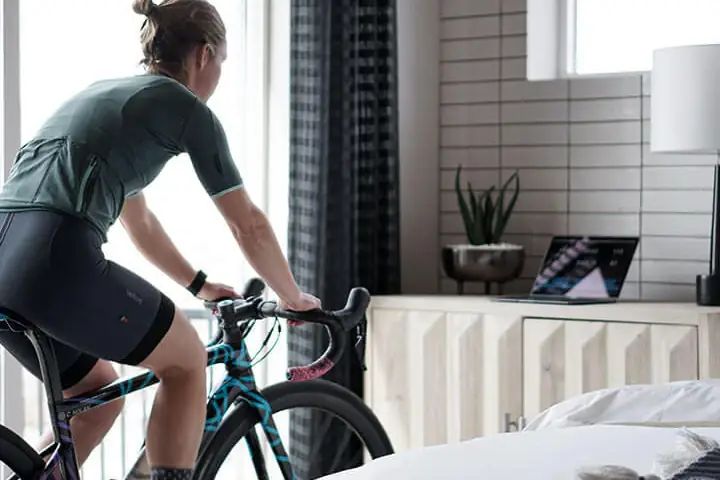
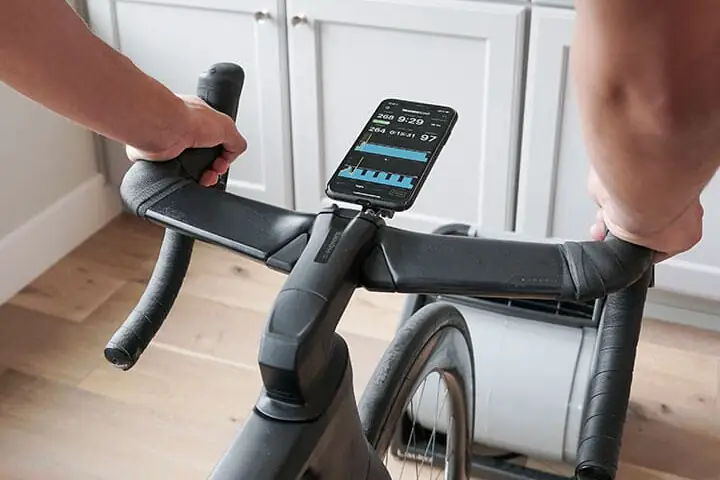
The typical training ride before the 200 was only about an hour and a half, and only 10% of them went over four hours, even for the fastest athletes. The right training plan is the one that fits your schedule and your life, so TrainerRoad builds yours around the time you have.
-
Most of these athletes never did a ride close to race length. Interestingly, the slower finishers were the ones more likely to have done a ride over 11 hours. None of the athletes who finished under 12 hours did one.
The fastest athletes kept most of their long rides between 3 and 5 hours, so some longer rides can be helpful, but they have to fit with the rest of your training. TrainerRoad does that with Dynamic Endurance. Your long endurance ride gets longer over the weeks, usually by 15 to 30 minutes at a time, up to five hours for an event like Unbound.
It only gets longer when your fitness and recovery support it, so you can still do the key workouts in your week. If you're carrying a lot of fatigue, the ride stays the same length or gets shorter.
-
This is what an average week looked like for these athletes in the 12 weeks before the race. You don't need to match their hours.
Many training plans set your weekly hours for you, whether or not that's close to what you've been riding. Training works better when it starts from the hours you're doing now and goes up gradually, because that's an increase you can keep up for months.
TrainerRoad starts your plan from your own training history. As you get faster, it gradually adds training time to keep you improving and get you ready for race day.
-
Yes, it can. In a larger filtered sample of TrainerRoad athletes, the ones who were most consistent with 2 to 4 hours a week raised their 20-minute power about 4% in six months. Athletes who rode inconsistently but averaged 8 to 12 hours a week only raised theirs about 1%.
At the 200, the faster groups were the more consistent ones too. The table shows each finish group's Training Consistency Score, which measures how close your weekly hours stay to your average. Athletes who finished under 12 hours scored 69, and the score gets lower with every slower group, down to 49.
So plan around the hours you can ride every week for months, even if that's fewer than you'd like. TrainerRoad helps you do that in two ways. It recommends a weekly schedule based on your own training history, so your plan starts at hours you can keep up. And it uses its own AI models to run thousands of simulations every day to find the best workout for your fitness, goals, and fatigue.
-
Structured training will make you faster. Among the athletes who rode under 7 hours a week before the 200, those who did three or more TrainerRoad workouts a week finished 1 hour 18 minutes faster on average than those who did fewer than one, at about the same volume. For athletes who rode 7 to 10 hours a week, the gap was 48 minutes.
A structured workout tells you how hard to ride and for how long. Every minute of every ride is optimized to make you faster at Unbound. That's useful for all athletes, regardless of how much time they have to train.
The key is doing the right workout at the right time, and that's what TrainerRoad AI does. It simulates thousands of workouts to find the best workout every day. You can do it indoors with the TrainerRoad app, Zwift or Rouvy, or outside on your bike computer.
Unbound 200, the 12 weeks before race day
| Finish time | Rides over 4 hoursin 12 weeks | Rides over 6 hoursin 12 weeks | Rides over 11 hoursin 12 weeks |
|---|---|---|---|
| Under 12 hours | 7.1 | 2.2 | 0.0 |
| 12 to 14 hours | 5.5 | 1.6 | 0.1 |
| 14 to 16 hours | 5.5 | 1.9 | 0.1 |
| 16 to 18 hours | 4.7 | 1.7 | 0.1 |
| Over 18 hours | 4.4 | 1.8 | 0.2 |
Take your riding hours for each of the last 12 weeks. Work out how much they vary from week to week (the standard deviation), divide that by your average week, and multiply by 100. Subtract the result from 100.Score = 100 - (variation in weekly hours / average weekly hours x 100)Riding the same hours every week scores 100. Over 65 is steady, and under 20 means your weeks swing a lot.
| Finish time | Training Consistency Score12 weeks before race day |
|---|---|
| Under 12 hours | 69 |
| 12 to 14 hours | 66 |
| 14 to 16 hours | 58 |
| 16 to 18 hours | 56 |
| Over 18 hours | 49 |
| Weekly hours12 weeks before race day | Fewer than 1 workouta week | 3 or more workoutsa week |
|---|---|---|
| Under 7 hours a weeksmall group | 15:50 | 14:32 |
| 7 to 10 hours a weeksmall group | 15:05 | 14:17 |
These are averages for each group, from a filtered sample of TrainerRoad athletes who finished in 2026.
Build your Unbound planTell Plan Builder you're racing Unbound and it picks which parts of your power curve to build. TrainerRoad AI then picks each workout right before you ride it, with race day in mind.
What should your nutrition be like?
A rider with an FTP of 250 W who weighs 170 lb would be riding for about 14 hours 43 minutes today, or about 13 hours 59 minutes with TrainerRoad. Either way that is a lot of eating and drinking, so it helps to know how long you'll ride between checkpoints.
-
The longer you're out there, the more you need to eat and drink, so start with how long your day is likely to be.
-
This is about how long you'd ride between checkpoints on the 2026 course, so you know how much food and water to carry. The official 2027 athlete guide will tell you where you can restock.
-
Fueling your training is crucial to getting faster. Our free nutrition calculator uses the Energy Availability Model to help you lose or maintain weight while still having the energy to crush your workouts and get faster for Unbound.
Your day on the bike
You today
14 h 43 min
You with TrainerRoad
13 h 59 min
| Stretch | You today | With TrainerRoad |
|---|---|---|
| Start to mile 42 | about 2 h 45 min | about 2 h 30 min |
| Mile 42 to mile 100 | about 4 h 15 min | about 4 h |
| Mile 100 to mile 160 | about 4 h 30 min | about 4 h 15 min |
| Mile 160 to the finish | about 3 h 30 min | about 3 h 15 min |
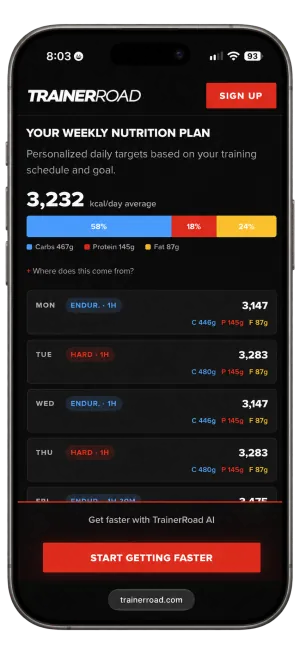
Eating enough for your training now helps you get more out of every workout between now and June.

Give yourself the best chance to be faster at Unbound
You today
14:43
You with TrainerRoad
13:59
A rider with an FTP of 250 W who weighs 170 lb would likely finish in 14:43 today. Athletes who follow their TrainerRoad plan see an average 8% FTP increase in six months, which would save 44 minutes.
4.9from over 21,000 ratings on the App Store
Start training for UnboundAlready a member? Build your Unbound plan
Questions about Unbound Gravel
How long does it take to finish the Unbound Gravel 200?
In 2026, half of the finishers in the open, non-elite field finished the 207-mile course within 14 hours 40 minutes, and the middle half of the field took between 13 hours 17 minutes and 16 hours 19 minutes. The finish line closed 20 hours 30 minutes after the start.
How long does the Unbound Gravel 100 take?
In 2026, half of the finishers in the open field finished the 106-mile course within 8 hours 21 minutes, and the middle half of the field took between 7 hours 30 minutes and 9 hours 55 minutes.
What is the average speed at Unbound Gravel?
The median finisher in the open, non-elite field of the 2026 Unbound 200 averaged about 14.1 mph (22.7 km/h) over 207 miles. In the 100, the median finisher averaged about 12.7 mph (20.4 km/h) over 106 miles. Both speeds include the time spent stopped, so the riding speed was a little higher.
What is the time cutoff at Unbound Gravel?
In 2026 the 200 started at 6:30 am and the 100 at 7:30 am, and the finish line closed at 3:00 am on Sunday, which gave 200 riders 20 hours 30 minutes and 100 riders 19 hours 30 minutes. There are cutoff times at the checkpoints along the way too. Life Time publishes them in the athlete guide on the official Unbound Gravel site, so check the 2027 guide before race day.
How long is Unbound Gravel, and how hilly is it?
In 2026 the Unbound 200 was 207 miles (333 km) and the 100 was 106 miles (171 km), both through the Flint Hills out of Emporia, Kansas. The XL was 356 miles (573 km). The 2026 200 had about 9,000 feet (2,700 m) of climbing. Its highest point is only about 570 feet above its lowest, so that climbing comes from rolling hills. You're almost always going slightly up or down, and there are very few places where you can stop pedaling and recover. The route changes a little every year.
Where are the checkpoints at Unbound Gravel?
On the 2026 Unbound 200 course the checkpoints were in Madison at mile 42, Matfield Green at mile 100 and Council Grove at mile 160. The median finisher rode for about 2 hours 45 minutes to 4 hours 30 minutes between them, so plan your food and water for each stretch. The official Unbound Gravel site will have the 2027 checkpoints and where you can restock.
What FTP do I need to finish the Unbound 200 in 12, 14 or 16 hours?
In our simulations of the 2026 course, a 170 lb (77 kg) rider needed an FTP of about 4.5 W/kg (345 W) to finish the 200 in 12 hours, about 3.5 W/kg (270 W) for 14 hours, about 2.9 W/kg (220 W) for 16 hours and about 2.5 W/kg (190 W) for 18 hours. Those times include the time spent stopped, which was about 50 minutes for the TrainerRoad athletes in our sample.
What W/kg do I need for the Unbound 100?
In our simulations of the 2026 course, a 170 lb (77 kg) rider needed an FTP of about 4.9 W/kg (375 W) to finish the 100 in 6 hours, about 3.7 W/kg (285 W) for 7 hours, about 3.0 W/kg (230 W) for 8 hours and about 2.1 W/kg (165 W) for 10 hours. The tables above cover other weights, and the calculator at the top of the page works out the time for your own FTP and weight.
How does the Unbound Gravel finish time calculator work?
We simulated riders from 1.5 to 6.5 W/kg at a range of weights on the 2026 course, on a gravel bike, in the weather recorded on race day. Then we scaled those times to match the official finish times of the TrainerRoad athletes who raced, so they include the time spent stopped. Your own day will also depend on the 2027 course, the weather, your pacing and your fueling. Athletes who finish at any one time have a wide range of FTP, because riding in groups, stopping less and pacing well all change the result.
How should I train for Unbound Gravel?
Follow a training plan you can do every week for months. The athletes in our sample did most of their training in short rides. The typical ride before the 200 was about an hour and a half, and only about 10% of rides went over four hours. The faster groups were also the more consistent ones from week to week. The training section above shows how the athletes at each finish time trained.
How many hours a week do I need to train for Unbound Gravel?
Athletes who finished the 2026 Unbound 200 in 12 to 14 hours averaged about 9 hours a week in the 12 weeks before the race, and those who took over 18 hours averaged about 7. You don't need to match their hours. Start from the hours you're riding now and go up gradually, because that's an increase you can keep up for months.
Do I need structured workouts to train for Unbound Gravel?
Structured training will make you faster. In our sample, athletes who rode under 7 hours a week before the 2026 Unbound 200 and did three or more TrainerRoad workouts a week finished 1 hour 18 minutes faster on average than athletes who did fewer than one, at about the same volume. For athletes who rode 7 to 10 hours a week, the gap was 48 minutes. We can only see workouts done in TrainerRoad, so structured workouts from other apps aren't counted.
How many carbs do I need per hour at Unbound Gravel?
Aim for roughly 60 to 90 grams of carbohydrate an hour, eaten a little at a time every 15 to 30 minutes. The median finisher in the 2026 Unbound 200 was out there for 14 hours 40 minutes, so practice eating that much on your longer training rides. Our guide to using carbs for performance covers what to eat, and the nutrition calculator helps you eat enough for your training in the months before.
I got in through the lottery. How much faster can I get before race day?
Athletes who follow their TrainerRoad plan closely raise their FTP by about 4% in two months, 7% in four months, 8% in six months and 10% in nine months on average, so it helps to start before you know whether you got in. Unbound entries are drawn by lottery, and the official Unbound Gravel site has the dates. In our simulations, a 250 W, 170 lb rider who raised their FTP by 8% would finish the 200 about 44 minutes sooner.
When is Unbound Gravel 2027?
Unbound Gravel 2027 runs from June 3 to June 6 in Emporia, Kansas, and the 200 and the 100 are on Saturday, June 5, 2027. Entries are drawn by lottery, and the official Unbound Gravel site has the lottery dates and the full schedule for race week.
Athletes are talking about this race on the TrainerRoad forum in the Unbound 2027 thread, and there are older threads on time goals for the 200, building an Unbound 200 plan and a training plan for the Unbound 100. Race details, the lottery and the athlete guide are on the official Unbound Gravel site.